

Daily Dose Of Jazz…
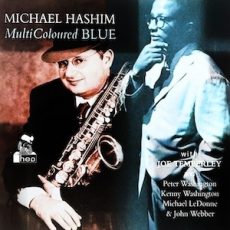
Michael James Hashim was born on April 9, 1956 in Geneva, New York. He began playing saxophone while in elementary school, then played with Phil Flanigan and Chris Flory as a high schooler. He worked with both into the middle 1970s.
In 1976 he toured with Muddy Waters and played with the Widespread Depression Orchestra, which he would later lead. Michael formed his own quartet in 1979, which has included Dennis Irwin, Kenny Washington, and Mike LeDonne as sidemen. In 1980 he toured with Clarence Gatemouth Brown.
Hashim played in New York City in the early 1980s with Roy Eldridge, Jo Jones, Brooks Kerr, Sonny Greer, and Jimmie Rowles. From 1987 he worked often with Judy Carmichael. The Nineties saw him touring China in 1992, and was one of the first jazz musicians ever to do so.
He worked with Flory through the 1990s, and toured North America and Europe regularly. In 1990 with his quartet he recorded Lotus Blossom, an album of Billy Strayhorn songs. In 1998 expanded this ensemble into 11 members as the Billy Strayhorn Orchestra.
Alto and soprano saxophonist Michael Hashim has been a member of the Raymond Scott Orchestra, a mainstay in the George Gee Orchestra, performs with The Microscopic Septet and continues to record as a leader and sideman..
More Posts: history,instrumental,jazz,music,saxophone
Requisites
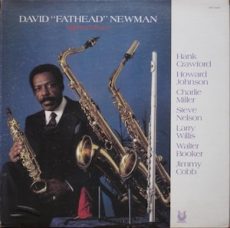
Still Hard Times ~ David “Fathead” Newman | By Eddie Carter
David “Fathead” Newman, a versatile multi-instrumentalist, enters this morning’s spotlight with his vastly underrated album, Still Hard Times (Muse Records MR 5283). This musical feast delights any jazz aficionado, offering a satisfying blend of David’s proficiency on the alto sax (track: B2), flute (B1, B3), soprano sax (A3), and tenor sax (A1, A2, B1). On his second Muse Records date, he joins forces with an talented ensemble of musicians: Charlie Miller on trumpet (A1, A2, B1, B2), Hank Crawford on alto sax (A1, A2, B1 to B3), Howard Johnson on baritone sax (A1, A2, B1, B2), Steve Nelson on vibraphone (A3, B3), Larry Willis on piano, Walter Booker on bass, and Jimmy Cobb on drums. My copy is the 1982 U.S. Stereo release.
The album opens with the septet’s introduction to Shana by David Newman, segueing into a mid-tempo melody that sets the mood. David indulges in delightful fun on a vibrant performance with playful energy and a lively tone. Larry adds an extra layer of excitement with a vibrant solo before the ensemble wraps up the song. Blisters by Hank Crawford opens with the rhythm section’s bluesy introduction, irresistibly getting your fingers snapping and your foot tapping. The theme starts as the front line launches this musical meal. Newman’s easygoing first course whets the appetite; then it’s on to Crawford, who delivers a splendid main course. Willis unfolds the perfect ending in a delicious treat for dessert, leading to the song’s conclusion.
Newman’s switch to the soprano sax for One For My Baby by Harold Arlen and Johnny Mercer is a moment of profound emotion. Larry introduces the jazz standard, ascending to David’s deeply poignant theme. He continues telling the melancholic story delicately. In the following tender presentation, Steve reveals the song’s melodic beauty, which precedes David’s serene fadeout. To Love Again is a beautiful ballad by Hank Crawford featuring “Fathead” in a heartfelt flute and tenor sax performance. Side Two opens with Newman’s flute introduction, followed by his gentle melody on the tenor sax with the ensemble in the background. In the song’s only solo, “Fathead” conveys heartwarming and precious thoughts in every note until the group returns for the gentle closing chorus.
The album’s title track, Still Hard Times by David Newman, places the leader on alto sax as the septet’s soulful theme begins. David leads off with an easy-flowing interpretation as enjoyable as something comfortable to wear. Larry brings a cheerful spontaneity to the second statement, complimenting David’s performance preceding the ending theme, which fades out gently. Percy Mayfield’s blues ballad, Please Send Me Someone To Love, receives a regal treatment by the sextet with Newman’s return to the flute, accompanied by Nelson’s vibes complementing the rhythm section as “Fathead” unveils the melody. The highlight is Crawford’s funky down-home performance until the group’s theme reprise and finale!
Still Hard Times was produced by Michael Cuscuna. Vince Traina was behind the dials of the recording, and Joe Brescio mastered the album. It has superb sound quality, with a rich soundstage transporting the listener to the studio as the musicians perform. David “Fathead” Newman’s versatility is remarkable, and the rhythm section’s steady foundation enhances the front line’s performance throughout each track. Whether you’re a soul jazz fan or discovering his music, I highly recommend checking out Still Hard Times by David “Fathead” Newman on your next record hunt. It’s a perfect album for a relaxing evening with friends or when enjoying the quiet, listening alone. It’s become a cherished part of my library, and I hope that after you hear it, it will become a treasured part of yours!
One For My Baby, Please Send Me Someone To Love – Source: Wikipedia.org
© 2025 by Edward Thomas Carter

More Posts: choice,classic,collectible,collector,history,instrumental,jazz,music,saxophone
KENNY GARRETT
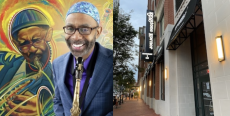
Newly named an NEA Jazz Master in 2023, saxophonist Kenny Garrett is one of the most powerfully expressive, uplifting, and influential instrumentalists and bandleaders of our time. Kenny’s fiery quintet swings into Keystone Korner Baltimore for 2 nights, Saturday & Sunday, April 26th & 27th, to celebrate his latest release, Sounds From The Ancestors, which reflects the rich jazz, R&B, and gospel history of his hometown of Detroit and deeply resonates with the Afro-Caribbean rhythms of Cuba, Nigeria and Guadeloupe.
With his illustrious career that includes hallmark stints with Miles Davis, Art Blakey and The Jazz Messengers, Donald Byrd, Freddie Hubbard, Woody Shaw and the Duke Ellington Orchestra, as well as a heralded career as a solo artist that began more than 30 years ago, Kenny Garrett is easily recognized as one of modern jazz’s brightest and most influential living masters. And with the marvelous Sounds From The Ancestors, the GRAMMY® Award-winning Garrett shows no signs of resting on his laurels.
Kenny Garrett ~ saxophones
Keith Brown ~ piano
Corcoran Holt ~ bass
Rudy Bird ~ percussion
Ronald Bruner ~ drums
Melvin Santa ~ vocals & keys
Tickets: $45 – $55 | $4.16 – $4.86 Fees
Shows: Saturday ~ 6:00pm & 8:30pm | Sunday ~ 5:00pm & 7:30pm
More Posts: adventure,bandleader,club,genius,instrumental,jazz,music,preserving,saxophone,travel

SALUTE TO FREDDIE HUBBARD & CANNONBALL ADDERLEY
Among the giants of jazz’s hard-bop and post-bop eras, Freddie Hubbard and Cannonball Adderley were distinctive pacesetters who stretched their talents while still making exciting, accessible music.
Their profound influence on contemporary headliners trumpeter Jeremy Pelt and saxophonist Vincent Herring cannot be underestimated and this all-star quintet pays tribute to their massive contributions. Last year, Herring and Pelt collaborated with other top NY musicians forming the supergroup Something Else!, named after a classic Cannonball recording.
The Players: Jeremy Pelt ~ Trumpet | Vincent Herring ~ Saxophone | Rick Germanson ~ Piano | Richie Goods ~ Bass | Louis Hayes ~ Drums
Tickets: $35.00 +fee
Saturday 7:00pm Show Sold Out
More Posts: adventure,bandleader,bass,club,drums,genius,instrumental,jazz,music,piano,saxophone,trumpet
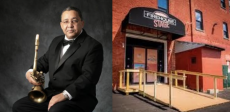
BILL EASLEY TRIO
He began playing music at the age of 13 and studied at Memphis State University during the 1960s. Easley worked with George Benson in the late 1960s and with Isaac Hayes in the 1970s. He also did sessions at Stax and Hi Records with Ann Peebles and Al Green). He moved back to New York in 1980.
He has worked with Roland Hanna, Jimmy McGriff, Jimmy Smith, Ruth Brown, James Williams, Bill Mobley, George Caldwell, Mulgrew Miller, Grady Tate, Victor Gaskin, Panama Francis, Mercer Ellington, and Billy Higgins.
Bill Easley ~ Alto & Tenor Saxophone | Dino Losito ~ Organ | Jimmy Johns ~ Drums
Tickets: $17.00
More Posts: adventure,bandleader,club,genius,instrumental,jazz,music,preserving,saxophone,travel