

Daily Dose Of Jazz…
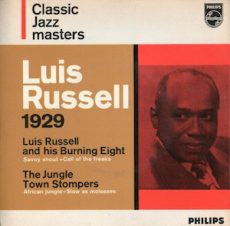
Harry Alexander White was born on June 1, 1898 in Bethlehem, Pennsylvania. As a teenager, he played drums, then switched to trombone after moving to Washington, D.C. around 1919. In the early Twenties he played with Duke Ellington, Elmer Snowden, and Claude Hopkins. Then in 1925 he formed the family band called the White Brothers Orchestra, which played the mid-Atlantic states for several years with regular gigs in New York City and Philadelphia, Pennsylvania.
Late in the 1920s, he played with Luis Russell, then joined the Mills Blue Rhythm Band in 1931. The following year he joined Cab Calloway’s orchestra, working as an arranger and composer in addition to his duties on trombone. One of Calloway’s trumpeters, Edwin Swayze, overheard Harry use the term “jitterbug”, and wrote a tune called The Jitterbug. Calloway’s 1934 recording of the song brought the term into widespread currency.
Returning to play with Russell in 1935 when the band was backing Louis Armstrong, he eventually quit playing for part of the Thirties decade. He would later perform with Manzie Johnson, Hot Lips Page, Edgar Hayes, and Bud Freeman.
Trombonist, pianist, saxophonist, arranger and composer Harry White, who was affectionately known as Father White, transitioned on August 14, 1962 in New York City.

More Posts: arranger,bandleader,composer,history,instrumental,jazz,music,piano,saxophone,trombone
Daily Dose Of Jazz…
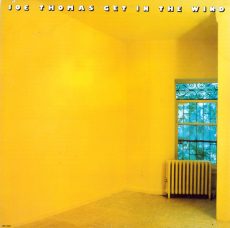
Joseph Samuel Thomas was born on May 31, 1933 in Newark, New Jersey. As a child, he learned to play alto and soprano saxophone, trombone, flute and piano, and also taught himself how to write music. Encouraged by his older brother, he began performing in clubs from the age of fifteen and was ultimately noticed by James Moody.
After enlisting in the United States Army he received a Purple Heart during combat in the Korean War. Returning to the States, Joe performed with Specks Williams and joined Rhoda Scott’s Trio in the early 1960s.
Thomas recorded with organist Jimmy McGriff and released a dozen albums under his own name in the late 1970s and early 1980s. As a sideman he also recorded five albums with Scott, and one each with Ambersunshower, Beck, Buddy Terry and Joe Tex.
Flutist, tenor saxophonist and bandleader Joe Thomas passed away in Orange, New Jersey at the age of 84 on July 26, 2017.

More Posts: flute,history,instrumental,jazz,music,piano,saxophone,trombone
Three Wishes
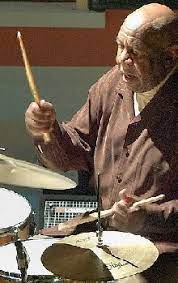
After a set, Pannonica sat down by Mickey Roker and during the conversation the subject of three wishes came up and when she inquired he answered:
- “Health first. I know I can always use that.”
- “Music – like, study some more. I don’t know what else I want, really! Because if I could maintain those two, I’d be cool. That’s enough.”
*Excerpt from Three Wishes: An Intimate Look at Jazz Greats ~ Compiled and Photographed by Pannonica de Koenigswarter

More Posts: baroness,drums,history,instrumental,jazz,music,pannonica,three,wishes
Daily Dose Of Jazz…
John Bernard Gordon was born May 30, 1939 in New York City, New York. He studied at Juilliard School and played with Buddy Johnson and Ray Draper in the 1950s.
Gordon worked with Lionel Hampton in 1961 and 1962 and with Lloyd Price and Sam Rivers later in the 1960s. By the 1970s, he was playing with Charles Tolliver, Clark Terry, Count Basie, Howard McGhee, and Frank Foster.
John led his own ensembles in the late 1970s, and his sidemen included Tolliver, Roland Alexander, Lisle Atkinson, Stanley Cowell, and Andrew Cyrille. During this decade he rejoined Hampton again, with whom he continued working until 1989.
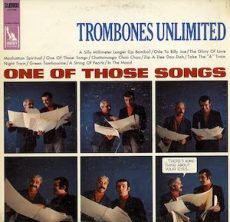
After his Hampton residency Gordon played in Al Grey’s ensemble, Trombone Summit, and founded a group called Trombones Incorporated with Fred Joiner. When Joiner left the group in the early 1990s, he became its leader and changed its name to Trombones Unlimited. The late 1990s had him playing with Slide Hampton, Josh Roseman, Lafayette Harris, Martin Winder, Curtis Fuller, and Thilo Berg.
Gordon worked for several decades as a session musician for recordings and has also performed in pit orchestras for Broadway musicals. At 83, trombonist JOhn Gordon continues to play.
More Posts: bandleader,history,instrumental,jazz,music,trombone
Daily Dose Of Jazz…
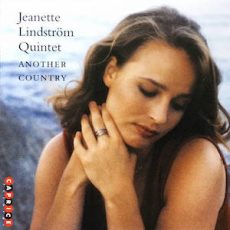
Maria Jeanette Lindström was born on May 29, 1971 in Stockholm, Sweden and grew up in Östersund and Ås in the Jämtland region of Sweden. She made her recording debut for Caprice Records with Another Country in 1995, which earned her the Jazz in Sweden prize. Two more albums followed for the same label.
In 2003 Jeanette began a collaboration with the Bonnier Amigo Music Group on the album Walk. The album and its sequel, In the Middle of This Riddle, were warmly received by audiences and critics in Sweden and abroad. She recorded a side project album Whistling Away the Dark with Palle Danielsson, Bobo Stenson, Jonas Östholm, and Magnus Öström.
In 2007 the song Leaf, from In the Middle of This Riddle, was remixed by King Britt, a DJ and record producer from Philadelphia, and a track from the album was chosen for Volume 7 of the compilation series Saint-Germain-des-Prés Café. Her album Attitude & Orbit Control was released in 2009 and she received a Swedish Grammis at the awards ceremony the following year.
She has worked with pianist Steve Dobrogosz and the group ONCE with bassist Anders Jormin. She has appeared as guest soloist in small groups, big bands, and chamber and symphony orchestras.
Vocalist, composer and lyricist Jeanette Lindström continues to tour worldwide and explore the endless realms of jazz.
More Posts: bandleader,history,instrumental,jazz,music,vocal