

Daily Dose Of Jazz…
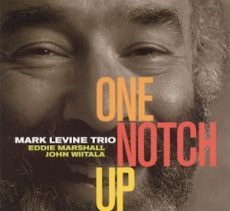
Mark Jay Levine was born on October 4, 1938 in Concord, New Hampshire and began playing the piano at the age of five, trombone in his early teens. Attending Boston University, graduating with a degree in music in 1960, he also studied privately with Jaki Byard, Hall Overton and Herb Pomeroy.
Moving to New York City in the Sixties he freelanced and then played with musicians Houston Person, Mongo Santamaría, and Willie Bobo from 1971 to 1974. Levine then moved to San Francisco, California and played with Woody Shaw for two years. His debut album was made as a leader for Catalyst Records in 1976.
He went on to play with the Blue Mitchell/Harold Land Quintet, Joe Henderson, Stan Getz, Bobby Hutcherson, Luis Gasca, and Cal Tjader. From 1980 to 1983, he concentrated on valve trombone, but then returned to playing mainly the piano. He then led his own bands, and recorded for Concord as a leader in 1983 and 1985. From 1992 Mark was part of Henderson’s big band. He created a new trio in 1996 and recorded it for his own, eponymous label. His Latin jazz group, Que Calor, was formed in 1997.
He put on his educator hat in 1970, teaching in addition to private lessons at Diablo Valley College, Mills College, Antioch University in San Francisco, San Francisco Conservatory of Music, Sonoma State University, and the JazzSchool in Berkeley. Levine wrote two method books: The Jazz Piano Book, and The Jazz Theory Book.
Pianist, trombonist, composer, author and educator Mark Levine, whose album Isla was nominated for a Grammy Award for Best Latin Jazz Album, died of pneumonia on January 27, 2022 at the age of 83.

More Posts: bandleader,clarinet,composer,educator,history,instrumental,jazz,music,producer,trombone
Daily Dose Of Jazz…
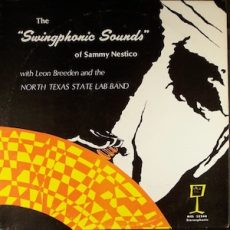
Harold Leon Breeden was born on October 3, 1921 in Guthrie, Oklahoma. At three his parents moved to Wichita Falls, Texas where he grew up and graduated from high school. He attended Texas Wesleyan College in Fort Worth, Texas on a scholarship and later transferred to Texas Christian University where he completed both his bachelor’s and master’s degrees. A move to New York City had him doing graduate work at Columbia University, he studied clarinet with Reginald Kell with whom Benny Goodman studied.
In 1944 after military duty he became the Director of Bands at Texas Christian University and later served as Director of Bands at Grand Prairie High School, then Director of Jazz Studies at the University of North Texas College of Music, where Breeden remained until his retirement in 1984.
Breeden also played saxophone and studied composition and arranging at Texas Christian. As a producer of the NBC Symphony, conducted by Arturo Toscanini, he declined a position as staff writer and arranger for the orchestra to take care of his ill father. Moving back to Texas he worked as music coordinator for KXAS-TV in Fort Worth, known at the time as WBAP-TV.
In the last several years of his life, Leon frequently soloed on clarinet with The Official Texas Jazz Orchestra. In 2009, The University of North Texas awarded him with an honorary Doctor of Humane Letters degree.
Clarinstist, educator, composer and director Leon Breeden, who made the One O’Clock Lab Band internationally famous, died of natural causes on August 11, 2010 in Dallas,Texas.
More Posts: bandleader,clarinet,composer,educator,history,instrumental,jazz,music
Daily Dose Of Jazz…
Jerome Don Pasquall was born on September 20, 1902 in Fulton, Kentucky, and grew up in St. Louis, Missouri. As a child, he played the mellophone in brass bands. He served in the United States Army in 1918 in the 10th Cavalry Band, and picked up clarinet during this time.
Following his discharge, Pasquall played with Ed Allen in 1919 and then found work on riverboats playing with Charlie Creath and Fate Marable. He moved to Chicago, Illinois to study at the American Conservatory, and played with Doc Cook’s Dreamland Orchestra as a tenor saxophonist.
Departing for Boston, Massachusetts he attended the New England Conservatory of Music. In 1927 and 1928, he played with Fletcher Henderson. Following this he returned to Chicago and led his own ensemble, in addition to playing with Freddie Keppard, Dave Peyton, Jabbo Smith, Tiny Parham, and Fess Williams.
He toured Europe with the 1934 Blackbirds, Eddie South, Henderson again in 1936, and Noble Sissle from 1937 throught World War II in 1944. After the mid-1940s, he did freelance work in New York City with Tony Ambrose among others, and gradually receded from active performance.
Clarinetist, alto saxophonist, mellophonist Jerome Don Pasquall, who never led his own recording session, dies on October 18, 1971 in New York City, New York.

More Posts: bandleader,clarinet,history,instrumental,jazz,mellophone,music,saxophone
Daily Dose Of Jazz…
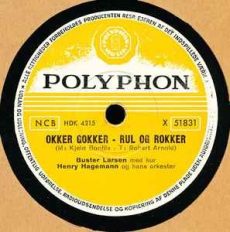
Henry Hagemann was born on September 6, 1910 in Copenhagen, Denmark He became a professional musician in 1931 and played primarily saxophone and clarinet. Throughout his career, he played with Kai Ewans, Winstrup Olesen and Leo Mathisen, among others.
From 1944 to 1949 he led his own ensemble. Afterward he performed as a theater musician, first with Hans Schreiber in the Fiffer revues and later in the Circus revue . He has also been engaged at the New Scala, where he regularly served as bandmaster.
Saxophonist and clarinetist Henry Hagemann died April 5, 1964.
More Posts: bandleader,clarinet,history,instrumental,jazz,music,saxophone
Daily Dose Of Jazz…
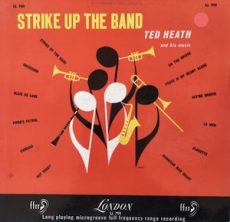
Roy Willox was born into a musical family in Welwyn, Hertfordshire, England on August 31,1929. At 16 he had a brief spell with Johnny Claes in 1945 and then with other bands before joining Ted Heath from 1950 to 1955.
About this time he worked in the jazz clubs in a group with Keith Christie, and with Jack Parnell followed with extensive freelance work in television, radio and the theatre. The jazz scene saw Willox in Harry South’s band during the 1960s and 1970s and returned to the Heath band for dates in the 1960s and 1970s.
He was in demand through the 1960s for many jazz big band dates, notably with Harry South and Tubby Hayes. He played throughout the 1990s and 2000s, first with The Ted Heath Band, (then led by Don Lusher), and in Lusher’s own big band until it’s last concert in 2007. He played in the Ted Heath band’s farewell concert at the Royal Festival Hall, London in 2000.
A fluent saxophonist, clarinetist and flutist Roy Willox, whose main instrument is alto saxophone, continues to perform and record.

More Posts: bandleader,clarinet,flute,history,instrumental,jazz,music,saxophone