

Requisites
It’s the late 1950s and early ’60s in Los Angeles, California and Jazz, that quintessentially American art form, is struggling to find its footing. Gigs are drying up, and even titans like tenor saxophonist Ben Webster are fighting for recognition in their own country. But here’s the beautiful part: when the spotlight dims, sometimes the most honest music emerges.
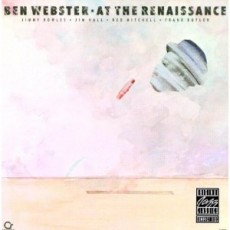
At The Renaissance captures one of those magical nights when Webster and a group of sympathetic, deeply inspired colleagues came together at a Hollywood club and created something essential. This wasn’t about fame or fortune—this was about survival, about keeping the music alive when nobody seemed to be listening.
Recorded live on October 14, 1960, Webster is surrounded by the perfect ensemble: the sensitive touch of pianist Jimmy Rowles, the elegant guitar work of Jim Hall, Red Mitchell’s solid bass foundation, and Frank Butler’s impeccable drumming. Producer Lester Koenig had the wisdom to simply press record and let them do what they do best.
What unfolds across eight tracks—from the haunting “Gone With The Wind” to the classic “Stardust,” from Ellington’s “Caravan” to the blues-soaked originals—is pure empathy translated into sound. Webster’s tone is unmistakable: warm, breathy, deeply human. You can hear everything he’s feeling in every note.
This is the kind of recording that belongs in every collection not because it’s flashy or groundbreaking, but because it reminds us what jazz is really about—musicians speaking truth to each other and to us, even when the world isn’t paying attention.

Give A Gift Of Jazz – Share
More Posts: collectible,saxophone
Jazz In Film
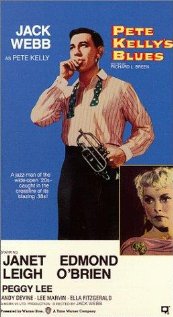
Kansas City, 1927. The jazz is hot, the liquor’s illegal, and cornetist Pete Kelly just wants to play music with his band at the local speakeasy. Simple enough plan, right? Not when the mob comes calling.
Jack Webb directs and stars in Pete Kelly’s Blues (1955), a gritty tale of what happens when organized crime muscles in on the music scene. When a local gangster decides he wants a piece of Pete’s action, things get dangerous fast. After their drummer is killed, Pete caves to the pressure—agreeing not only to the gangster’s “partnership” but also accepting his alcoholic girlfriend as the band’s new singer.
It’s a devil’s bargain, and Pete knows it. As the situation spirals, he realizes he’s sold out everything that mattered. The only bright spot? A wealthy woman named Ivy who represents the one decent connection left in his increasingly compromised life.
What elevates this noir-tinged drama into something special is the authentic jazz running through its veins. The cast includes actual legends: Peggy Lee as Rose Hopkins, Ella Fitzgerald as Maggie Jackson, and guitarist Herb Ellis as Bedido. Backing them up are pianist Don Abney, bassist Joe Mondragon, and drummer Larry Bunker.
The band itself is stacked with talent—Teddy Buckner on cornet, Matty Matlock handling both clarinet and jazz arrangements, Eddie Miller on tenor sax, and a brass section that includes Dick Cathcart (who dubbed Webb’s cornet playing). The musical lineup features classic numbers including the title track, plus standouts like Peggy Lee’s emotionally charged performance and other jazz standards of the era.
Webb brought the same attention to detail here that made Dragnet a phenomenon—only this time, the crime is what happens when art meets corruption, and the blues tell the whole story.

More Posts: film
Requisites
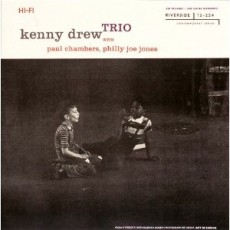
It’s 1956 when pianist Kenny Drew steps into a New York studio with two absolute legend, bassist Paul Chambers and drummer Philly Joe Jones, to record his first album as a bandleader. The Kenny Drew Trio. This should’ve been his big break, the moment that launched him into the jazz stratosphere but America wasn’t ready to listen.
There’s a twist though. While Drew struggled to find acceptance at home, his brilliance didn’t go unnoticed everywhere. Fast forward to the early 1970s when the album finally gets released in Japan, and suddenly everything clicks. Japanese audiences and critics got it. The record became a best-seller, earning the acclaim it deserved all along.
Recorded across two September days in 1956, with production by the legendary Orrin Keepnews and Bill Grauer, and cover photography by the brilliant Roy De Carava, this trio tackled everything from Duke Ellington’s “Caravan” to Thelonious Monk’s “Ruby, My Dear,” from the Disney classic “When You Wish Upon A Star” to Drew’s own composition “Blues For Nica.”
Sometimes the world has to catch up to genius. Kenny Drew’s story reminds us that great art doesn’t always find its audience right away—but when it does, it’s worth the wait.

More Posts: collectible,piano