

Requisites
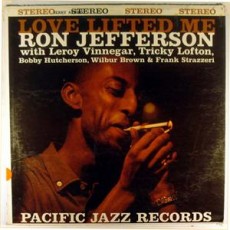
Love Lifted Me, recorded in 1962, is the debut album of Ron Jefferson as a leader and is infused with gospel flavoring on the title track to the classic “Flamingo” that features some wonderful work by Bobby Hutcherson. Add up-tempo swingers like “Little One” and “George’s Dilemma” makes for a delightful mix of tunes. However, Leroy Vinnegar’s contribution of timekeeping and soloing gives the listener an opportunity to be enthralled especially on his composition “For Carl Perkins”.
Personnel: Ron Jefferson – drums, Laurence “Tricky” Lofton – trombone, Wilbur Brown – tenor saxophone, Bobby Hutcherson – vibraphone, Frank Strazzeri – piano, Leroy Vinnegar – bass
Recording/Release Date: Hollywood, California – 1962
Label: Pacific Jazz ST 36 CD: Toshiba-EMI PJ0036 (Japan only)
Songs: Love Lifted Me, For Carl Perkins, Little One, Ivy League Blues, Flamingo, George’s Dilemma

More Posts: collectible,drums
Requisites
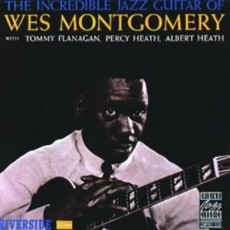
The Incredible Jazz Guitar Of Wes Montgomery is a dazzling display of the unorthodox technique and emotional power that combined to make Wes a literally “incredible” artist. Ever since its initial release in 1960, this album has been a consensus choice of musicians, critics and knowledgeable listeners as a matchless example of the talents of one of the finest jazz instrumentalists of all times.
Personnel: Wes Montgomery – guitar, Tommy Flanagan – piano, Percy Heath – bass, Albert “Tootie” Heath – drums
Producer: Orrin Keepnews
Record Date: New York City – January 26 & 28, 1960
Cover Art: Produced and designed by Paul Bacon, Ken Braren and Harris Lewine
Songs: Airegin, D-Natural Blues, Polka Dots & Moonbeams, Four On Six, West Coast Blues, In Your Own Sweet Way, Mr. Walker (Renie), Gone With The Wind
More Posts: collectible,guitar
Jazz In Film
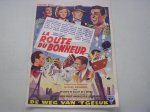
La Route du Bonheur (The Road To Happiness) is a 1952 film directed by Carlo Mastelli, the young radio presenter of “New Voices” has run short of ideas and his program is likely to be suspended from the radio schedule if he does not find any new ones. He is saved by chance in the person of Marina, a charming young school teacher, who takes advantage of the presence of a radio crew in her village for the recording of a singing contest to broadcast an appeal in favor of Tonino, the most underprivileged of her pupils.
Directors: Carlo Mastelli,Maurice Labro and Giorgio Simonelli
Stars: Georges Guetary, Luis Mariano and Nilla Pizzi
Musical appearances by Louis Armstrong and His Orchestra, Sidney Bechet, Claude Luter, Django Reinhardt and Hubert Rostaing.
More Posts: film
Requisites
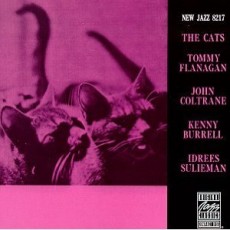
The Cats: In the Fifties, Tommy Flanagan was one of the most highly valued pianists in jazz. His appearance on record was primarily as a sideman, well appreciated by his fellow musicians but not recognized for their display of his superior abilities by a wider audience.
This album contains a Flanagan trio track “How Long Has This Been Going On?” surrounded with the choice, empathetic soloists as Coltrane, Burrell and Sulieman. It is still a delight to hear their interaction to this day with Tommy and the all-Detroit rhythm section of Doug Watkins and Louis Hayes. Flanagan penned all of the originals on this album.
Personnel: Tommy Flanagan – piano, John Coltrane – tenor saxophone, Idrees Sulieman – trumpet, Kenny Burrell – guitar, Doug Watkins – bass, Louis Hayes – drums
Record date: Hackensack, New Jersey – April 18, 1957
Supervised by: Bob Weinstock
Songs: Minor Mishap; How Long Has This Been Going On; Eclypso; Solacium; Tommy’s Tune
More Posts: bass,collectible,drums,guitar,piano,saxophone,trumpet
Jazz In Film
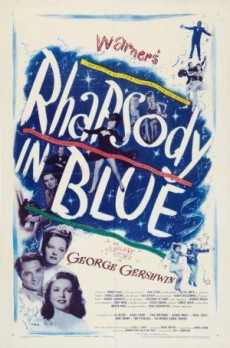
Rhapsody in Blue (1945): Hollywood’s Glamorous Portrait of Gershwin
Directed by Irving Rapper and starring Robert Alda, Joan Leslie, and Alexis Smith, Rhapsody in Blue is Hollywood’s lavish 1945 attempt to capture the life and genius of George Gershwin—one of America’s most beloved composers, who died tragically young at just 38 years old in 1937.
The Hollywood Treatment
As with most biopics of the era, the film takes considerable liberties with historical fact. The story centers on Gershwin as a driven, ambitious composer whose relentless need to succeed comes at a steep personal cost—destroying his relationships with a fictional singer named Julie Adams (Joan Leslie) and an equally fictional socialite Christine Gilbert (Alexis Smith).
These romantic subplots are pure Hollywood invention, designed to give audiences the kind of emotional drama they expected from a major studio production. The real George Gershwin’s personal life was more complex and less cinematically tidy, but Warner Bros. wasn’t particularly interested in documentary accuracy, they wanted a story of artistic genius struggling between ambition and love.
The Music Is the Real Star
What the film does deliver magnificently is Gershwin’s extraordinary music. The soundtrack features selections from his remarkable catalog: the jazz-inflected concert works like the titular “Rhapsody in Blue” and “An American in Paris,” beloved songs from his Broadway shows and Hollywood films, and glimpses of his ambitious opera Porgy and Bess.
Hearing these works performed in a 1945 film, still relatively close to when they were composed, gives the movie a period authenticity that transcends the fictionalized biography. This is what audiences in the 1940s heard when they thought of Gershwin, presented with the full resources of a major Hollywood studio’s orchestra.
Notable Appearances
The film includes memorable appearances by bandleader Paul Whiteman and His Orchestra—significant because Whiteman commissioned and premiered “Rhapsody in Blue” in 1924, making him an actual part of Gershwin’s story rather than Hollywood invention.
Also featured is the remarkable pianist and singer Hazel Scott, one of the few Black performers given significant screen time in a major Hollywood production of that era. Scott was a genuine virtuoso and a pioneering artist who fought against racial stereotyping in Hollywood—her presence adds both musical credibility and historical significance to the film.
Worth Watching Despite the Liberties
Rhapsody in Blue won’t teach you accurate biographical facts about George Gershwin—for that, you’ll need to read a proper biography. But as a celebration of his music and a snapshot of how Hollywood mythologized its cultural heroes in the 1940s, it remains an entertaining, gorgeously photographed production.
Robert Alda, Alan’s dad, brings charm and intensity to his portrayal of Gershwin, even if the script gives him more romantic angst than the real composer likely experienced. And ultimately, any film that introduces audiences to Gershwin’s genius—however fictionalized the surrounding story, serves a valuable purpose.
For anyone who loves Gershwin’s music or classic Hollywood biopics, Rhapsody in Blue delivers the glamour, the drama, and most importantly, the unforgettable melodies that made George Gershwin an American icon.
Just don’t expect historical accuracy—expect beautiful music wrapped in beautiful Hollywood fantasy.
More Posts: film