

Daily Dose Of Jazz…
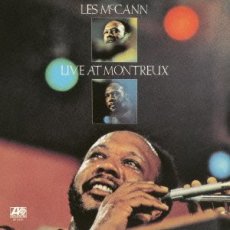
Les McCann was born on September 23, 1935 in Lexington, Kentucky. He first gained notoriety in the early Sixties with his trio while recording for Pacific Jazz Records and working with Ben Webster, Richard “Groove Holmes, Blue Mitchell, Stanley Turrentine, Joe Pass, the Jazz Crusaders, and the Gerald Wilson Orchestra.
In 1969, Atlantic Records released Swiss Movement recorded with saxophonist Eddie Harris at the Montreux Jazz Festival. The album featured trumpeter Benny Bailey and contained the tune “Compared To What” which took the album and the single to the top of the Billboard charts, bringing worldwide recognition to the musician even though it contained political criticism of the Vietnam War.
After the success of Swiss Movement the pianist began to emphasize his rough-hewn vocals more becoming an innovator in the soul jazz style, merging jazz with funk, soul and world rhythms; much of his early 1970s music prefigures the great Stevie Wonder albums of the decade. He was among the first jazz musicians to include electric piano, clavinet, and synthesizer in his music.
Les discovered Roberta Flack, obtained an audition that resulted in a recording contract with Atlantic Records and the 1969 release of her album First Take. In 1971, he and Harris were part of a group of soul, R&B, and rock performers that included Wilson Pickett, The Staple Singers, Santana and Ike & Tina Turner who flew to Accra, Ghana for a historic 14-hour concert before more than 100,000 Ghanaians.
He continued a long and moderately successful career for the next two decades until a stroke in the mid 1990s sidelined McCann for a while but in 2002 he released a new album Pump it Up. The soul jazz piano player and vocalist found success both in the jazz arena and as a crossover artist into R&B and soul. Pianist and vocalist Les McCann died from pneumonia in a Los Angeles hospital on December 29, 2023, at age 88.

Take A Dose On The Road
Daily Dose Of Jazz…
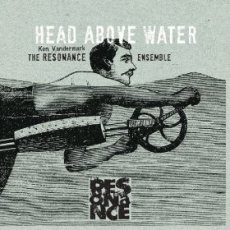
Ken Vandermark was born September 22, 1964 in Warwick, Rhode Island but grew up in Boston, Massachusetts. Mostly a self-taught musician, the saxophonist studied intermittently under George Garzone in the early 80s. He performed and led groups while in high school and at McGill University in Montreal, graduated in 1986.
Returning to Boston Ken co-led the groups Lombard Street, Mr. Furious and Barrage Double incorporating “suite forms” into his arrangements and composing pieces dedicated to other Boston bands, thus, developing broad, free-ranging charts as his signature especially in large ensemble settings.
Vandermark moved to Chicago in 1989 and has performed or recorded with many musicians such as Fred Anderson, Joe Morris, Fredrik Ljungkvist and Yakuza to name a few. He first gained widespread attention working with the NRG Ensemble from 1992 to 1996, went on to co-lead DKV Trio, Free Fall, Territory Band, the Vandermark Five and some six more groups, collaborated with Joe Harriott, released his album Furniture Music in 2002 marking his debut as an accomplished soloist and has since concentrated on his own compositions.
A fixture on the Chicago music scene Vandermark plays tenor and baritone saxophone, clarinet and bass clarinet and has received critical praise for his performing multilayered compositions that typically balance intricate orchestration with passionate improvisation. He was awarded a 1999 MacArthur Fellowship, won the Cadence magazine poll for Best Artist and Best Recording. He continues to perform and record.
Dose A Day – Blues Away
Daily Dose Of Jazz…
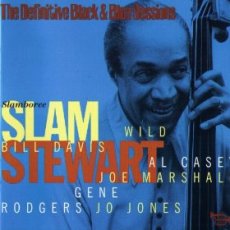
Slam Stewart was born Leroy Eliot Stewart on September 21, 1914 in Englewood, New Jersey. He originally played violin before switching to bass at the age of 20. While attending the Boston Conservancy he heard Ray Perry singing along with his violin giving him the inspiration to follow suit with his bass.
In 1937 Stewart teamed with Slim Gaillard forming the novelty jazz act Slim and Slam. The duo’s biggest hit was in 1938 with Flat Foot Floogie (With A Floy Floy).
Stewart found regular session work throughout the 1940s with Lester Young, Fats Waller, Coleman Hawkins, Erroll Garner, Art Tatum, Johnny Guarnieri, Red Norvo, Don Byas, Benny Goodman Sextet and Beryl Booker among others.
One of the most famous sessions he played on took place in 1945, when Stewart played with Dizzy Gillespie’s group during Charlie Parker’s tenure. Out of those sessions came some of the classic bebop tunes such as “Groovin’ High” and “Dizzy Atmosphere”.
Throughout the rest of his career, Stewart worked regularly and employed his unique and enjoyable bass-playing style trademark of bowing the bass (arco) while simultaneously humming or singing an octave higher until his death on December 10, 1987 in Binghamton, New York.
Inspire A Young Mind
More Posts: bass
Hollywood On 52nd Street
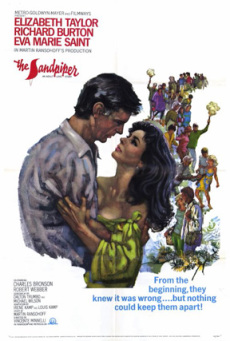
The Shadow Of Your Smile also known as the love theme from the 1965 film The Sandpiper“, is a popular song whose music was written by Johnny Mandel with the lyrics written by Paul Francis Webster.
The song was introduced in the 1965 film The Sandpiper with a trumpet solo by Jack Sheldon and later became a minor hit for Tony Bennett. Johnny Mandel arranged and conducted his version as well). It won the Grammy Award for Song of the Year and the Academy Award for Best Original Song.
The Story: Vincente Minnelli directed the film’s stars Richard Burton and Elizabeth Taylor. Laura Reynolds (Taylor) is a free-spirited, unwed single mother living with her young son Danny (Morgan Mason) in an isolated California beach house. She makes a modest living as an artist and home-schools her son out of concern that he will be compelled to follow stifling conventional social norms in a regular school. Danny has gotten into some trouble with the law through two minor incidents, which are in his mother’s eyes innocent expressions of his natural curiosity and conscience rather than delinquency. Now with a third incident a judge orders her to send the boy to an Episcopal boarding school where Dr. Edward Hewitt (Burton) is headmaster, and his wife Claire (Eva Marie Saint) teaches. Edward and Claire are happily married with two young sons, but their life has become routine and their youthful idealism has been tamed by the need to raise funds for the school and please wealthy benefactors.
Sponsored By

www.whatissuitetabu.com
More Posts: comedy,dance,drama,hollywood,instrumental,jazz,musical,suite ta bu,vocal
Daily Dose Of Jazz…
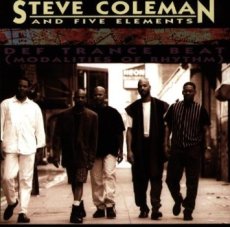
Steve Coleman was born on born September 20, 1956 in Chicago, Illinois and grew up in the musically rich Southside. As a child, he was in little singing groups, imitating the Jackson 5, singing in church and he started playing alto saxophone at the age of 14. About three years later he began to study the music of Charlie Parker, Sonny Rollins and John Coltrane and other masters.
He spent two years at Illinois Wesleyan University, transferred to Roosevelt University to concentrate on Chicago’s musical nightlife, having been introduced to Chicago premier saxophonists Von Freeman, Bunky Green and Sonny Stitt are just a few names from whom he learned.
Moving to New York in 1978 he joined the big bands of Thad Jones/Mel Lewis, Slide Hampton, Sam Rivers, and Cecil Taylor and was soon recording as a sideman with David Murray, Doug Hammond, Dave Holland, Mike Brecker and Abbey Lincoln. During this period he was playing the club circuit and putting a band together that would evolve into the Five Elements. He would go on to cofound the M Base movement with Cassandra Wilson and Greg Osby.
Influenced by Parker and Coltrane, gleaning improvisation from Von Freeman, composition from Sam Rivers and conceptual thinking from Doug Hammond, the alto saxophonist has added to his arsenal West African music, non-western cultures, Black American rhythm and blues and even nature by studying the flight patterns of bees. Steve Coleman continues to perform, record and tour and compose within the construct of contemporary jazz.
Give A Gift Of Jazz – Share
More Posts: saxophone