

From Broadway To 52nd Street
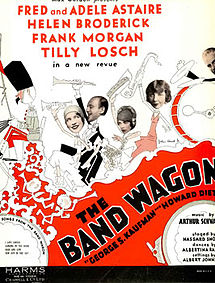
The Band Wagon hit the stage on June 3, 1931 at the New Amsterdam featuring Frank Morgan, Helen Broderick and Fred and Adele Astaire in their 10th and final Broadway appearance together. This revue utilized for the first time on Broadway, a double revolving stage for both its musical numbers and sketches. Dancing In The Dark written and composed by Arthur Schwartz and Howard Dietz, remains a jazz standard.
The Story: The revue, which ran 260 performances, had Fred and Adele cast as two French children cavorting with hoops, riding a Bavarian merry-go-round and several other sketches.
Broadway History: Theater posters are probably as old as the idea of the poster, but they really blossomed as an art form during the Industrial Revolution, when lithographic printing was perfected and affordable. In Paris during the Belle Époque (1880-1914) such posters were everywhere, a feature of the city. It was then that theater posters first became popular as decoration and memorabilia at home. When color printing developed (chromolithography), poster artists became even more popular and individually famous – like artist Jules Cheret, whose beautiful poster-girls (literal pin-up girls) were called “Chèrettes.” More and more reputable artists started creating posters. Toulouse-Lautrec, for instance, created many famous ones – an important part of his career.
Since that heyday, artists have continued to experiment with posters, including posters for the stage. Posters are an interesting genre-blending fine art, illustration, graphic art, advertising, and typography – so poster design attracts artists from each of those fields, for a lively cross-pollination of styles and ideas. All of which make posters a particularly rich and exciting contemporary art form.
The poster is also a supremely timely and ephemeral art designed to be used this one time for this one show, making them a sort of limited-time-offer art. Added to posters’ artistic merit, their time-capsule quality and their commemoration of now vanished events (plus the inevitable rarity of a paper artifact surviving) make posters ideal collectibles.
Sponsored By
www.whatissuitetabu.com
More Posts: broadway
Daily Dose Of Jazz…
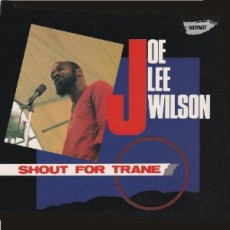
Joe Lee Wilson was born to farming parents on December 22, 1935 in Bristow, Oklahoma of African American and Creek Native American heritage. Attending a 1951 performance by Billie Holiday began his interest in a music-industry career. He studied in Los Angeles before touring the West Coast, where he sat in with Sarah Vaughan before heading down to Mexico. In New York in the 1960s, he worked with Sonny Rollins, Lee Morgan, Miles Davis, Pharoah Sanders and Jackie McLean.
Wilson formed his band Joy of Jazz, to personify the life-affirming nature of jazz and blues. During the 1970s, Joe operated a jazz performance loft in New York’s NoHo district known as the Ladies’ Fort at 2 Bond Street. His regular band, Joe Lee Wilson Plus 5, featured alto saxophonist Monty Waters and Japanese guitarist Ryo Kawasaki, and hosted Archie Shepp and Eddie Jefferson as frequent collaborators.
Joe also sang with Eddie Jefferson, Freddie Hubbard and Kenny Dorham, recorded a 1972 live radio program at Columbia University’s WKCR-FM, which was released as an album, Livin’ High Off Nickels & Dimes, on the short-lived Oblivion Records. Wilson’s rendition of “Jazz Ain’t Nothing But Soul” was a radio hit on New York jazz radio in 1975.
While based in Paris, Tokyo, and the United Kingdom, he recorded regularly with the pianist Kirk Lightsey, and one of his last albums was an Italian recording with Riccardo Arrighini and Gianni Basso, Ballads for Trane.
Joe Lee Wilson was inducted into the Oklahoma Jazz Hall of Fame in November 2010, where he gave his last public performance. The baritone gospel-influenced jazz singer, best recognized on several Archie Shepp albums, passed away on July 17, 2011 leaving behind a short but relevant discography.

More Posts: vocal

Daily Dose Of Jazz…
Rita Reys was born into an artistic family as Maria Everdina Reijs on December 21, 1924 in Rotterdam, The Netherlands. She grew up listening to classical music and as a teenager entered and won many local talent competitions.
In 1943, Rita met her first husband, jazz drummer Wessel Iicken, who introduced her to the jazz scene. Forming Rita Reys & The Wessel Ilcken Sextet, she regularly performed at the Sheherezade jazz club in Amsterdam and as her reputation grew began to tour and perform around Europe and Africa between 1945 and 1950.
In 1950, the then Rita Reys Sextet celebrated continued success in The Netherlands, played American army bases and dance clubs in England, and settled in Stockholm, the city known as the jazz center of Europe in the early Fifties. She made her first recordings there for the Artist record label, would follow up with a session with Ove Lind, and others such as Quincy Jones, Clifford Brown, Art Farmer. She would go on to meet Ella Fitzgerald, Dizzy Gillespie, Oscar Peterson and Lester Young.
Reys accepted an invitation by Columbia record producer George Avakian to visit the United States and after arrival recorded The Cool Voice of Rita Reys with Art Blakey and the Jazz Messengers featuring Horace Silver, Hank Mobley and Donald Byrd. She had a swinging quality of her phrasing that opened the doors of the Village Vanguard for several performances. She has performed with Oscar Pettiford, Zoot Sims, Clark Terry, Herbie Mann, Milt Hinton, Osie Johnson, Jimmy Smith and Lester Young to name a few luminaries.
Vocalist Rita Reys has won France’s Juan Les Pins Jazz Festival; in 1969 she was the first Dutch jazz singer to perform at the New Orleans Jazz Festival, became a Citizen of Honor of New Orleans in 1980, won the Edison Award, the Bird award and has eight gold records.
Throughout the next three decades she would continue to perform, record and tour, returning to the Great American Songbook, paid tribute to George Gershwin and Antonio Carlos Jobim, has published her life story Rita Reys, Lady Jazz, has recorded nearly four-dozen albums since 1957, perform at festivals around the world and was named Europe’s First Lady of Jazz, a title she carries to this day. Vocalist Rita Reys passed away on July 28, 2013 in Breukelen, Netherlands.
More Posts: vocal
Daily Dose Of Jazz…
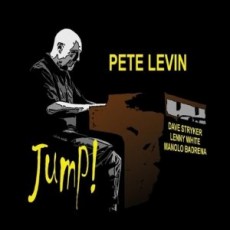
Pete Levin was born on December 20, 1942 in Boston, Massachusetts and started his musical journey on the French horn under the direction John Corley, director of the MIT concert band. Inspired by his teacher, he enrolled at Julliard School of Music in New York City.
Moving to New York in the 70s, Pete began a 15-year association with the Gil Evans Orchestra as both a French horn and electric keyboardist, receiving two Grammy awards during his tenure. This he followed with eight years with Jimmy Giuffre.
As a bandleader, he signed his first record deal with Grammavision Records in 1990, releasing his solo jazz project “Party In The Basement” followed by “Solitary Man” the following year. He went on to release four new age albums and produced the album Deacon Blues in 2007.
He plays Hammond organ, clavinet and Moog synthesizer, has performed, composed or arranged for such film and television scores as Missing In Action, Lean On Me, The Color of Money, The Guiding Light, Spin City, America’s Most Wanted, Star Trek and the Discovery Channel’s Secret of the Humpback Whales among others.
As a sideman Levin has performed with Carla Bley, The Brubeck Brothers, Jimmy Cobb, Hiram Bullock, Rachelle Ferrell, Chuck Mangione, Gregory Hines, Wayne Shorter, David Sanborn, Miles Davis, Vanessa Williams, Lenny White, Lew Soloff and Gerry Mulligan on the short list. He continues to perform, record, arrange and tour.

Daily Dose Of Jazz…
Lenny White was born Leonard White III on December 19, 1949 in New York City. Self-taught left-handed drummer, he played in local groups but basically started his career at the top of the ladder playing regularly with Jackie McLean in 1968, recording “Bitches Brew” with Miles Davis in 1969 and Freddie Hubbard’s Red Clay in 1970.
White was soon working with some of the who’s who of jazz including Geri Allen, Joe Henderson, Woody Shaw, Gato Barbieri, Gil Evans, Stanley Clarke, Jaco Pastorious and Stan Getz among others. He joined the short-lived group Azteca, and then as a member of Return To Forever from 1973-76, he gained a huge reputation as one of the top fusion drummers, but he remained versatile to play in many settings.
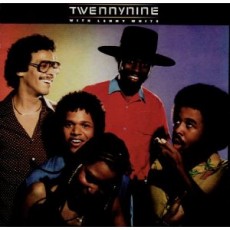
After the breakup of Return To Forever, Lenny White headed several fusion projects but none of the Nemperor and Elektra recordings found much traction in popularity, even amongst the funk crowd. In 1979 he formed the group “Twentynine” that achieved some notoriety. However, his work with the Echoes Of An Era and Griffith Park all-star groups have been received with acclaim and success.
Lenny has led fifteen albums as a leader and another two-dozen as a valuable sideman for a wide variety of projects. He continues to perform, record and tour.
More Posts: drums