From Broadway To 52nd Street
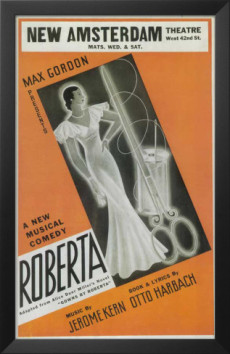
Roberta opened at the New Amsterdam Theater on November 11, 1933. It ran 295 performances with music by Jerome Kern, and lyrics and book by Otto Harbach. The show starred Tamara Drasin, Bob Hope, George Murphy, Ray Middleton, Fay Templeton and Fred MacMurray. The musical comedy was based on the novel Gowns by Roberta by Alice Duer Miller and is set in a fraternity house at Haverhill College. From the play came songs like Yesterdays, Smoke Gets In Your Eyes and The Touch Of Your Hand that have become jazz standards.
The Story: Set in a fraternity house at Haverhill College: A deposed Russian princess has become a famed Parisian couturier. Her partner passes away leaving her half of the business to American football player Randolph Scott–who of course knows next to nothing about the gown business, and couldn’t care less anyway. The former girlfriend of the bandleader poses as a phony Polish countess. Men are chasing women who are chasing men as flirtations involved all.
Jazz History: By the time Roberta premiered on Broadway, the nation was buckling under the devastation of The Great Depression. Twenty-five percent of the workforce was jobless, and up to 60 percent of African American men had no work. Cities became crowded with people searching for work after farms began to whither and rot. Black musicians were not allowed to do studio or radio work. However, jazz music was resilient. While businesses, including the record industry, were failing, dance halls were packed with people dancing the jitterbug to the music of big bands, which would come to be called swing music.
Swing bands attracted throngs with their intensity, playing fast and loud blues riffs and featuring virtuosic soloists. All of a sudden, thanks to musicians such as Coleman Hawkins, Lester Young and Ben Webster, the tenor saxophone became the instrument most strongly identified with jazz.
In Kansas City, pianist Count Basie began building an all-star big band after Benny Moten, a well-known bandleader died in 1935. Basie featured Lester Young, giving rise to the saxophonist’ career as an innovator, and also bringing exposure to an aggressive and bluesy vein of jazz that filled the clubs of the Midwest.
Sponsored By

www.whatissuitetabu.com
More Posts: broadway
Daily Dose Of Jazz…
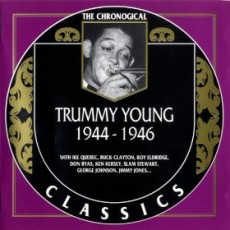
Trummy Young was born James Young in Savannah, GA on January 12, 1912 but grew up in Washington, DC. He originally started out as a trumpeter but by the time he debuted in 1928, he had switched to trombone and soon became one of the finest trombonists of the swing era. From 1933 to ’37 Young was a member of Earl Hines’ orchestra and later joined Jimmie Lunceford from ‘37 to 1943.
Although he was never really a star or bandleader, Trummy had one hit with his version of “Margie” and with Sy Oliver wrote the tune “Tain’t What You Do (It’s The Way You Do It)” that became a hit for both Lunceford and Ella Fitzgerald in 1939.
Young played with Charlie Parker and Dizzy Gillespie on a Clyde Hart led session in 1945 and with the Jazz At The Philharmonic. In 1952 he joined the Louis Armstrong All Stars and stayed a dozen years recording St. Louis Blues in ’54 and performing in the 1956 musical High Society. 1964 saw Young quitting the road to settle in Hawaii where on September 10, 1984 he succumbed to a cerebral hemorrhage.

More Posts: trombone
Daily Dose Of Jazz…
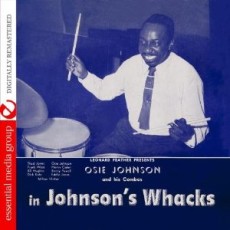
Osie Johnson was born James Johnson in Washington, DC on January 11, 1923. He started his drumming career in 1941 in Boston with the Sabby Lewis band and then during the war years in the Navy Band. Upon discharge from the service he freelanced around Chicago until he joined the Earl Hines band from 51-53.
He played stints with Dorothy Donegan and Illinois Jacquet prior to becoming one of the most in-demand drummers in the 50’s and first half of the 60’s in New York. As a busy session musician working with the likes of Coleman Hawkins, Dinah Washington, Wes Montgomery and Sonny Stitt, Paul Gonsalves, Zoot Sims and Mose Allison among the many who’s who list of musicians he kept time for.
On February 10, 1966 drummer, composer, arranger and singer Osie Johnson, who made a countless recordings as a leader and studio musician, passed away in New York City at the age of 43.

Daily Dose Of Jazz…
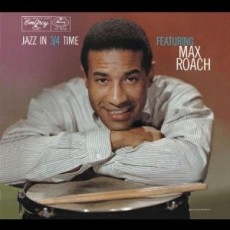
Max Roach was born Maxwell Lemuel Roach into the musical family of Alphonse and Cressie Roach on January 10, 1924 in the township of Newland in Pasquotank County, North Carolina. At the age of 4 the family moved to Bedford–Stuyvesant in Brooklyn, New York and few years later he was playing bugle and by 10 he was drumming in gospel bands. Upon graduation from Boy’s High School in 1942, the eighteen year old was called up to the majors filling in for Sonny Greer in the Duke Ellington Orchestra.
Roach’s most significant innovations came in the 1940s, when he and jazz drummer Kenny Clarke devised a new concept of musical time. By playing the beat-by-beat pulse of standard 4/4 time on the “ride” cymbal instead of on the thudding bass drum, Roach and Clarke developed a flexible, flowing rhythmic pattern that allowed soloists to play freely. The new approach also left space for the drummer to insert dramatic accents on the snare drum, “crash” cymbal and other components of the trap set. By matching his rhythmic attack with a tune’s melody, Roach brought a newfound subtlety of expression to his instrument.
Max along with Kenny Clarke were the first drummers to play bebop and performed in the bands of Dizzy Gillespie, Thelonious Monk, Coleman Hawkins, Bud Powell, Charles Mingus, Sonny Rollins, Clifford Brown, Duke Ellington, Miles Davis and Charlie Parker. He played on many of Parker’s most important records including the Savoy 1945 session, a turning point in recorded jazz.
Roach went on to lead his own groups, and made numerous musical statements relating to the Black civil rights movement. He once observed, “In no other society do they have one person play with all four limbs.” Jazz percussionist, drummer, composer and innovator Max Roach left the jazz world on August 16, 2007.

More Posts: drums
Daily Dose Of Jazz
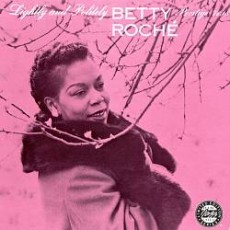
Betty Roché was born in Wilmington, Delaware on January 9, 1920. She began her career by taking the amateur contest on the famed stages of the Apollo Theatre in Harlem. Famous for her strong, dramatic way of singing the blues, she sang with the Savoy Sultans in 1941 and then joined Duke Ellington two years later replacing Ivie Anderson just days before his Carnegie concert.
Betty rose to the occasion to critical acclaim performing a section of Black, Brown & Beige. But it was her rendition of Take The “A” Train that gained her greatest fame. She performed it in the 1943 film “Reveille With Beverly” but because of WWII it would be nearly a decade later before she would record the tune.
Roché performed and recorded with pianist Earl ‘Fatha’ Hines, trumpet master Clark Terry and pianist/singer Charles Brown. In the late 50’s and early 60’s she recorded for both Bethlehem and Prestige and her contribution to the jazz scene is larger than most think as she is credited with being a major influence on bebop singers and the public’s ability to deal with the musical adventure.
Vocalist Betty Roché, known for her blues and jazz renderings, died on February 16, 1999.

More Posts: vocal