
Daily Dose Of Jazz…
Eddie Heywood was born Edward Heywood, Jr. on December 4, 1915 in Atlanta, Georgia. Following in his father’s jazz footsteps, in through the Thirties he played with Waymon Carter, Clarence Love and Benny Carter once he moved to New York in 1939.
After starting his band, Heywood was an occasional sideman with Billie Holiday in 1941. By 1943 he was taking several classic solos on a Coleman Hawkins quartet date and put together the first sestet with Doc Cheatham and Vic Dickerson. Their version of “Begin the Beguine” became a hit in 1944 and three successful years followed.
Between 1947 and 1950, Eddie was stricken with a partial paralysis of his hands and could not play at all. However, it did not stop him when he made a comeback later in the decade. During the Fifties he composed and recorded “Land of Dreams” and “Soft Summer Breeze” and is probably best known for his 1956 recording of his composition “Canadian Sunset,” all of which he recorded with the Hugo Winterhalter Orchestra.
After a second partial paralysis in the 1960s, he made another comeback and continued his career in the 1980s. Pianist Eddie Heywood, who passed away on January 3, 1989 in Miami Beach, Florida, was awarded a star at 1709 Vine Street on the Hollywood Walk of Fame.
Eddie Heywood: 1915-1989 / Piano

More Posts: piano

Daily Dose Of Jazz…
Paul Lingle was born on December 3, 1902 in Denver, Colorado and began on piano at age six. He first played professionally in the San Francisco area in the 1920s, later becoming a local legend in the Bay area in the Forties. He often accompanied Al Jolson in the late 1920s, including recording for his film soundtracks.
In the 1930s Paul worked mainly on radio, and also played with Al Zohn’s band. He tuned pianos early in the 1940s and worked as a soloist in local San Francisco clubs, accompanying visiting musicians such as Leadbelly and Bunk Johnson.
Lingle moved to Honolulu, Hawaii in 1952, where he played until his death on October 30, 1963. A talented stride pianist that also played ragtime, he released almost no recorded material during his lifetime, doing only one session for Good Time Jazz in 1952. Euphonic Records posthumously released several volumes of private recordings that were critically acclaimed.

More Posts: piano
Daily Dose Of Jazz…
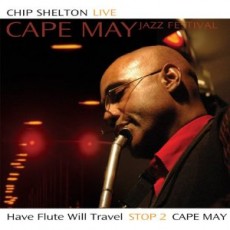
Chip Shelton was born Clarence Elmo Shelton, Jr. on December 2, 1944 in Welch, West Virginia. He studied drums with his multi-instrumentalist record collector father from age 5 to 7. He studied piano from age 8 to 11 and clarinet from age 11 to14 and finally settled on flute. A well-rounded student he found time to participate in choir, dance and sports.
Shelton attended high school in Dayton, Ohio, followed by 3 years of pre-med at University of Cincinnati, experimenting with his own brand of self-taught improvisation on piano, clarinet, and saxophone. At age 20, he became more focused musically and while at Howard University he jammed with notables like Donny Hathaway, Sherry Winston, and Lloyd McNeil, and led his own straight-ahead jazz quintet, the “DMZ Revisited”.
At age 24 Chip moved to New York, studying and/or performed with Bill Barron, James Moody, Hank Mobley, Irene Reid, Jimmy Ponder, Frank Foster, Jimmy Heath, Frank Wess, Hubert Laws, Ernie Wilkins, Joe Newman, and many others around New York and New Jersey.
Chip Shelton has gone on to perform live alongside Greg Bandy, Peter Bernstein, Philip Harper, Herman Foster, Lou Donaldson, and TK Blue. In the 90s he would record for with Rise Up Label, Satellites Records, and performed with Louis Hayes, Bob Baldwin, Roy Ayers, Roy Merriwether, John Hicks, Lynn Seaton and numerous others. He has recorded nearly a dozen albums and continues to compose, perform and tour.

More Posts: flute
Daily Dose Of Jazz…
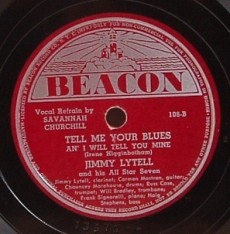
Jimmy Lytell was born on December 1, 1904 in New York, NY. His first professional experience came at age twelve, and by the beginning of the 1920s he was recording with early jazz ensembles. Jimmy played in the Original Indiana Five in 1921 and the Original Memphis Five from 1922 – 1925, and also played in the Original Dixieland Jazz Band for two years beginning in1922.
After the 1920s Lytell rarely performed in jazz settings, spending more time as a studio and orchestra musician. He worked as a staff musician for NBC during this time. From 1949 into the late 1950s he appeared in the New Original Memphis Five revival band, and recorded with Connee Boswell late in the 1950s.
As a leader, he recorded 18 titles during the Roaring Twenties and six more for London Records in 1950. Clarinetist Jimmy Lytell, player of Dixieland and early jazz continued to perform up until a year before his death on November 28, 1972 in Kings Point, New York.

More Posts: clarinet
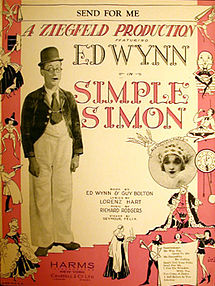
From Broadway To 52nd Street
As the decade of despair opens, Broadway opens another musical to lift the spirits of a theatre going society on February 18, 1930 the Ziegfeld Theatre unveils Simple Simon, starring Ed Wynn as a waif who dreams in fairy tales. Wynn played Ziegfeld Follies until butting heads with W.C. Fields who let the back end of a pool cue down on Wynn’s head with a mighty thwack. He went on to sprout into his repertoire inane inventions like a pair of eyeglasses with a windshield to protect you when you ate grapefruit. But from the play Simple Simon, which ran for 135 performances, came the song Dancing on the Ceiling and He Was Too Good For Me composed by Richard Rodgers and Lorenz Hart. The two songs, however, were dropped from the show before the New York opening but get their perpetual encores as jazz standards.
Jazz History: Before the Onyx Club came to life on 52nd Street, Joe Helbock, who may justly claim to be the grandfather of The Street, was bootlegging there in 1927 and ’28 and sold to notables such as Teddy Roosevelt, Babe Ruth, Will Rogers, Marilyn Miller and Jimmy Walker. He hung out with Jimmy Dorsey, Paul “Pops” Whiteman and Roy Bargy at a “speak” called Plunkett’s where all the musicians hung out. In 1927 he opened the Onyx on the parlor floor in the rear of the brownstone at 35 W. 52nd with his partner Fred Hoetter, giving the club its name because of the black marble bar. They started with Art Tatum, Maxine Sullivan, Louis Prima and Stuff Smith. It wasn’t until 1933 that The Onyx put a steady pianist on payroll for the cocktail hour however Willie “The Lion” Smith disputes this claim. As the story goes, one day in 1930, Joe approached Willie saying “Lion, why don’t you stop by every day around five and I’ll give you a little salary for your trouble?” That deal, the Lion emphasizes, established an engagement of the cocktail hour that launched 52nd Street as the Cradle Of Swing.
Sponsored By

www.whatissuitetabu.com
More Posts: broadway