

Daily Dose Of Jazz…
Wendell Philips Culley was born on January 8, 1906 in Worcester, Massachusetts. He performed locally in Boston, then moved to New York City in 1931 and found early work playing with Horace Henderson and Cab Calloway.
He then spent eleven years in the employ of Noble Sissle, recording with him extensively. Following this he played with Lionel Hampton from 1944 to 1949, and then briefly worked again with Sissle.
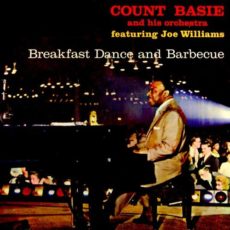
In 1951 he joined the Count Basie Orchestra and until 1959 he recorded twenty albums with the man and toured the world. After his tenure with Basie, he retired from music and pursued a career in insurance. Trumpeter Wendell Culley, who never led a session of his own, passed away on May 8, 1983 in Los Angeles, California. He was seventy-seven years old.

Give The Gift Of Knowledge

#preserving genius
More Posts: trumpet
Daily Dose Of Jazz…
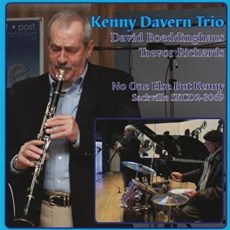
Kenny Davern was born John Kenneth Davern on January 7, 1935 in Huntington, Long Island, New York of Austrian-Irish ancestry. After hearing Pee Wee Russell the first time, he was convinced that he wanted to be a jazz musician and at the age of 16 he joined the musician’s union, first as a baritone saxophone player. In 1954 he joined Jack Teagarden’s band, and after only a few days with the band he made his first jazz recordings.
He would later work with bands led by Phil Napoleon and Pee Wee Erwin before joining the Dukes of Dixieland in 1962. The late 1960s found him free-lancing with, among others, Red Allen, Ralph Sutton, Yank Lawson and his lifelong friend Dick Wellstood.
Davern had taken up the soprano saxophone, and when a spontaneous coupling with fellow reedman Bob Wilber at Dick Gibson’s Colorado Jazz Party turned out be a huge success, one of the most important jazz groups of the 1970s, Soprano Summit, was born. The two co-led the group switching between the clarinet and various saxophones, and over the next five years Soprano Summit enjoyed a very successful string of record dates and concerts. When the group disbanded in 1979, he devoted himself to solely playing clarinet, preferring trio formats with piano and drums.
He revived his collaboration with Bob Wilber in 1991 and the new group was called Summit Reunion. Leading quartets since the 1990s, Kenny preferred the guitar to the piano in his rhythm section, employing guitarists Bucky Pizzarelli, Howard Alden and James Chirillo. He appeared numerous times at the Colorado Springs Invitational Jazz Party; in 1997 he was inducted into the Jazz Hall of Fame at Rutgers University, and in 2001 he received an honorary doctorate of music at Hamilton College, Clinton, New York.
Mainly playing in traditional jazz and swing settings, he ventured into the free-jazz genre collaborating in 1978 with avant-garde players Steve Lacy, Steve Swallow and Paul Motian that produced the album titled Unexpected. He also held an ardour and knowledge of classical music. Clarinetist Kenny Davern passed away of a heart attack at his Sandia Park, New Mexico home on December 12, 2006.
Put A Dose In Your Pocket
#preserving genius
Daily Dose Of Jazz…
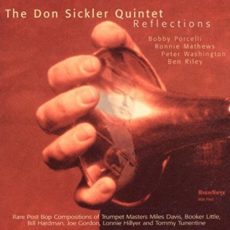
Don Sickler was born on January 6, 1944 in Spokane, Washington and with his mother’s guidance, an accomplished teacher, started learning accordion and piano at the age of four. At five he wrote his first composition that his parents published in their Sickler Accordion Course books. Taking up the trumpet at age ten, two years later he formed his first jazz combo and by 1957 was leading a nonet, playing for school and college dances. He went on to matriculate through Gonzaga University and the Manhattan School of Music in 1970 with a Master’s Degree in Trumpet Performance.
In New York he played commercially, subbed in Broadway show bands, played in rehearsal bands and jazz lofts though he turned towards music publishing. Don began working at E.B. Marks Music as music editor to managing editor, then moved to production manager of United Artists Publishing’s print division. Though they controlled the music catalogues of Blue NOte and Pacific Records that shaped much of his early life, he became disillusioned by the lack of corporate priority given to jazz. So he left and established his own publishing companies: Second Floor Music and 28th Street Music, which have published the works of over 350 jazz composers including Hank Mobley, Kenny Dorham, Bobby Timmons, Gigi Gryce, James Williams, Bobby Watson and a list too long to name.
After a seven-year hiatus Sickler resumed his playing career by collaborating with Philly Joe Jones that lasted for five years. This association afforded him opportunities to play with Art Blakey, Billy Higgins, Roy Haynes, Ben Riley and Charli Persip and other great players on every instrument. By 1982 he and Philly Joe created Dameronia, an all-star tribute band to Tadd Dameron, releasing two critically acclaimed albums and he transcribed all arrangements.
He would go on to release albums as a leader with Jimmy Heath, Cedar Walton, Ron Carter, Billy Higgins, Roy Hargrove, Mulgrew Miller, Bobby Watson, Ralph Moore, Wallace Roney, Clark Terry, Grover Washington, Joe Henderson, and Renee Rosnes. As a sideman he has worked with Herbie Hancock, Frank Wess, Wayne Shorter, Christian McBride, Larry Coryell Freddie Redd and Superblue.
Trumpeter, arranger, producer, publisher, music director and educator Don Sickler has won five Grammy Awards beginning with Joe Henderson’s Lush Life in 1992 and has been nominated several times that include J. J. Johnson’s The Brass Orchestra. His tribute album Monk on Monk was DownBeat Magazine’s 1998 Album of the Year. He is currently the musical director for the annual Thelonious Monk International Jazz Instrumental Competition for the Thelonious Monk Institute, conducts workshops, master classes and teaches trumpet, jazz arranging and composition at Columbia University.
Sponsored By

#preserving genius
More Posts: trumpet
Daily Dose Of Jazz…
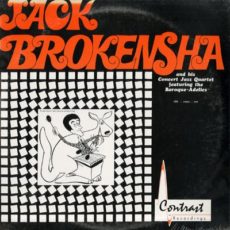
Jack” Brokensha was born John Joseph Brokensha on January 5, 1926 in Nailsworth, South Australia. He studied percussion under his father, and played xylophone in vaudeville shows and on radio. He played with the Australian Symphony Orchestra during the war years from 1942–44, and then joined a band in the Air Force from 1944 to 1946.
Forming his own group, Jack began performing in Melbourne in 1947, moving around Australia and playing in Sydney from 1949 to mid–50, Brisbane later in 1950 and Adelaide in 1951. By 1953 he had moved to Windsor, Ontario, Canada with Australian pianist Bryce Rohde and together they formed the Australian Jazz Quartet/Quintet. They enlisted fellow Australian bassoonist/saxophonist Errol Buddle and American saxophonist/flutist/bassist Dick Healey to complete the ensemble that toured together until 1958 and often grew to quintet /sextet to record.
Leaving Canada for Detroit, Michigan, Brokensha was hired by Berry Gordy of Motown Records as a percussionist, becoming one of the few white members of Motown’s Hitsville U.S.A. recording studio’s house band, The Funk Brothers. He was given the nickname “White Jack”, to distinguish him from Jack Ashford, an African American percussionist nicknamed “Black Jack”.
During the 1970s he ran “Brokensha’s”, a steakhouse high up in a Downtown Building whilst working at Motown. Though relatively small, the club had good food and Jack’s great music, with occasional appearance by his friend and pianist Detroit resident, pianist Bess Bonnier. Following tours of Australia with Sammy Davis, Jr. and Stan Freberg, he founded his own music production company and did a session with Art Mardigan in 1963. Jack then became more active in radio as a disc jockey and writing music for television. He recorded as a leader again in 1980 and continued to lead his own group well into the 1990s. The Australian Jazz Quartet also reunited for tours and recording in 1994, leaving a small collection of some thirteen albums as a leader and member of the quartet.
Vibraphonist Jack Brokensha moved to Sarasota, Florida, where he passed away due to complications from congestive heart failure, at age 84 on October 28, 2010.

#preserving genius
More Posts: drums,vibraphone
Daily Dose Of Jazz…
Alan Littlejohn was born Albert John Alan Littlejohns on January 4, 1928 in Highgate, London, England. Taking up the trumpet in 1946, he trained as an accountant after the War but also played semi-professionally with bands such as the Blue Note Swingtet and the Galleon Jazz Band. In 1952 he joined Cy Laurie and then a year later moved to play with Eric Silk. Moving to Manchester for eight months he worked with Ron Simpson and the Saints Jazz band in 1954, but then returned to London to work with Eric Silk again.
1955 saw Littlejohn taking a residency at the Putney Jazz Club and a further residency in Chelsea in 1960. In 1963 he led a quintet with trombonist Tony Milliner, pianist Mat Mathewson, bassist Bucky Cowman and Terry Cox on drums, emulating the style of the Bob Brookmeyer/Clark Terry band. Cox and Cowman were soon replaced by Max Cutlan and Dave Holland, respectively.
Over the course of his career Alan would play with Mal Cutlan, Lew Hooper, Jimmy Hamilton, Matt Methewson, Cat Anderson, Peanuts Hucko, Earl Warren, Sonny Dee, the Georgia Jazz Band and to be the support band for Dave Brubeck at his Festival Hall gig. From 1973 to 1978, he played with Alvin Roy’s Band which had a residency at The Prospect of Whitby in London.
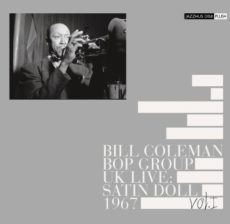
When not in residency at clubs in London Littlejohn toured Spain and Germany, guest appeared with the Merseysippi Jazz Band and during the Eighties played as a full-time professional musician for a short period. From 1990 he worked with Laurie Chescoe’s Good Time Jazz until a month before his death. Trumpeter, flugelhornist and bandleader Alan Littlejohn, most notable for his work with artists such as Ben Webster, Earl Hines, Billy Butterfield and recording with Bill Coleman, passed away on November 12, 1995 in Barnet in Hertfordshire.
Uplift Someone’s World
#preserving genius
More Posts: flugelhorn,trumpet