

Daily Dose Of Jazz…
Gene Perla was born on March 1, 1940 in Woodcliff Lake, New Jersey. He studied piano at Berklee School of Music and Boston Conservatory before switching to bass.
In 1969 Perla played with Woody Herman, as well as Thad Jones/Mel Lewis, Sarah Vaughan, Miles Davis, Nina Simone, Jeremy Steig, Elvin Jones and Sonny Rollins in the early Seventies.
During the decade Gene founded PM Records and later headed Plug Records and under his leadership the labels recorded Dave Liebman, Elvin Jones, Steve Grossman, Pat La Barbera and Jerry Bergonzi. Forming the Stone Alliance with Grossman and Don Alias in 1975, he continues to perform.
As a sideman he has recorded several albums with Frank Foster, Elvin Jones and Mickey Tucker. Bassist Gene Perla currently teaches at Lehigh University and the New School of Jazz & Contemporary Music.

Dose A Day-Blues Away
More Posts: bass
Daily Dose Of Jazz…
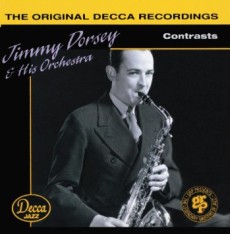
James Dorsey was born on February 29, 1904 in Shenandoah, Pennsylvania. Known as “JD”, he played trumpet in his youth and appeared on stage with J. Carson McGee’s King Trumpeters in 1913 at age nine. He switched to alto saxophone two years later, then learning to double on the clarinet.
With his brother Tommy playing trombone, he formed Dorsey’s Novelty Six, one of the first jazz bands to broadcast. In 1924 he joined the New York City based California Ramblers with Paul Whiteman and Red Nichols, did freelance radio and recording work throughout the 1920s and joined the Ted Lewis band, with whom he toured Europe.
He went on to work with Rudy Vallee and other bandleaders, continued with the Dorsey Brothers Orchestra, appeared on seventy-five radio broadcasts, breaking with his brother changed the band to the Jimmy Dorsey Orchestra with Bobby Byrne, Ray McKinley, Donald Matteson, Skeets Herfurt, and vocalists Bob Eberly and Kay Weber, later hiring Helen O’Connell.
In the fifties he rejoined his brother under the auspices of Tommy Dorsey and His Orchestra featuring Jimmy Dorsey, appeared on Jackie Gleason’s show and got their own weekly variety program Stage Show, produced by Gleason.
Jimmy took over leadership of the orchestra after Tommy’s death but only survived a few months passing away from throat cancer at age 53 in New York City on June 12, 1957.
Jimmy received a gold record for the Herst/Sharpe composition So Rare, made Latin flavored records that topped the charts in 1941, appeared in several movies including their own bio-pic The Fabulous Dorseys, composed the classic tune I’m Glad There Is You, as well as a host of others collaborating with Jimmy Van Heusen, Sonny Burke, Frankie Trumbauer and Babe Russin to name a few.
Saxophonist Jimmy Dorsey is considered one of the most important and influential alto saxophone players of the Big Band and Swing era, had several #1 hits, honored with a U.S. postal stamp, had his recording of Brazil (Aquarela do Brasil) into the Grammy Hall of Fame, and was inducted into the Big Band and Swing Hall of Fame.
Daily Dose Of Jazz…
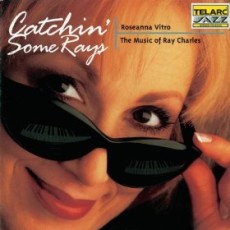
Roseanna Elizabeth Vitro was born in Hot Springs, Arkansas on February 28, 1951 and began singing at an early age, drawing inspiration from various musical genres like gospel from her mother’s side of the family, rock and R&B, theatre and classical. During the 1950s, her father owned a nightclub in Hot Springs called The Flamingo and he loved Dean Martin’s music and opera. . By the 1960s, Vitro was determined to be a rock singer.
She was exposed to jazz and it became her genre of choice after moving to Houston in the 1970s. It was there that Ray Sulienger discovered her and voice coached her and presented her to the Houston Jazz Community. Vitro sang frequently with tenor Arnett Cobb.
She worked for two years in Houston’s Green Room with her group Roseanna with Strings and Things, hosted a radio show on KUHF-FM, featuring guests like Cobb. Many jazz greats stopped in and played with Strings and Things, like Oscar Peterson, Bill Evans, Tommy Flanagan and Keter Betts. Encouraged to dedicate herself to jazz, in 1978 Roseanna moved to New York City with guitarist Scott Hardy and began to study with Professor Gabore Carellia at the Manhattan School of Music.
Vitro started performing with Kenny Werner and Fred Hersch, sat in with and ultimately toured with Lionel Hampton, and appeared at all the major New York jazz clubs. She also appeared with Steve Allen, recorded an album of his compositions and performed and recorded live with Kenny Werner at the John F. Kennedy Center in Washington, DC.
Throughout her career she has collaborated and recorded with Christian McBride, Elvin Jones, Gary Bartz, Kevin Mahogany, and David “Fathead” Newman. She has thirteen albums under her belt and a Grammy nomination for Best Jazz Vocal Album for The Music of Randy Newman. She has been inducted into the Arkansas Jazz Hall of Fame, a U.S. Jazz Ambassador for The John F. Kennedy Center and U.S. State Department, and The Rhythm Road: American Music Abroad featured artist with her band JazzIAm.
As an educator Roseanna Vitro has taught Vocal Jazz at State University of New York at Purchase and currently at New Jersey City University and the New Jersey Performing Arts Center. As a clinician she holds frequent workshops, clinics and master classes.
Give The Gift Of Knowledge
More Posts: vocal
Daily Dose Of Jazz…
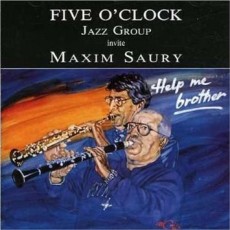
Maxim Saury was born in Enghien-les-Bains, in the Val-d’Oise, France on February 28, 1928. The son of a professional violinist, Andrew “Kiki” Saury, he first took violin lessons between 1940 and 1942, but not suiting him, he turned to the clarinet.
In 1946, he joined the orchestra of Christian Azzi and the following year joined Claude Bolling before leaving in 1949 to mount a trio in 1951. Between 1955 and 1968, Saury played almost exclusively at Caveau de la Huchette in Paris, performed at all the major French jazz festivals including Cannes, Antibes, Nice and Juan-les-Pins.
Maxim represented the middle of French traditional jazz and was invited to perform on television shows and also appear in several films made in the late 1950s and early 1960s, particularly Otto Preminger’s Bonjour Tristesse, The Cheaters by Marcel Carne, My Uncle by Jacque Tati and Jacques Rozier’s Adieu Philippine.
Since the late 1960s, Maxim Saury performed regularly in concert in France and worldwide. In 2007, he was one of few performers selected for the four volume compilation The 100 Greatest Success of Saint-Germain-des-Prés , alongside Yves Montand, Boris Vian, Juliette Greco, Les Freres Jacques, Catherine Sauvage, Sidney Bechet, Marcel Mouloudji and Stephane Grappelli.
Clarinetist, conductor and arranger Maxim Suary, one of the symbols of revival of New Orleans jazz in Saint Germain-des-Pres during the Fifties and Sixties, passed away at the age of eighty-four, on November 15, 2012 at the Ambroise Pare Hospital in Boulogne-Billancourt, following heart problems.
Put A Dose In Your Pocket
More Posts: clarinet
Daily Dose Of Jazz…
William Russell was born Russell William Wagner on February 26, 1905 in Canton, Missouri. He learned to play the violin and throughout his career contributed to many a performance. When he decided to become a classical music composer he changed his name, transposing first and second and dropping his last.
He was a leading figure in percussion music composition, influenced by his acquaintances John Cage and Henry Cowell. In turn, he also influenced Cage, in his emphasis of percussion. During the 1930s, predating Cage’s main work, Russell’s percussion works called for vernacular textures such as Jack Daniels bottles, suitcases, and Haitian drums, and pianos.
One notable performance of his Fugue For Eight Percussion Instruments took place in 1933 at Carnegie Hall, with the ubiquitous and influential critic-writer-performer Nicholas Slonimsky conducting. These performances took place under the auspices of the Pan-American Association of Composers, an organization that was composed of Cowell, Slonimsky Ruth Crawford Seeger, Edgard Varese and other luminaries of American ultra-modernism.
Bill was also one of the leading authorities on early New Orleans jazz, authoring articles and books, including three essays in the milestone book, Jazzmen and the voluminous 720-page Jelly Roll Morton scrapbook, Oh, Mr. Jelly. He made many recordings of historical interest, founded American Music Records, helping bring many forgotten New Orleans performers, including Bunk Johnson back to public attention and became an important force in the New Orleans jazz revival of the early 1940s.
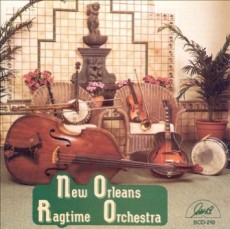
Moving to the French Quarter of New Orleans in 1956, he opened a small record shop from which he also repaired violins. Russell played violin with the New Orleans Ragtime Orchestra, co-founded and became the first curator of The Hogan Jazz Archive at Tulane University in 1958,
Russell collected a large quantity of material related to the history of New Orleans, early jazz, ragtime, blues, and gospel music, all of which he kept in his French Quarter apartment. During his lifetime he always was willing to share access to the material with serious researchers.
At his death on August 9, 1992, Bill Russell, the single most influential figure in the revival of New Orleans jazz that began in the 1940s, bequeathed his collection to the Historic New Orleans Collection, where it continues to be a valuable resource for researchers in the city that became his last home.
Jazz Is Global – Share