Daily Dose Of Jazz…
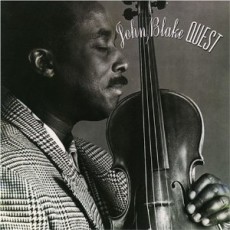
John Blake, Jr. was born in Philadelphia, Pennsylvania on July 3, 1947 and began studying violin in that city’s public school system and at the Settlement Music School. Graduating from West Virginia University, his postgraduate work was at the Institute for Advanced Studies in Montreux, Switzerland prior to receiving a grant to study studied East Indian music.
Classically trained, Blake first gained recognition on early-’70s recordings he made with Archie Shepp and in the mid-70s became established with a global audience during three years recording and touring as a member of Grover Washington, Jr.’s popular “crossover” jazz band. He then spent five years working extensively as a member of various ensembles led by pianist McCoy.
John is a four-time winner of the Down Beat Critics’ Poll Violinist Deserving Wider Recognition category he was also one of the top two jazz violinists in the 49th, 50th, and 51st Down Beat Readers’ Poll. He has performed and/or recorded with are the Duke Ellington Orchestra, Turtle Island String Quartet, Quartet Indigo, the Steve Turre Sextet, the Billy Taylor Trio, Avery Sharpe, Cecil McBee, Jay Hoggard and James Newton.
In addition to being a prominent violinist leading his own quartet, sideman and session player, John is an accomplished composer, arranger and producer as well as an author, educator and lecturer who presents hundreds of workshops annually to musicians at all levels. Violinist John Blake continues to perform, record and tour and lecture.

Give A Gift Of Jazz – Share
Daily Dose Of Jazz…
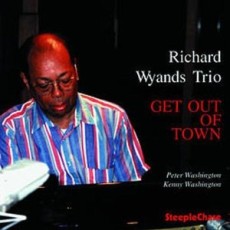
Richard Wyands was born July 2, 1928 in Oakland, California and started working in local clubs when he was 16, graduated from San Francisco State College, and gained experience playing in the San Francisco Bay area.
Although his chordal voicings are a little reminiscent of Red Garland, he spent most of his career as a sideman playing a few early dates for Fantasy and accompanying Ella Fitzgerald and Carmen McRae in 1956. A move to New York in 1958 afforded him the opportunity to gig with Roy Haynes, Charles Mingus, Gigi Gryce’s quintet, Oliver Nelson, Etta Jones, Eddie “Lockjaw” Davis, and Gene Ammons, among others.
Wyands’ association with Kenny Burrell had him playing and touring extensively from 1964-1977. He has played with many other top musicians, including Freddie Hubbard, Zoot Sims, Frank Foster, the Illinois Jacquet Big Band, Benny Carter, Ernie Andrews, and Milt Hinton, among others.
Pianist Richard Wyands has also headed his own trios, but has only had a handful of sessions as a leader including dates for Storyville, DIW and Criss Cross. The hard bop pianist is best known as a sideman, has led a few of his own trios and continues to perform and tour.
Jazz Is Global – Share
More Posts: piano
Daily Dose Of Jazz…
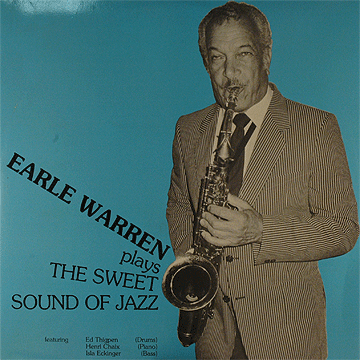
Earle Warren was born on July 1, 1914 in Springfield, Ohio. He was the primary alto saxophonist and occasional singer in the Basie orchestra in its formative years and its heyday, from 1937 to the end of the 1940s. After the break-up of Basie’s 1940s band, in 1949, he worked with former Basie trumpeter, Buck Clayton.
Earle also played some rock´n roll working for Alan Freed in Alan Freed’s Christmas Jubilee, December 1959, which was the very last big Alan Freed show before payola put an end to the legendary Freed. He also appeared in the 1970s jazz film of Count Basie and his band, “Born to Swing”.
In his later years, Warren performed often at the West End jazz club at 116th and Broadway in New York City, helming a band called The Countsmen, which also featured fellow former Basie-ite Dicky Wells on trombone and Peck Morrison on bass. He lived part of the time in Switzerland where he fathered a child in a May/September romance. Alto saxophonist Earle Warren passed away on June 4, 1994.
Put A Dose In Your Pocket
Daily Dose Of Jazz…
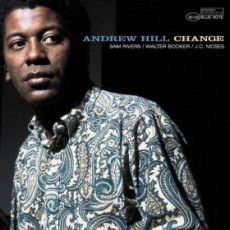
Andrew Hill was born June 30, 1931 in Chicago, Illinois and took up the piano at the age of thirteen, and was encouraged by Earl Hines. He studied informally until 1952. While a teenager he performed in rhythm and blues bands and toured with jazz musicians, including Charlie Parker and Miles Davis.
Hill first recorded as a sideman in 1954, but made his reputation recording as a leader for Blue Note from 1963 to 1970, featuring important post-bop musicians including Joe Chambers, Richard Davis, Eric Dolphy, Bobby Hutcherson, Joe Henderson, Freddie Hubbard, Elvin Jones, Woody Shaw and Tony Williams.
Hill is recognized as one of the most important innovators of jazz piano in the 1960s but rarely worked as a sideman after the 1960s, preferring to play his own compositions, which may have limited his public exposure.
As an educator he held positions at Portland State University, held residencies at Colgate University of Hamilton, Wesleyan University, University of Michigan, University of Toronto, Harvard University and Bennington College.
Returning to New York City in 1990, composer and pianist Andrew Hill, whose unique idiom of chromatic, modal and free improvisation, made his final public appearance on March 29, 2007 at Trinity Church. Suffering from lung cancer during his later years he died in his home on April 20, 2007. In May 2007, he became the first person to receive a posthumous honorary doctorate from Berklee College of Music.
Give The Gift Of Knowledge
Daily Dose Of Jazz…
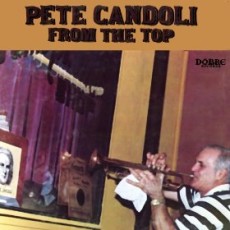
Pete Candoli was born Walter Joseph Candoli in Mishawaka, Indiana on June 28, 1923. And his professional career began 13 years later when he became a member of the American Federation of Musicians. Quickly finding a spot as lead trumpeter, by 1940 had become a member of Sonny Dunham’s band, a year later in Tommy Dorsey’s band and during this time from ’41 to ’43 he performed in three films – Las Vegas Nights, Girl Crazy and Upbeat In Music. By 1944 he was playing with the Teddy Powell and bringing his younger brother Conte into the major leagues of big band.
After 1945, Candoli worked with several bands including Stan Kenton’s, then drifted into the West Coast jazz and studio scenes. Despite his range, he rarely played lead, reserved instead for feature roles and became a sought after studio musician and favorite collaborator of many influential musicians and performers, including Peggy Lee, Henry Mancini and Frank Sinatra.
Pete was inducted into The International Jazz Hall of Fame in 1997, the “Big Band Hall of Fame” in 2003 and won the Down Beat, Metronome and Esquire “All American Band Trumpet Bronze Award”, and Look magazine named him one of the seven all-time outstanding jazz trumpet players—the others being Louis Armstrong, Bix Biederbecke, Harry James, Bunny Berigan, Dizzy Gillespie and Bobby Hackett.
Candoli’s solo work is notable for his eloquent roles, supportive of the efforts of others, was adroit in the use of staccato and had a reputation for his high-note ability, that was used in West Side Story’s Dance at the Gym sequence. Trumpeter Pete Candoli passed away from complications due to prostate cancer on January 11, 2008.
Dose A Day – Blues Away
More Posts: trumpet