

Daily Dose Of Jazz…
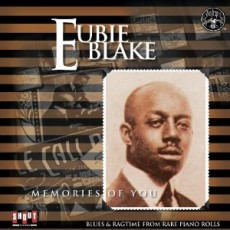
James Hubert Blake was born on February 7, 1887 in Baltimore, Maryland to former slaves and was the only surviving child of eight. Blake’s musical training began when he was just four or five years old when he wandered into a music store, climbed on the bench of an organ, and started “fooling’” around. The store manager recognized his genius, told his mother and subsequently bought an organ.
At seven, he received music lessons from the Methodist church organist, by fifteen he played piano at Aggie Shelton’s Baltimore bordello and got his first big break in the music business when world champion boxer Joe Gans hired him to play the piano at Gans’ Goldfield Hotel, the first “black and tan club” in Baltimore in 1907. In 1912, Blake began playing ragtime in vaudeville with James Reese Europe’s “Society Orchestra” which accompanied Vernon and Irene Castle’s ballroom dance act. Shortly after World War I, Blake joined forces with performer Noble Sissle forming the vaudeville music duo, the “Dixie Duo” that transformed into 1921’s “Shuffle Along”, the first hit musical on Broadway written by and about African-Americans.
Throughout his career Blake made three films with Sissle for Lee DeForest’s Phonofilm Sound-On-Film, later played the Boathouse nightclub in Atlantic City, was bandleader with the USO during World War II, with his career winding down in 1946 enrolled and graduated from New York University, revived in 1950 with new interest in ragtime as artist, historian and educator, received the Presidential Medal of Freedom from President Reagan, awarded numerous honorary doctorates and had another hit Broadway play “Eubie!” in his honor. Eubie Blake continued to play piano and record until his death on February 12, 1983 in Brooklyn, New York. He was 96.
More Posts: piano
Daily Dose Of Jazz…
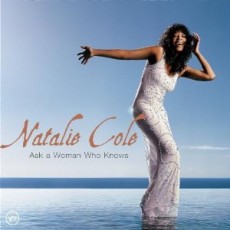
Natalie Maria Cole was born February 6, 1950 in Los Angeles, California the daughter of Nat King Cole and former Ellington Orchestra singer Maria Cole. Exposed to a host of great singers as a child, she first sang on her father’s Christmas album at six and began performing at 11. At 15 she attended Northfield Mount Hermon School followed by University of Massachusetts – Amherst, transferred to University of Southern California, returned to U Mass and graduated with a degree in Child Psychology and a minor in German.
While in college Natalie was singing on weekends and was welcomed on the club circuit in hope of singing her father’s music. However she stayed as far from his music as managers would allow and it was her own style of soul that attracted R&B producers Chuck Jackson and Marvin Yancy. The subsequent partnership produced 1975’s “Inseparable” that garnered her a Grammy for Best R&B Vocal Performance for “This Will Be” and Best New Artist for the album. She returned to pick up Grammy awards in 1976 and 1977 along with two platinum albums and gold singles.
By 1978, she would star in her first television special on CBS to rave reviews and garnered another gold album in the classic Natalie Live set. A string of hits followed with more gold albums but by the early 80s Cole’s career paused as she entered rehab multiple times for heroin and cocaine addiction.
1985 saw her back in good health and on the comeback trail hitting the charts with songs like “Dangerous” and “Pink Cadillac” through the decade culminating with a 1990 performance of “Wild Women Do” on the soundtrack of Pretty Woman. In 1991 she returned to her vocal jazz roots producing her best selling album “Unforgettable…with Love” covering 22 of her father’s greatest hits, again winning several Grammy awards. Her release of several more jazz CDs brought her more recognition with the album “Take A Look” winning a Grammy for Best Jazz Vocal Performance and “When I Fall In Love” from her Stardust album won a 1996 Grammy.
Natalie Cole has received numerous other awards and accolades, has carved out a secondary career in acting both on television and the silver screen, appeared live in concerts or other music-related programs and continued to record and perform until her passing away of congestive heart failure on December 31, 2015.

More Posts: vocal
Daily Dose Of Jazz…
Big Bill Bissonnette was born February 5, 1937 in Bridgeport, Connecticut who became a jazz trombonist and producer. A strong advocate of New Orleans jazz played by Black musicians in the Sixties he led his group The Easy Riders Jazz Band.
During that period Bill also established his own Jazz Crusade label and organized northern tours for such veterans as Kid Thomas Valentine, George Lewis and Jim Robinson. After a period off the jazz scene, Bill successfully published of his 1992 memoirs, “The Jazz Crusade” that told many stories about New Orleans’ musicians.
Bissonnette reactivated his label and began to play trombone again. He has produced and recorded over 100 jazz sessions for his Jazz Crusade label, appearing as trombonist or drummer on over 50 recording sessions of New Orleans jazz.
He has spent much of the 1990s documenting the British jazz scene with his “Best of the Brits” CD series. He published a newsletter several times a year. Trombonist, drummer, producer, bandleader and writer retired from music and now resides in Concord, North Carolina in 2006.
More Posts: bandleader,drums,writer
Daily Dose Of Jazz…
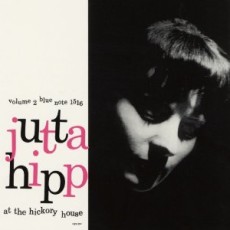
Jutta Hipp was born on February 4, 1925 in Leipzig, Germany. She first studied painting in Germany, but later played jazz during the war and she indicated jazz was important to her during that period. After the war she moved to West Germany due to the Soviet Union working with Hans Zoller and leading a quintet.
In 1954 Jutta played with Attila Zoller where critic Leonard Feather was so impressed with her work that soon after she moved to New York City. She drew some criticism initially from critics who felt she was too similar to her sponsor Horace Silver. In 1956 she played the Newport Jazz Festival and cut a studio album with Zoot Sims that is considered possibly her best.
Hipp went on to work in New York based trios determined to be accepted as an equal amongst her male counterparts, but felt intense nervousness and the anxiety led to her abandoning jazz in 1958. From then on she made her living primarily as a seamstress and returned to her first interest of painting and her portraits of various jazz musicians became popular with musicians.
Although she maintained some contact with musicians like Lee Konitz, she cut herself off from the music industry to the point that by 2000 Blue Note did not know where to send her royalty checks. Jazz pianist Jutta Hipp, who primarily played in the bebop and cool jazz genres during her short musical career, gained new interest after her passing in Queens on April 7, 2003 as a woman instrumentalist in the New York Jazz scene.
More Posts: piano

Daily Dose Of Jazz…
Gregory Tardy was born February 3, 1966 in New Orleans, Louisiana but was reared in Milwaukee, Wisconsin. His interest in music began studying classical clarinet. By high school he excelled in music, winning many awards and scholarships, studying with renowned clarinetists and preparing for a symphony career. Over time he was asked to play saxophone, filling missing gaps in various high school and college ensembles. But it was the prodding of his older brother that made him explore the music of John Coltrane, and decide to follow a jazz path.
Gregory’s passion for the saxophone took over his studies, he moved to St. Louis, played the jazz and blues scene, returned to New Orleans to further study, gigged with the Neville Brothers and ended up in bands led by Nicholas Payton, Jason and Ellis Marsalis. In 1992, Tardy recorded his first solo project “Crazy Love”, was picked up by Elvin Jones Jazz Machine, and moved to New York City.
His performance and recording lists a large array of prominence not limited to Tom Harrell, Dave Douglas, Wynton Marsalis, Jay McShann, Steve Coleman, Betty Carter, James Moody, Ravi Coltrane, Mark Turner, Dewey Redman, Chris Potter, Joe Lovano, Bill Frisell, Rashied Ali and John Patitucci. He has even brought his clarinet out of retirement playing with Andrew Hill, Steve Swallow, Stefan Harris and others.
Tardy continues to explore new territory while keeping in the tradition as he play his own music and perform in many great bands. As an educator he teaches private lessons and facilitates clinics around the world, but always speaking through his horn.