Daily Dose Of Jazz…
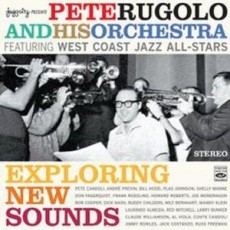
Pete Rugolo was born Pietro Rugolo in San Piero Patti, Sicily, Italy on December 25, 1915. His family emigrated to the U.S. in 1920 and settled in Santa Rosa, California. He began his career in music playing the baritone saxophone, like his father, but he quickly branched out into other instruments, notably the French horn and the piano. He received a bachelor’s degree from San Francisco State College and then went on to study composition at Mills College in Oakland, earning his master’s degree.
After graduation, he was hired as an arranger and composer by guitarist and bandleader Johnny Richards and spent World War II playing with altoist Paul Desmond in an army band. After WWII, Rugolo worked for Stan Kenton, providing arrangements and original compositions that drew on his knowledge of 20th century music, sometimes blurring the boundaries between jazz and classical music.
While Rugolo continued to work occasionally with Kenton in the 1950s, he spent more time creating arrangements for pop and jazz vocalists, most extensively with former Kenton singer June Christy and others like Ernestine Anderson, Harry Belafonte, Nat King Cole, Billy Eckstine, Peggy Lee, The Four Freshman, Mel Torme to name a few.
He would work on MGM film musicals, serve as A&R director for Mercury Records and produce a handful of self-titled albums. Pete’s scores for television and film on The Fugitive, Leave It To Beaver, Run For Your Life and Where The Boys Are often demanded that he suppress his highly original style. However, there are some striking examples of his work in both TV and film such as the soundtrack for his last movie, This World, Then the Fireworks demonstrates his gift for writing music that is both sophisticated and expressive. Pete Rugolo, jazz composer and arranger, died, aged 95, on October 16, 2011 in Sherman Oaks, California.

Daily Dose Of Jazz…
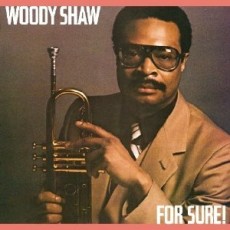
Woody Shaw born December 24, 1944 in Laurinburg, North Carolina with a photographic memory and perfect pitch. Growing up in Newark, New Jersey from the age of one, he began playing bugle at age 9 and performed in the Junior Elks, Junior Mason, and Washington Carver Drum and Bugle Corps. Though not his first choice of instrument, wanting to play the violin, he began studying classical trumpet at Cleveland Junior High School at the age of 11.
Shaw skipped two grades and began attending Newark Arts High School, pursuing an education at Julliard School and his interest in jazz, as his first influences were Louis Armstrong and Harry James. As a teenager, he worked professionally at weddings, dances, and nightclubs. He eventually left school but continued his study of the trumpet under the influence of Dizzy Gillespie, Fats Navarro, Clifford Brown, Booker Little, Lee Morgan and Freddie Hubbard.
In 1963, after many local professional jobs, Woody worked for Willie Bobo with Chick Corea and Joe Farrell before moving to Paris at age 19. There he gigged with Nathan Davis, Bud Powell, Kenny Clarke, Johnny Griffin and Art Taylor. In England he played with Davis, and childhood friends Larry Young and Billy Brooks.
Returning to the States in 1964, Shaw began his career as one of Blue Note Records’ formidable “house” trumpet players. He replaced Carmel Jones in the Horace Silver Quintet, and made his first Blue Note debut on Larry Young’s famed Unity album (1965), upon which three of his compositions “Zoltan”, “Moontrane”, and “Beyond All Limits” would appear.
Over the course of his career he would collaborate frequently and record with Chick Corea, Jackie McLean, Booker Ervin, McCoy Tyner, Andrew Hill, Herbie Hancock, Bobby Hutcherson, Max Roach, Art Blakey & The Jazz Messengers, Onaje Allan Gumbs, Mulgrew Miller, Steve Turre and others. He travelled all over Europe, performed with Max Roach in Iran in 1969, toured Japan, England, Italy, Germany Sweden, Switzerland, Egypt, Sudan, UAE, and India.
He would work as a studio musician and in pit orchestras and on Broadway musicals. He released several albums for Muse and Columbia record labels, was nominated for two Grammy Awards, and was voted Best Jazz Trumpeter of the Year among other accolades and honors. As an educator he taught countless clinics, master classes and private lessons to students around the world, was on the faculty of Jamey Aebersold’s jazz camp, taught Wynton Marsalis, Ingrid Monson, Chris Botti, Wallace Roney and Terence Blanchard among others.
Trumpeter Woody Shaw passed away at age 44 of kidney failure on May 10, 1989, leaving a memorable catalogue of more than sixty albums as a leader and sideman.

More Posts: trumpet
Daily Dose Of Jazz…
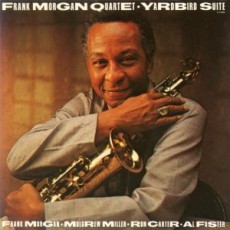
Frank Morgan was born on December 23, 1933 in Minneapolis, Minnesota and took after his father playing the guitar until he was seven, when he went to see Charlie Parker. Meeting him backstage, Parker suggested the clarinet for embouchure and two years later he switched to the saxophone.
Moving to California at age of 14, Frank entered and won a talent contest that provided him the opportunity to solo with Freddy Martin. But he hung out in the wrong circles and started taking heroin at 17, subsequently becoming addicted. He recorded with Teddy Charles in ’53 and Kenny Clarke in ’54 and touted as Charlie Parker’s successor, he would cut his first self-titled album “Frank Morgan” in 1955.
It would be three decades before his sophomore project due to his addiction and spending some twenty years in prison for various drug-related crimes. He would, however, form a small ensemble at San Quentin prison in the 1960s with another addict and sax player Art Pepper.
The Frank Morgan Quartet featured pianist Dolo Coker on piano, Flip Greene on bass and drummer Larance Marable. In 1985 he started recording again, releasing Easy Living in June 1985. This kicked off one of jazz’s most amazing comebacks. He recorded and toured vigorously but suffered a stroke in 1998. He subsequently recovered and once again began recording and performing.
Though mainly playing alto saxophone, Frank also played soprano and has recorded a string of excellent sets for Contemporary, Antilles, and Telarc, and has become an inspiring figure in the jazz world. Bebop alto saxophonist Frank Morgan passed away on December 14, 2007.

More Posts: saxophone
From Broadway To 52nd Street
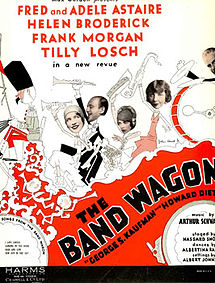
The Band Wagon hit the stage on June 3, 1931 at the New Amsterdam featuring Frank Morgan, Helen Broderick and Fred and Adele Astaire in their 10th and final Broadway appearance together. This revue utilized for the first time on Broadway, a double revolving stage for both its musical numbers and sketches. Dancing In The Dark written and composed by Arthur Schwartz and Howard Dietz, remains a jazz standard.
The Story: The revue, which ran 260 performances, had Fred and Adele cast as two French children cavorting with hoops, riding a Bavarian merry-go-round and several other sketches.
Broadway History: Theater posters are probably as old as the idea of the poster, but they really blossomed as an art form during the Industrial Revolution, when lithographic printing was perfected and affordable. In Paris during the Belle Époque (1880-1914) such posters were everywhere, a feature of the city. It was then that theater posters first became popular as decoration and memorabilia at home. When color printing developed (chromolithography), poster artists became even more popular and individually famous – like artist Jules Cheret, whose beautiful poster-girls (literal pin-up girls) were called “Chèrettes.” More and more reputable artists started creating posters. Toulouse-Lautrec, for instance, created many famous ones – an important part of his career.
Since that heyday, artists have continued to experiment with posters, including posters for the stage. Posters are an interesting genre-blending fine art, illustration, graphic art, advertising, and typography – so poster design attracts artists from each of those fields, for a lively cross-pollination of styles and ideas. All of which make posters a particularly rich and exciting contemporary art form.
The poster is also a supremely timely and ephemeral art designed to be used this one time for this one show, making them a sort of limited-time-offer art. Added to posters’ artistic merit, their time-capsule quality and their commemoration of now vanished events (plus the inevitable rarity of a paper artifact surviving) make posters ideal collectibles.
Sponsored By

www.whatissuitetabu.com
More Posts: broadway
Daily Dose Of Jazz…
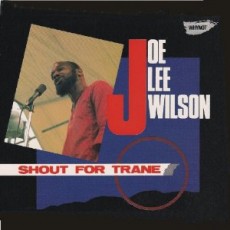
Joe Lee Wilson was born to farming parents on December 22, 1935 in Bristow, Oklahoma of African American and Creek Native American heritage. Attending a 1951 performance by Billie Holiday began his interest in a music-industry career. He studied in Los Angeles before touring the West Coast, where he sat in with Sarah Vaughan before heading down to Mexico. In New York in the 1960s, he worked with Sonny Rollins, Lee Morgan, Miles Davis, Pharoah Sanders and Jackie McLean.
Wilson formed his band Joy of Jazz, to personify the life-affirming nature of jazz and blues. During the 1970s, Joe operated a jazz performance loft in New York’s NoHo district known as the Ladies’ Fort at 2 Bond Street. His regular band, Joe Lee Wilson Plus 5, featured alto saxophonist Monty Waters and Japanese guitarist Ryo Kawasaki, and hosted Archie Shepp and Eddie Jefferson as frequent collaborators.
Joe also sang with Eddie Jefferson, Freddie Hubbard and Kenny Dorham, recorded a 1972 live radio program at Columbia University’s WKCR-FM, which was released as an album, Livin’ High Off Nickels & Dimes, on the short-lived Oblivion Records. Wilson’s rendition of “Jazz Ain’t Nothing But Soul” was a radio hit on New York jazz radio in 1975.
While based in Paris, Tokyo, and the United Kingdom, he recorded regularly with the pianist Kirk Lightsey, and one of his last albums was an Italian recording with Riccardo Arrighini and Gianni Basso, Ballads for Trane.
Joe Lee Wilson was inducted into the Oklahoma Jazz Hall of Fame in November 2010, where he gave his last public performance. The baritone gospel-influenced jazz singer, best recognized on several Archie Shepp albums, passed away on July 17, 2011 leaving behind a short but relevant discography.

More Posts: vocal