

Daily Dose Of Jazz…
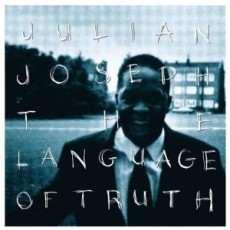
Julian Joseph was born May 11, 1966 in London, England. As a jazz pianist, bandleader, composer, arranger and broadcaster he has worked solo, in his all-star big band, trio, quartet, forum project band or electric band.
Joseph’s style combines a respect for the modern developments in jazz piano with its history and works in both contemporary and traditional situations with his music. He is also active in jazz education helping to form the jazz syllabus for the Associated Board of the Royal Schools of Music in Great Britain.
Starting with his first album The Language of Truth in 1991, Julian has a total of seven albums to date, one single, and a soundtrack to his credit, and a baker’s dozen as a sideman. He has focused on live performance such as, at the London Jazz Festival, also broadcasting as he hosts several radio shows on BBC Radio 3, including Jazz Line-up and the celebrated Jazz Legends as well as composing and teaching.
He has also made two jazz television series for Meridian, a jazz series for Sky TV’s Artsworld Channel and the documentary A Festival of Jazz Piano for the BBC in Wales directed by Celia Lowenstein. He continues to perform and record.

Jazz Is Global – Share
More Posts: arranger,broadcaster,composer,educator,piano
Daily Dose Of Jazz…
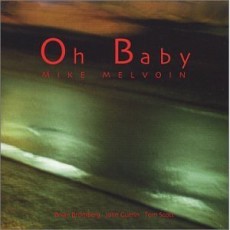
Mike Melvoin was born on May 10, 1937 in Oshkosh, Wisconsin and began playing piano at age three. He studied English at Dartmouth College but after graduating decided to pursue a career in music.
In 1961 he moved to Los Angeles and began playing with Frank Rosolino, Leroy Vinnegar, Gerald Wilson, Paul Horn, Terry Gibbs, Joe Williams, Peggy Lee, Tom Waits and others.
He worked extensively as a studio musician, in addition to playing Los Angeles clubs, accompanying singer Bill Henderson and playing with Herb Ellis and Plas Johnson on concord Jazz releases. As a composer he lent his scoring talents to the Partridge Family, Fame and MacGyver.
Pianist, composer and arranger Mike Melvoin served as chairman and president of The Recording Academy, was nominated for a Grammy for Best Jazz Instrumental Solo from his album It’s Always You, played between the jazz, rock and pop genres. A prolific studio musician he associated with among numerous others Frank Sinatra, Natalie Cole, The Jackson 5, The Beach Boys, Barbra Streisand, John Lennon, and The Wrecking Crew, passed away at the age of 74 in Burbank, California on February 22, 2012.
Put A Dose In Your Pocket
Daily Dose Of Jazz…
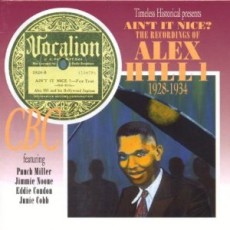
Alex Hill was born on April 19, 1906 in Little Rock, Arkansas to a minister father and pianist mother who taught her child prodigy to play. Defying his father’s wishes the young pianist delved into secular music and while studying at Shorter College met Alphonse Trent and began arranging for him. After graduating in 1922 he worked with several territory bands including Fats Waller and Terence Holder.
From 1924 to 1926 Alex led his own ensemble, then played with Speed Webb, and in 1927 he spent time with Mutt Carey’s Jeffersonians and Paul Howard’s Quality Serenaders. Later that same year Hill relocated to Chicago and held a job as an arranger for the Melrose Music Publishing Company, while simultaneously arranging for the Carroll Dickerson Orchestra. He began recording as a leader and a sideman in 1928 and continued through 1934.
By 1930, prior to a move to New York City, Alex had played with Jimmy Wade, Jimmie Noone and Sammy Stewart. During his time in New York he arranged for Paul Whiteman, Benny Carter, Claude Hopkins, Andy Kirk, Eddie Condon and Duke Ellington among others. Additionally, he became staff arranger for the Mills Music Company. Reuniting with Fats Waller the two did a show together in New York called “Hello 1931”, and accompanied Adelaide Hall.
Hill again put together his own group in 1935, but after playing the Savoy Ballroom he disbanded the ensemble due to his battle with tuberculosis. Moving back to Little Rock, pianist and arranger Alex Hill passed away in February 1937 at the age of 30.
Give A Gift Of Jazz – Share
Daily Dose Of Jazz…
Bobby Tucker was born Robert Nathaniel Tucker on January 8, 1923 in Morristown, New Jersey. His rise to recognition came On November 12, 1946 when during Billie Holiday’s stay at the Down Beat Club he was drafted to accompany Holiday because Eddie Heywood refused his opportunity. Billie’s stay at the Down Beat was so successful due to Tucker’s playing that she decided to keep him as her accompanist. The partnership lasted until 1949, where Tucker quit due to Holiday’s abusive lover, John Levy (not the bassist) threatening him.
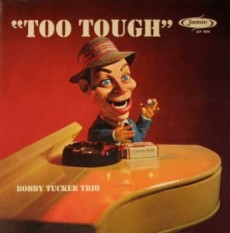
After leaving Holiday, Tucker began playing with Billy Eckstine, a partnership and friendship that last more than forty years. He recorded on multiple sessions with Billy but was featured on the 1960 album “No Cover, No Minimum”, in which he arranged and conducted the orchestra behind Eckstine. That same year Tucker also released his only known album under his own name “Too Tough”.
Bobby was especially sought out as an accompanist for singers among them Johnny Hartman, Lena Horne and Antonio Carlos Jobim. He was a musician’s musician whose quiet yet prolific career renders little biographical information, yet spanned the jazz age from the 40s to the 60s and beyond with his friend Billy Eckstine.
Pianist, arranger and conductor Bobby Tucker passed away of a heart attack on April 12, 2007 in his hometown of Morristown, New Jersey at the age of 85.
Daily Dose Of Jazz…
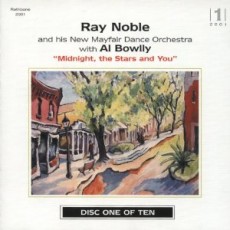
Raymond Stanley Noble was born on December 17, 1903 in Brighton, England and studied music at the Royal Academy. He became the leader of the HMV Records studio band, known as the New Mayfair Dance Orchestra that featured popular vocalist Al Bowlly and many musicians of the top hotel bands.
The Bowlly/Noble recordings achieved popularity in the United States, however, union bans prevented Noble from bringing British musicians to America so he arranged for Glenn Miller to recruit American musicians. Bowlly returned to England but Noble continued to lead bands in America, moving into an acting career portraying a stereotypical upper-class English idiot in films like Top Hat and Slumming On Park Avenue. He also played the “dense” character in love with Gracie Allen, or with his orchestra in an Edgar Bergen vehicle. Noble also provided music for many radio shows of the times like The Charlie McCarthy Show. His last major success as a bandleader came with Buddy Clark in the late 1940s.
Ray Noble arranged hits in the 1930s such as “Easy to Love”, “Mad About the Boy”, “Paris in the Spring”, wrote both lyrics and music for now jazz standards “Love Is The Sweetest Thing”, “Cherokee”, “The Touch of Your Lips”, “I Hadn’t Anyone Till You” and “The Very Thought Of You” and co-wrote “Goodnight, Sweetheart” and “You’re So Desirable”, recorded by Billie Holiday, Teddy Wilson and in 1990 by Robert Palmer.
Ray Noble, bandleader, composer, arranger, pianist, singer and actor passed away on April 3, 1978 at the age of 74.
More Posts: arranger,bandleader,composer