

Daily Dose Of Jazz…
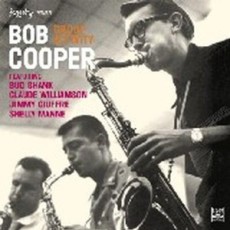
Bob Cooper was born on December 6, 1925 in Pittsburgh, Pennsylvania. He began to study the clarinet in high school and the following year he began working on the tenor saxophone. By 1945 he was joining Stan Kenton’s outfit when he was just 20, and as the new tenor saxophone player played alongside vocalist June Christy on “Tampico” that was to be a Kenton million-selling record. He would marry Christy two years later in Washington, DC.
Coop, as he was affectionately known, stayed with Kenton until he broke up the band in 1951. A naturally swinging jazz musician, Cooper and some other ex- Kenton men were hired to play at the Lighthouse Cafe in Los Angeles by the bassist Howard Rumsey. The Lighthouse became one of the most famous jazz clubs in the world, and the band, Howard Rumsey’s Lighthouse All Stars made history.
With a steady job he could work from home and he expanded his study of the oboe and English horn. While at the Lighthouse he made many momentous recordings, unique amongst them oboe and flute with Bud Shank, and composing a 12-tone octet for woodwind. Bob would go on to lead record sessions as part of a series of long-playing albums under “Kenton Presents” for Capitol Records.
His writing and playing on the album and its successor, “Shifting Winds” in 1955, were seminal in the creation of what was to become known as West Coast jazz. Imaginative writing and a well lubricated polish characterized the session and Cooper’s singing and stomping tenor style on his arrangement of “Strike Up The Band” boosted the record sales considerably.
Cooper would go on to tour Europe, South Africa and Japan with Christy, work as a studio musician in Hollywood, further develop his writing and compose film scores, join Kenton’s huge Neophonic Orchestra and have his composition ‘Solo For Orchestra’ premiered at one of its concerts. Much in demand for his beloved big-band work, he played regularly in other Los Angeles orchestras led by Shorty Rogers, Terry Gibbs, Bill Holman, Bill Berry, Bob Florence and Frankie Capp / Nat Pierce.
Bob Cooper, the West Coast jazz musician known primarily for playing tenor saxophone was also one of the first to play solos on oboe, passed away on August 5, 1993 in Los Angeles, California. Though maturing into one of the finest but least praised tenor saxophonists, he easily ranked with Stan Getz, Zoot Sims and Al Cohn in his talents. His last studio recording, released the year of his death, was on Karrin Allyson’s album Sweet Home Cookin on which he played tenor saxophone.
More Posts: arranger,composer,english horn,oboe,saxophone,vocal
Daily Dose Of Jazz…
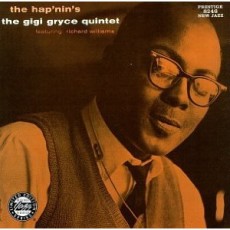
Gigi Gryce was born George General Grice, Jr. on November 28, 1925 in Pensacola, Florida but grew up in Hartford Connecticut. He studied classical composition at the Boston Conservatory, studied with private teachers, then won a Fulbright scholarship and continued his studies in Paris.
His performing career was relatively short in comparison to other musicians of his generation, his work little known, however, several of his compositions have been covered extensively – “Minority,” “Social Call,” and “Nica’s Tempo” are frequently heard in mainstream jazz venues. Gigi’s compositional bent includes harmonic choices similar to those of Benny Golson, Tadd Dameron and Horace Silver in the contemporaneous period. Gryce’s playing, arranging, composing is consonant with the hard bop classic period was generally considered to be 1953-1965.
During the 1950s he achieved some renown for his innovative bebop playing, his primary instrument being the alto saxophone. Among the musicians with whom Gryce performed were Thelonious Monk, Tadd Dameron, Lionel Hampton, D, Howard McGhee, Clifford Brown, Art Farmer, Lee Morgan, Max Roach, Oscar Pettiford, Teddy Charles and Benny Golson. In 1955, Gryce formed the Jazz Lab Quintet, which included trumpeter Donald Byrd.
In the mid-1950s he converted to Islam and adopted the name Basheer Qusim. By the 60s he stopped using the name Gigi Gryce partly due to personal problems that took their toll on his financial and emotional state, withdrawing from performing. During this last period of his life he taught at a series of public schools in Long Island and New York City and the Community Elementary School 53 on 168th Street in the Bronx, the last school renamed the Basheer Qusim School in his honor.
Gigi Gryce, saxophonist, flautist, clarinetist, composer, arranger, educator, and big band leader died of an apparent epileptic seizure on March 14, 1983 in Pensacola, Florida.
Daily Dose Of Jazz…
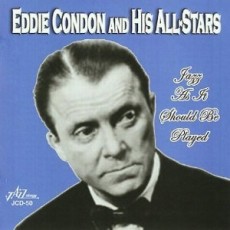
Albert Edwin Condon was born November 16, 1905 in Goodland, Indiana and started playing music on the ukulele before switching to guitar. By the time he was sixteen he was in Chicago playing professionally with Bix Beiderbecke, Jack Teagarden and Frank Teschmacher.
In 1928 Condon moved to New York City frequently arranging jazz sessions for various labels, sometimes playing with the artists he brought like Louis Armstrong and Fats Waller. He organized racially integrated recording sessions – when these were still rare – with Waller, Armstrong and Henry “Red” Allen. He played with the Red Nichols band, later forming a long association with Milt Gabler’s Commodore Records in 1938.
From the late 1930s on Eddie was a regular at Nick’s in Manhattan with Pee Wee Russell, Wild Bill Davison and Bobby Hackett. He went on to appear in a short film with Hackett, produced a series of jazz broadcasts from Town Hall during the last years of WWII that gave him national popularity.
From 1945 through 1967 he ran his own New York jazz club, Eddie Condon’s. In the 50s he recorded a sequence of classic albums for Columbia Records, toured Britain, Australia, Japan, the U. S. and performed at jazz festivals throughout the world until 1971. Two years later, Eddie Condon, jazz banjoist, guitarist, bandleader and arranger passed away on August 4, 1973 in New York City.
More Posts: arranger,bandleader,banjo,guitar
Daily Dose Of Jazz…
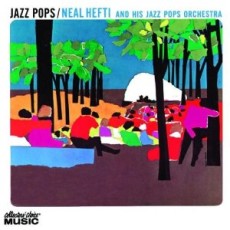
Neal Hefti was born on October 29, 1922 in Hastings, Nebraska, outside Omaha and was a child of the jazz age. His mother, a music teacher, started piano lessons at the age of 3, becoming well versed in theory and harmony by the time he took up the trumpet at 11. He was already writing arrangements, having taught himself by trial and error in high school and was supplying local dance bands with music well before he graduated. After winning several school prizes, he was to start making a living as a jazz trumpeter in the big bands of Charlie Barnet and Charlie Spivak.
After travelling to California with Spivak to make a film, Hefti stayed on the West Coast, joined Woody Herman’s band as a trumpeter in 1944 and his arranging began to take precedence over his playing. Hefti married, moved back to New York and began writing in every genre and for all sizes of ensembles, becoming adept at using small forces to create a big sound. He arranged for Count Basie both in octet and big band configurations making Neal became one of his principal writers. He went on to write numerous compositions for Harry James in the late 40s and 50s designed to feature the leader’s trumpet and the band’s star drummer Buddy Rich.
Hefti fronted his own band in the Fifties, contributed to some of Frank Sinatra’s most popular albums, including “Frank Sinatra and Swinging Brass”, which he also produced. From the early 1960s onwards, he was increasingly involved in the world of films and television, winning a Grammy award for his Batman theme. Hefti was a brilliant composer and arranger who created the scores for many other television shows and films, notably the two Neil Simon movies The Odd Couple and Barefoot in the Park. His score for Harlow included the song “Girl Talk” that has become a jazz standard.
However, in 1978 after his wife’s passing, he ceased to write and record new music. Nevertheless, because Basie continued to commission other writers to replicate his style, his effect on big band arranging and on film scores remained extremely influential. Trumpeter, composer, songwriter and arranger Neal Hefti, who contributed to the genres of swing and big band along with scores for the film and television industries, passed away in Toluca Lake, California on October 11, 2008.
Daily Dose Of Jazz…
Carmell Jones was born in Kansas City, Kansas on July 19, 1936 and was reared by parents how were both teachers. He became interested in music and jazz, by his own admission, at the age of two. Piano lessons began at age five, gave way to the “that’s for sissy’s attitude” and trumpet started at seven.
He spent two years in the army followed by two years at the University of Kansas as a music education and trumpet major. Leaving the Midwest for the Pacific coast, he became a California studio musician in 1960 recording with such artists as Sammy Davis Jr., Bob Hope, and Nelson Riddle. During this chapter in his success story, he was being compared to Clifford Brown and Fats Navarro. Carmell developed a close association with Bud Shank as a member of his quintet. He recorded with many other notables and most importantly he recorded his first album under his own name and contract with Pacific Jazz – “The Remarkable Carmell Jones”.
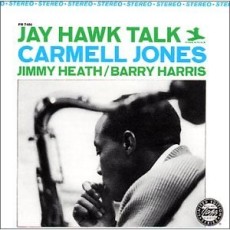
In ‘64 moving to New York he joined the Horace Silver Quintet recording three albums with Silver including “Song For My Father”. Down Beat Magazine awarded Jones the designation of “New Star Trumpeter” and signing with Prestige, he recorded what he considers his most successful personal album, “Jay Hawk Talk”, with pianist Barry Harris, tenor Jimmy Heath, drummer Roger Humphreys and bassist Teddy Smith. This album received the critics 5 Star Best Album Award.
The next year Carmell left the U.S. for Germany and spent the next fifteen years working with Milo Pavlovic, Herb Geller, Leo Wright and Eugene Cicero, the SFB Big Band and Radio Free Berlin recording 8 hours a day, composing and arranging for radio, TV and film. Upon his return to the States he devoted much of his time building new musicians from the ground up teaching music in his hometown elementary schools.
Carmell Jones, trumpeter, composer, arranger, music publisher, educator and recording artist with over sixty albums to his credit passed away in Kansas City, Kansas on November 7, 1996.