

Daily Dose Of Jazz…
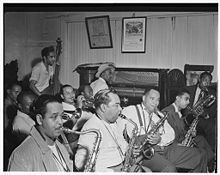
Eddie Wilcox was born in Method, North Carolina on December 27, 1907. He studied at Fisk University, where he met Jimmie Lunceford and played with him in college bands and then professionally in the mid-1920s. In 1929 he became the main arranger for the ensemble, and remained so until Lunceford’s death in 1947.
Wilcox was named co-leader with Joe Thomas after Lunceford died, and became sole leader in January 1949, where he remained until the group disbanded early in the 1950s.
His 1952 recording of the Bennie Benjamin and George David Weiss composition “Wheel of Fortune” became a hit in the U.S., peaking at #14. Following this Wilcox played solo at the Cafe Riviera in New York City for nearly a decade.
He and Teddy McRae founded the Raecox record label in the 1950s that produced and released R&B music. He also worked as an executive for Riviera and Derby record labels. Working with jazz trombonist Big Chief Russell Moore shortly before his death, pianist and arranger Eddie Wilcox passed away on September 29, 1968.

Daily Dose Of Jazz…
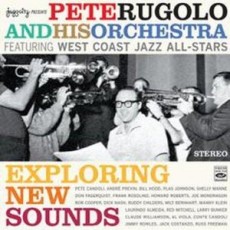
Pete Rugolo was born Pietro Rugolo in San Piero Patti, Sicily, Italy on December 25, 1915. His family emigrated to the U.S. in 1920 and settled in Santa Rosa, California. He began his career in music playing the baritone saxophone, like his father, but he quickly branched out into other instruments, notably the French horn and the piano. He received a bachelor’s degree from San Francisco State College and then went on to study composition at Mills College in Oakland, earning his master’s degree.
After graduation, he was hired as an arranger and composer by guitarist and bandleader Johnny Richards and spent World War II playing with altoist Paul Desmond in an army band. After WWII, Rugolo worked for Stan Kenton, providing arrangements and original compositions that drew on his knowledge of 20th century music, sometimes blurring the boundaries between jazz and classical music.
While Rugolo continued to work occasionally with Kenton in the 1950s, he spent more time creating arrangements for pop and jazz vocalists, most extensively with former Kenton singer June Christy and others like Ernestine Anderson, Harry Belafonte, Nat King Cole, Billy Eckstine, Peggy Lee, The Four Freshman, Mel Torme to name a few.
He would work on MGM film musicals, serve as A&R director for Mercury Records and produce a handful of self-titled albums. Pete’s scores for television and film on The Fugitive, Leave It To Beaver, Run For Your Life and Where The Boys Are often demanded that he suppress his highly original style. However, there are some striking examples of his work in both TV and film such as the soundtrack for his last movie, This World, Then the Fireworks demonstrates his gift for writing music that is both sophisticated and expressive. Pete Rugolo, jazz composer and arranger, died, aged 95, on October 16, 2011 in Sherman Oaks, California.


Daily Dose Of Jazz…
Johnny Mandel was born John Alfred Mandel on November 23, 1925 in New York, New York. His mother, an opera singer, discovered he had perfect pitch at age five. Piano lessons ensued but Johnny switched to the trumpet and later the trombone.
Johnny studied at the Manhattan School of Music and the Julliard School. By 1943 he was playing trumpet with Joe Venuti, in 1944 with Billy Rogers and then trombone in the bands of Boyd Raeburn, Jimmy Dorsey, Buddy Rich, George Auld and Chubby Jackson. In 1949 he accompanied singer June Christy in the Bob Cooper Orchestra, then with Elliot Lawrence’s outfit, followed by a stint with Count Basie and a move to Los Angeles, California to play with Zoot Sims.
In the late Forties and into the Fifties he wrote jazz compositions like “Not Really the Blues” for Woody Herman, “Hershey Bar” and “Pot Luck” for Stan Getz, “Straight Life” and “Low Life” for Count Basie as well as “Tommyhawk” for Chet Baker. Mandel composed, conducted and arranged the music for numerous movie sound tracks with his earliest credited contribution to “I Want To Live” in 1958 being nominated for a Grammy. Mandel’s most famous compositions include “Suicide Is Painless” from M*A*S*H, “Close Enough for Love”, “Emily”, “A Time for Love”, and “The Shadow Of Your Smile” which won an Oscar for Best Song and a Grammy for Song Of The Year in 1966.
Mandel is a recipient of the 2011 NEA Jazz Masters Award, has won several Grammy Awards for Best Instrumental Arrangements Accompanying Vocals for Quincy Jones’ Velas, Natalie & Nat King Cole’s Unforgettable and Shirley Horn’s Here’s To Life. He has composed music with lyricists Alan & Marilyn Bergman, Paul Williams and Johnny Mercer; and arranged for Frank Sinatra, Tony Bennett, Barbra Streisand, Diana Krall, The Diva Jazz Orchestra and Ann Hampton Calloway among numerous others.
