

Daily Dose Of Jazz…
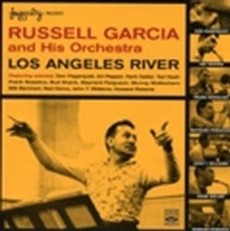
Russell Garcia was born April 12 1916 in Oakland, California but for most of his life has resided in New Zealand. The self-taught musician with only a few lessons in high school could read music from a very young age. He began his career at age five when one of his brothers bought him a $5 cornet. In school he started up a jazz band so he could play his horn and it became an outlet for his compositions and arrangements.
When Garcia was eleven the Oakland Symphony Orchestra performed his arrangement of Stardust and by high school was playing five nights a week. After a year at San Francisco State University he dropped out and went on the road with several big bands. Finding no satisfaction in his progress he went to Hollywood and studied composition, harmony, orchestration, counterpoint and form with the best teachers and took lessons on every instrument so he could write for each with a deeper awareness. During that time while still in his twenties he conducted the West Hollywood Symphony Orchestra, preparing him for things to come.
Russell’s big break came in 1939 when he took the job of composer/conductor for “This Is Our America” and impressed then director Ronald Reagan, who in turn, recommended him to NBC. From that point on worked poured in. He worked with Henry Mancini on the Glenn Miller Story, Charlie Chaplin, Universal Studios, arranged and conducted Louis Armstrong and Ella Fitzgerald’s “Porgy & Bess”, then followed up with three more albums with Armstrong.
Always the innovator Garcia left Hollywood for jazz and using experimental frameworks assembled his groundbreaking four-trombone band with famed brass players Frank Rosolino, Tommy Pederson, Maynard Ferguson and Herbie Harper and Marty Paich. He recorded over sixty albums under his own name, as well as composing for Stan Kenton’s cutting edge Neophonic Orchestra. He collaborated with Frances Faye, Anita O’Day, Mel Torme, Andy Williams, Judy Garland, Orson Welles, Julie London and Oscar Peterson.
In 1966 he walked away from his success in music to advocate world peace, a promise he made to himself after surviving World War II’s Battle of the Bulge. He continues to lecture and record around the globe and has authored what is considered the definitive textbooks on composition, “The Professional Arranger Composer Books I and II” used in universities and conservatories worldwide. Composer and arranger Russell Garcia passed away on November 19, 2011.

Daily Dose Of Jazz…
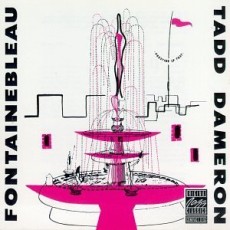
Cleveland, Ohio was the birthplace of Tadley Ewing Peake Dameron on February 21, 1917. Tadd as he was known in the jazz world became the definitive arranger/composer of the bop era writing such standards as “Good Bait,” “Our Delight,” “Hot House,” “Lady Bird,” and “If You Could See Me Now.” Not only did he write melody lines, he also wrote full arrangements. Though he never financially prospered, Dameron was an influential force from the mid-’40s till his death.
Dameron started out in the swing era touring with the Zack Whyte and Blanche Calloway bands, he wrote for Vido Musso in New York and most importantly, contributed arrangements for Harlan Leonard’s Kansas City Orchestra, some of which were recorded.
Soon he was writing charts for such bands as Jimmie Lunceford, Count Basie, Billy Eckstine, and Dizzy Gillespie (1945-1947) in addition to Sarah Vaughan. Always very modest about his own piano playing but he did gig with Babs Gonzales’ Three Bips & a Bop in 1947 and led a sextet featuring Fats Navarro at the Royal Roost during 1948-1949.
Dameron co-led a group with Davis at the 1949 Paris Jazz Festival, stayed in Europe for a few months (writing for Ted Heath), and then returned to New York. He wrote for Artie Shaw’s last orchestra that year, played and arranged R&B for Bull Moose Jackson (1951-1952) and in ‘53 led a nonet featuring Clifford Brown and Philly Joe Jones.
He also led bands that included Dexter Gordon, Sonny Rollins and Wardell Gray. Drug problems, however, started to get in the way of his music. After recording a couple of albums including 1958’s Mating Call with John Coltrane, drug addiction caused him to spend much of 1959-1961 in jail. After he was released, Dameron wrote for Sonny Stitt, Blue Mitchell, Milt Jackson, Benny Goodman, suffered several heart attacks and diagnosed with cancer from which he would eventually succumb to on March 8, 1965 in New York City.

Daily Dose Of Jazz…
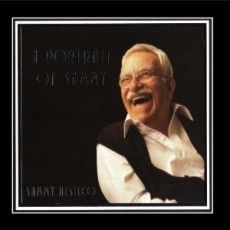
Sammy Nestico was born Samuel Lewis Nestico on February 6, 1924 in Pittsburgh, Pennsylvania. Studying and learning to play the trombone, he started his professional career in 1941 at age 17 as a staff arranger for ABC radio affiliate WCAE.
Over the course of his career he arranged for Count Basie from 1967-1984, for the US Air Force and Marine Bands for twenty years while in Washington, DC, and played trombone in Tommy Dorsey, Woody Herman, Gene Krupa and Charlie Barnet big bands.
A professor at the University of Georgia from 1998-99 Nestico taught commercial orchestration and conducting the Studio Orchestra, but was unable to find the necessary administrative support to remain there. He has also directed music programs at Los Angeles Pierce College, and the Westinghouse Memorial High School in Wilmerding, PA.
During his life in the television and film industry, Sammy has arranged and conducted projects for artists such as Bing Crosby, Sarah Vaughan, Frank Sinatra, Toni Tennille, Phil Collins, Barbra Streisand among others and orchestrated nearly seventy television programs such as Mission Impossible, Mannix, Charlie’s Angels and The Mod Squad.
He has written commercial jingles for numerous companies including Ford, Dodge, Anheuser-Busch and Mattel and has published nearly 600 numbers for school groups and professional big bands. A trombone player and a prolific, well-known composer and arranger of big band music, he is best known for his arrangements for the Count Basie orchestra. Sammy Nestico continues to compose, arrange, conduct and perform.
Daily Dose Of Jazz…
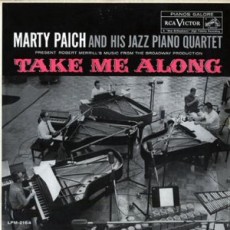
Marty Paich was born Martin Louis Paich on January 23, 1925 in Oakland, California. He started his music career taking lessons on the accordion followed by the piano and by 10 he formed his first of several bands and by 12 was playing regularly at weddings and similar social events. He attended a series of professional schools, served in the Army Air Corps during WWII leading various bands and orchestras until his discharge. Marty went back to school studying composition and graduating magnum cum laude in 1951 from the Los Angeles Conservatory.
Paich had an extraordinary ear for style and an eclectic taste. His early work included arranging and playing the score for Disney’s Lady and The Tramp, accompanist for Peggy Lee, playing piano for Shorty Roger’s Giants and touring with Dorothy Dandridge.
During the 1950s, Paich was active in West Coast jazz performance while also working intensively in the studios. He not only played on, but arranged and produced, numerous West Coast jazz recordings, including albums by Ray Brown, Ella Fitzgerald, Terry Gibbs, Shelly Manne, Anita O’Day, Dave Pell, Buddy Rich but it was his association with Mel Torme and their work with the Marty Paich Dektette, albeit difficult at times, was what many jazz critics consider to be the high point of their respective careers.
The 60’s moved him to the studios and television working for Andy Williams, Al Hirt, Dinah Shore, Glen Campbell, Sonny & Cher, the Smothers Brothers and winning an Emmy for Ironside.
In a career which spanned half a century, he worked as a pianist, composer, arranger, producer, music director and conductor for such artists as Frank Sinatra, Sammy Davis Jr., Sarah Vaughan, Stan Kenton, Jack Jones, Art Pepper, Stan Getz, Barbra Streisand, Ray Charles, Aretha Franklin, Linda Ronstadt, and Michael Jackson and a hundred others. Marty Paich passed away on August 12, 1995, aged 70 from colon cancer, at his home in Santa Ynez, California.
Daily Dose Of Jazz…
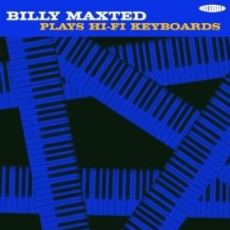
Born January 21, 1917, pianist Billy Maxted grew up in Racine, Wisconsin. He started out playing and arranging for the Red Nichols Big Band in 1937 and stayed with him for three years. After serving in the Navy he provided arrangements for Benny Goodman and Claude Thornhill and co-led a band with Ray Eberle from 1948 to 1948.
In the following years he worked with drummer and bandleader Ben Pollack, guitarist, composer and big band leader Teddy Powell and trombonist and bandleader Will Bradley.
Maxted moved to Long Island, NY and for much of his life he was a fixture at Nick’s in Greenwich Village. From 1955 to 1966 he recorded a dozen albums including Dixieland and Big Band hits. In 1961 he moved to Fort Lauderdale and that same year reached the Billboard “Bubbling Under The Top 100” chart with a swing version of “Satin Doll”.
He worked with Pee Wee Erwin, Bob Crosby and Red Nichols and over his career recorded for MGM< Brunswick, Cadence and Seeco labels. Not much was heard from him after his move to Florida and in relative obscurity Billy Maxted passed away on October 11, 2001 in Fort Lauderdale.