

Daily Dose Of Jazz…
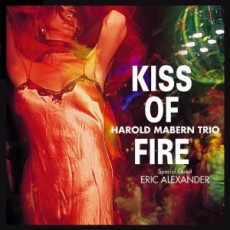
Harold Mabern was born on March 20, 1936 in Memphis, Tennessee and initially started learning the drums before turning his attention to the piano. Attending Douglass High School he played with Frank Strozier, George Coleman, Booker Little but was most influenced by the piano of Phineas Newborn Jr. After graduating from high school he moved to Chicago where he went to street school listening to Ahmad Jamal and others in clubs to increase his proficiency.
Early in his career Harold played in Chicago with Walter Perkins’ MJT + 3 in the late 1950s before moving to New York in 1959. Heading straight to Birdland where he met Cannonball Adderley who introduced him to Harry “Sweets” Edison who was looking for a replacement for Tommy Flanagan. A quick audition was followed by an offer and a few week later they were in the studio recording with Jimmy Forrest.
Mabern grew his reputation as a sideman and in the tradition of hard bop and soul jazz, the pianist worked with Lionel Hampton, the Jazztet, Donald Byrd, Miles Davis, J. J. Johnson, Lee Morgan, Hank Mobley, Sonny Rollins, Freddie Hubbard, Wes Montgomery, Joe Williams and Sarah Vaughan to name a few.
In the late 1960s and early 1970s, Mabern led four albums for Prestige Records and recorded with Stanley Cowell’s Piano Choir. Harold Mabern also recorded as a leader for DIW/Columbia and Sackville and toured with the Contemporary Piano Ensemble.
Pianist Harold Maben has twenty sessions as a leader and another six-dozen as a sideman in his catalogue. In more recent years, Harold is a frequent instructor at the Stanford Jazz Workshop, has recorded extensively with his former William Patterson University student, the tenor saxophonist Eric Alexander and continues to perform and tour.
More Posts: piano
Daily Dose Of Jazz…
Tommy Flanagan was born Thomas Lee Flanagan on March 16, 1930 in Detroit, Michigan. He began playing clarinet at age six and switched to piano just five years later. By the ‘50s he had become a part of the fertile Detroit scene until moving to New York in 1956.
After his arrival and until his long association with Ella Fitzgerald beginning in 1963, Flanagan worked regularly as a sideman, cut leader sessions for New Jazz, Prestige, Savoy and Moodsville, worked with Oscar Pettiford, J. J. Johnson, Harry “Sweets” Edison and Coleman Hawkins.
It was in 1975 just three years prior to his leaving Ella Fitzgerald that he regained his soloist chops, leading superior recording sessions with his swinging and creative post-bop style.
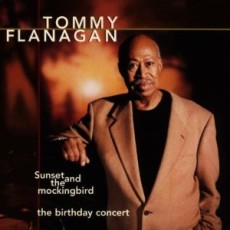
Flanagan recorded for several American and Japanese labels but came to true prominence with his Sunset and The Mockingbird recording in 1998 followed a year later by Samba for Felix.
In his latter years Tommy Flanagan, known also for his flawless and tasteful playing, suffered from a heart condition. However, despite his health problems, the pianist continued to tour and perform until the end of his life when he passed away of an arterial aneurysm at age 71 on November 16, 2001 in Manhattan, New York.

More Posts: piano
Daily Dose Of Jazz…
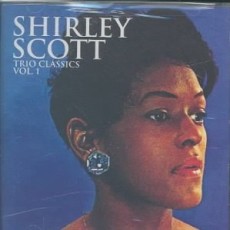
Shirley Scott was born in Philadelphia, Pennsylvania on March 14, 1934. She began her musical journey with piano and trumpet in high school but her admiration for Jimmy Smith moved her to the Hammond organ as her primary instrument, though she continued to play piano.
In the Fifties she came to prominence working with saxophonist Eddie Davis, but by the ‘60s Scott married Stanley Turrentine and the subsequent musical collaboration was fruitful with releases.
A very melodic player, Shirley graduated to an aggressive, highly rhythmic approach of organ player blending intricate bebop harmonies with blues and gospel with soul jazz. Her visibility waned in the seventies as labels interest in organ combos was replaced by fusion and pop jazz.
By the 1980s she would become a jazz educator and recording for Muse with the new found interest in organ late in the decade. Scott, a superb pianist, exclusively played piano during the Nineties in Philly jazz clubs and recorded trio projects for Candid.
By the turn of the new century with her health declining, she was diagnosed with heart damage due to adverse effects from the diet pill “fen-phen”. She was awarded $8 million in a lawsuit against the drug manufacturers. Shirley Scott died of heart failure on March 10, 2002.

Daily Dose Of Jazz…
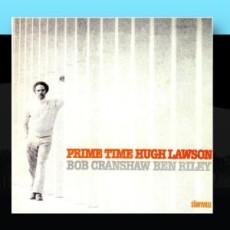
Hugh Lawson was born on March 12, 1935 in Detroit, Michigan. Inspired by Bud Powell, Hampton Hawes and Bill Evans he gained recognition for his more than ten year association with Yusef Lateef during the late ‘50s. During the Sixties he would record with Harry “Sweets” Edison, Roy Brooks and again with Lateef on several sessions.
During the Lawson performed with “The Piano Choir”, a group of several pianists including Stanley Cowell, and Harold Mabern. He went on to tour with Charles Mingus, record with Charlie Rouse, George Adams and as a leader, recording Prime Time, Colour, Jazzcraft Studio recording 1977-78, Beat-EP and Constellations.
Pianist Hugh Lawson was diagnosed with colon cancer and succumbed one day before his 62nd birthday on March 11, 1997 in White Plains, New York.
More Posts: piano
Daily Dose Of Jazz…
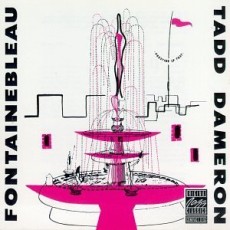
Cleveland, Ohio was the birthplace of Tadley Ewing Peake Dameron on February 21, 1917. Tadd as he was known in the jazz world became the definitive arranger/composer of the bop era writing such standards as “Good Bait,” “Our Delight,” “Hot House,” “Lady Bird,” and “If You Could See Me Now.” Not only did he write melody lines, he also wrote full arrangements. Though he never financially prospered, Dameron was an influential force from the mid-’40s till his death.
Dameron started out in the swing era touring with the Zack Whyte and Blanche Calloway bands, he wrote for Vido Musso in New York and most importantly, contributed arrangements for Harlan Leonard’s Kansas City Orchestra, some of which were recorded.
Soon he was writing charts for such bands as Jimmie Lunceford, Count Basie, Billy Eckstine, and Dizzy Gillespie (1945-1947) in addition to Sarah Vaughan. Always very modest about his own piano playing but he did gig with Babs Gonzales’ Three Bips & a Bop in 1947 and led a sextet featuring Fats Navarro at the Royal Roost during 1948-1949.
Dameron co-led a group with Davis at the 1949 Paris Jazz Festival, stayed in Europe for a few months (writing for Ted Heath), and then returned to New York. He wrote for Artie Shaw’s last orchestra that year, played and arranged R&B for Bull Moose Jackson (1951-1952) and in ‘53 led a nonet featuring Clifford Brown and Philly Joe Jones.
He also led bands that included Dexter Gordon, Sonny Rollins and Wardell Gray. Drug problems, however, started to get in the way of his music. After recording a couple of albums including 1958’s Mating Call with John Coltrane, drug addiction caused him to spend much of 1959-1961 in jail. After he was released, Dameron wrote for Sonny Stitt, Blue Mitchell, Milt Jackson, Benny Goodman, suffered several heart attacks and diagnosed with cancer from which he would eventually succumb to on March 8, 1965 in New York City.
