Daily Dose Of Jazz…
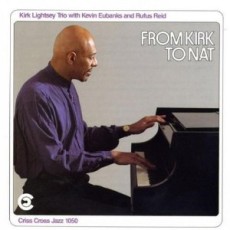
Kirkland “Kirk” Lightsey was born on February 15, 1937 in Detroit, Michigan and started his piano instruction at the age of five, adding clarinet through high school. After his Army service he worked accompanying singers around Detroit and in California, gaining some attention when he recorded with Sonny Stitt in 1965 and on five Prestige dates with Chet Baker. He would work with Yusef Lateef, Betty Carter, Bobby Hutcherson, Kenny Burrell, Pharaoh Sanders and many others.
From 1979 to 1983 he toured with Dexter Gordon and was a member of the Leaders. Through out the 80’s he led sessions including duets with Harold Danko, performed with Jim Raney, Clifford Jordan, Woody Shaw, David Murray and Harold Land.
Rooted in the hard-bop genre, Kirk has developed his own style and sound that is marked by a certain openness and playfulness. An accomplished flautist, he occasionally doubles in live performances.
In 2004 he released a duo album with Rufus Reid titled Nights At Bradley’s and recorded a quintet project Lightsey To Gladden in 2008, dedicated to the late great drummer, Eddie Gladden. Over the course of his career he has amassed some three-dozen albums as a leader and sideman and pianist Kirk Lightsey continues to create music and perform worldwide.

More Posts: piano
Daily Dose Of Jazz…
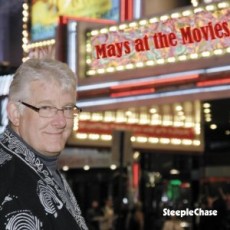
Bill Mays was born William Allen Mays on February 5, 1944 in Sacramento, California. Coming from a musical family he learned to play piano and at sixteen he became interested in jazz after attending an Earl Hines concert.
From 1969 to the early 1980s Bill worked Frank Sinatra, Al Jarreau, Dionne Warwick, Anita O’Day, Mark Murphy and accompanied other vocalists in Los Angeles with Sarah Vaughan, while also working sessions with such luminary musicians as Art Pepper, Shelly Manne, Bud Shank, Red Mitchell, and Bobby Shew to name a few from an esteemed list of luminaries.
In 1984, Mays moved to New York and became best known as a sideman or accompanist, but starting in the 1990s he began to do more work as a bandleader, composer, and arranger. As far back as the 70’s on, he recorded over two-dozen albums under his own name, in different configurations, and has been heard as a sideman on many more. He continues to perform, record and tour.

More Posts: piano
Daily Dose Of Jazz…
It has been said that Antonio Carlos Jobim was the George Gershwin of Brazil, and there is a solid ring of truth in that, for both contributed large bodies of songs to the jazz repertoire, both expanded their reach into the concert hall, and both tend to symbolize their countries in the eyes of the rest of the world.
Born Antônio Carlos Brasileiro de Almeida Jobim on January 25, 1927 in Tijuca neighborhood of Rio de Janiero studied to become an architect but the lure of music was too strong being firmly rooted in the music of Pixinguinha, who began modern Brazilian music in the 1930’s. By twenty he started playing piano in nightclubs and working recording sessions. He cut his first record in 1954 leader his group Tom and His Band, backing singer Bill Farr.
Tom, a nickname he affectionately carried throughout his life, was firmly planted in jazz having been impacted by Gerry Mulligan, Chet Baker, Barney Kessel and other West Coast musicians. He also gleaned influence upon his harmonies from Claude Debussy and Samba gave his music an exotic rhythmic underpinning. His piano is simple and melodic, his guitar gentle and his singing hauntingly emotional. Among his many themes his lyrics talked of love, political repression, betrayal, the natural beauties of Brazil and his home city of Rio.
Jobim first found fame in 1956 when he teamed with poet and diplomat Vinicius de Moraes to score part of the play Orfeo do Carnival, which would later gain them worldwide acclaim at Cannes when Black Orpheus debut in 1959.
In 1958, an unknown Brazilian singer João Gilberto recorded some of Jobim’s songs, which effectively launched bossa nova. Yet, Jobim’s breakthrough outside Brazil occurred in 1962 when Stan Getz and Charlie Byrd scored a surprise hit with his tune “Desafinado” – and later Getz teamed with Joao Gilberto and his wife Astrud resulting in Getz/Gilberto in 1963 and Getz/Gilberto 2 in 1964. The ’63 album became one of the best selling jazz albums of all time and grabbed 4 Grammy Awards. With their gracefully urbane, sensuously aching melodies and harmonies, Jobim’s songs gave jazz musicians in the 1960s a quiet, strikingly original alternative to their traditional Tin Pan Alley source.
Grammy award winning songwriter, composer, arranger, singer, pianist and guitarist while driving home after finishing recording for his next album Tom Jobim, collapsed and passed away of heart failure in New York City on December 8, 1994.

Daily Dose Of Jazz…
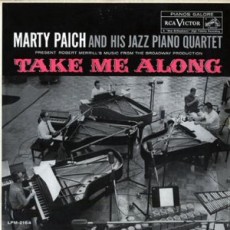
Marty Paich was born Martin Louis Paich on January 23, 1925 in Oakland, California. He started his music career taking lessons on the accordion followed by the piano and by 10 he formed his first of several bands and by 12 was playing regularly at weddings and similar social events. He attended a series of professional schools, served in the Army Air Corps during WWII leading various bands and orchestras until his discharge. Marty went back to school studying composition and graduating magnum cum laude in 1951 from the Los Angeles Conservatory.
Paich had an extraordinary ear for style and an eclectic taste. His early work included arranging and playing the score for Disney’s Lady and The Tramp, accompanist for Peggy Lee, playing piano for Shorty Roger’s Giants and touring with Dorothy Dandridge.
During the 1950s, Paich was active in West Coast jazz performance while also working intensively in the studios. He not only played on, but arranged and produced, numerous West Coast jazz recordings, including albums by Ray Brown, Ella Fitzgerald, Terry Gibbs, Shelly Manne, Anita O’Day, Dave Pell, Buddy Rich but it was his association with Mel Torme and their work with the Marty Paich Dektette, albeit difficult at times, was what many jazz critics consider to be the high point of their respective careers.
The 60’s moved him to the studios and television working for Andy Williams, Al Hirt, Dinah Shore, Glen Campbell, Sonny & Cher, the Smothers Brothers and winning an Emmy for Ironside.
In a career which spanned half a century, he worked as a pianist, composer, arranger, producer, music director and conductor for such artists as Frank Sinatra, Sammy Davis Jr., Sarah Vaughan, Stan Kenton, Jack Jones, Art Pepper, Stan Getz, Barbra Streisand, Ray Charles, Aretha Franklin, Linda Ronstadt, and Michael Jackson and a hundred others. Marty Paich passed away on August 12, 1995, aged 70 from colon cancer, at his home in Santa Ynez, California.
Daily Dose Of Jazz…
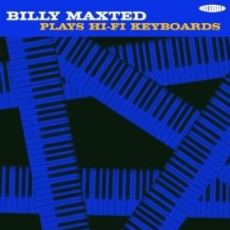
Born January 21, 1917, pianist Billy Maxted grew up in Racine, Wisconsin. He started out playing and arranging for the Red Nichols Big Band in 1937 and stayed with him for three years. After serving in the Navy he provided arrangements for Benny Goodman and Claude Thornhill and co-led a band with Ray Eberle from 1948 to 1948.
In the following years he worked with drummer and bandleader Ben Pollack, guitarist, composer and big band leader Teddy Powell and trombonist and bandleader Will Bradley.
Maxted moved to Long Island, NY and for much of his life he was a fixture at Nick’s in Greenwich Village. From 1955 to 1966 he recorded a dozen albums including Dixieland and Big Band hits. In 1961 he moved to Fort Lauderdale and that same year reached the Billboard “Bubbling Under The Top 100” chart with a swing version of “Satin Doll”.
He worked with Pee Wee Erwin, Bob Crosby and Red Nichols and over his career recorded for MGM< Brunswick, Cadence and Seeco labels. Not much was heard from him after his move to Florida and in relative obscurity Billy Maxted passed away on October 11, 2001 in Fort Lauderdale.