

Daily Dose Of Jazz…
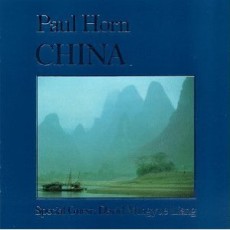
Paul Horn was born March 17, 1930 in New York City and began playing piano at the age of 4 and the saxophone at 12. He studied the flute in 1952 at the Oberlin Conservatory of Music in Ohio and then earned a master’s degree from the Manhattan School of Music.
Moving to Los Angeles in 1956 Paul played with Chico Hamilton’s Quintet till 1958 and two years later recorded his debut album “Something Blue”. By now an established West Coast session player he played on the Duke
Ellington Orchestra’s Suite Thursday and during this period worked with Nat King Cole, Tony Bennett and others. In 1970, he moved Vancouver Island, formed his own and has recorded film scores for the National Film Board of Canada.
Widely known for his innovations on both metal and traditional wood flutes, Horn has recorded some truly exotic albums. Perhaps most famous of these are his “Inside” recordings, which feature airy, echoing sounds created in places of spiritual importance. While he is undoubtedly a jazz musician, many of his works defy categorization. As well as the Inside series, he has recorded other albums of jazz with musicians from a range of cultures and backgrounds including China and Africa. He continues to perform and record.
The Jazz Voyager
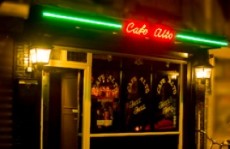
Alto: Korte Leidse Dwarsstraat 115, Amsterdam, Netherlands / Tel. 020-6263249 / The oldest and most famous jazz café in Amsterdam is located in the middle of the nightlife center and open its doors for a broad audience. Every evening of the week has live jazz and sometimes blues music. Famous and less famous artists play for you every night.
Daily Dose Of Jazz…
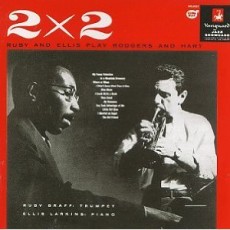
Reuben “Ruby” Braff was born on March 16, 1927 in Boston, Massachusetts He began playing in local clubs in the 1940s and in 1949, and he was hired to play with the Edmond Hall Orchestra at Boston’s Savoy Cafe. Ruby teamed up with Pee Wee Russell when the clarinet was making a comeback and they recorded several sessions for Savoy Records.
Relocating to New York in 1953 Braff easily fit into a variety of Dixieland and mainstream settings becoming in demand for band dates and recordings. He recorded as both leader and sideman working with such names as Vic Dickinson, Buck Clayton, Urbie Green, Ellis Larkins and Benny Goodman.
In the Sixties he was a member of George Wein’s Newport All-Stars but for a number of years work was hard to come by for the Dixieland player until the 70s when he formed a quartet in 1973. Following this he freelanced in different small combos and duets ultimately recording with Scott Hamilton’s quintet and sparring with guitarist Howard Alden.
Ruby Braff, cornetist and trumpeter who played in the genres of Dixieland, mainstream jazz and swing passed away on February 10, 2003 in Chatham, Massachusetts.

From Broadway To 52nd Street
The Roar Of The Greasepaint – The Smell Of The Crowd opened its season at the Shubert Theatre on May 16, 1965 and ran for 231 performances. Leslie Bricusse and Anthony Newley composed the music with the later starring alongside Cyril Ritchard. From these two talented lyricist and composer, Who Can I Turn To and Look At That Face entered the lexicon of jazz standards.
The Story: The allegorical plot examines the maintenance of the status quo between the upper and lower classes of British society in the 1960s. Since Sir forever is changing the rules of the game of life, downtrodden young Cocky always gets the short end of the stick. Assisting Sir is his eager disciple Kid, anxious to pick up bits of wisdom while helping keep Cocky in his place.
Broadway History: Musical theatre is a form of theatrical performance that combines songs, spoken dialogue, acting, and dance. The story and emotional content of a musical may have humor, pathos, love, anger and are communicated through the words, music, movement and technical aspects of the entertainment as an integrated whole. Although musical theatre overlaps with other theatrical forms like opera and dance, it may be distinguished by the equal importance given to the music as compared with the dialogue, movement and other elements. Since the early 20th century musical theatre stage works have generally been called, simply, musicals.
Sponsored By

www.whatissuitetabu.com
Daily Dose Of Jazz…
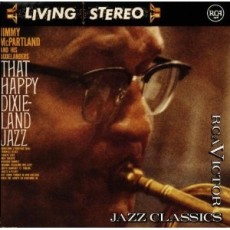
James Dugald McPartland was born on March 15, 1907 in Chicago, Illinois and due to family problems caused Jimmy and his siblings to be partly raised in orphanages. After being kicked out of one orphanage for fighting, he got in further trouble with the law. Fortunately, he had started violin at age 5, then took up the cornet at 15 and credits music with turning him around.
A member of the legendary Austin High Gang in the 920s, they would study and attempt duplication of recordings by The New Orleans Rhythm Kings and visit with Louis Armstrong and King Oliver’s Creole Jazz Band at Lincoln Gardens. After playing through high school, their first musical job was under the name The Blue Friars. In 1924, at age 17, McPartland was then called to New York to take Bix Beiderbecke’s place in the Wolverine Orchestra and who gave him a cornet he would play throughout his career.
From 1926 to the end of the decade, Jimmy worked with Art Kassel, the McKenzie-Condon Chicagoans, Ben Pollack and Benny Goodman, moonlighted in Broadway pit bands and played in a number of small combos. By the thirties he was back in Chicago working with his brother at the Three Deuces and working with other bands around the city. He spent time in South America, returned and led his own bands until drafted into WWII.
Upon his return McPartland worked with Willie “The Lion” Smith’s band that won a Grammy for the soundtrack to the 1954 film After Hours. He soon met and married Marian, encouraged her to form her own group and subsequently landed a long residency at the Hickory House. Jimmy went on to try his hand at acting resulting in a featured role in a Sal Mineo and Ralph Meeker episode “The Magic Horn” on The Alcoa Hour in 1956.
Over the course of his career James McPartland has played with Gene Krupa, Jack Teagarden, Eddie Condon, Pee Wee Russell, Bud Freeman, Glenn Miller, Benny Goodman, Lil Armstrong and George “Pops” Foster to name a few while also guest starring with many bands and at festivals around the world. Although he and Marian divorced in 1970, they remained friends, worked together and remarried shortly before his death of lung cancer on March 13, 1991 in Port Washington, New York, two days shy of his 84th birthday.
More Posts: cornet