

Daily Dose Of Jazz…
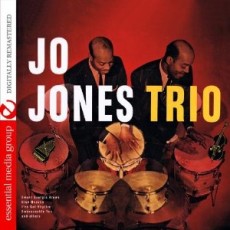
Jo Jones was born Jonathan David Samuel Jones on October 7, 1911 in Chicago, Illinois. He moved to Alabama where he learned to play several instruments, including saxophone, piano, and drums. He worked as a drummer and tap-dancer in carnival shows until joining Walter Page’s band “The Blue Devils” in Oklahoma City, Oklahoma in the late 1920s. He recorded with trumpeter Lloyd Hunter’s Serenaders in 1931, later joining pianist Count Basie’s band in 1934.
Jones, Basie, guitarist Freddie Green and bassist Walter Page were sometimes billed as an “All American Rhythm Section”. Taking a brief break for two years when he was in the military, he remained with Basie until 1948, participating in the Jazz At The Philharmonic concert series.
One of the first drummers to promote the use of brushes on drums and shifting the role of timekeeping from the bass drum to the hi-hat cymbal, Jo had a major influence on later drummers such as Buddy Rich, Kenny Clarke, Roy Haynes, Max Roach and Louie Bellson.
He performed regularly in later years at the West End jazz club at 116th and Broadway in New York City. He also starred in several films, most notably the musical short Jammin’ The Blues in 1944. In his later years, he was known as Papa Jo Jones and often omitted bass drum playing altogether. He continued a ride rhythm on hi-hat while it was continuously opening and closing instead of the common practice of striking it while it was closed. His style influenced the modern jazz drummer’s tendency to play timekeeping rhythms on a suspended cymbal that is now known as the ride cymbal.
In 1979, Jones was inducted into the Alabama Jazz Hall of for his contribution to the Birmingham, Alabama musical heritage and 1985 was the recipient of an American Jazz Masters fellowship awarded by the National Endowment for the Arts.
He recorded nearly a dozen albums as a leader and more as a sideman between 1950 and 1985 working with the likes of Gene Ammons, Art Blakey, Sonny Stitt, Coleman Hawkins, Oscar Peterson, Ella Fitzgerald, Illinois Jacquet, Ben Webster and Charles Mingus.
Drummer Jo Jones, who passed away on September 3, 1985 was often confused with drummer Philly Joe Jones, and ironically the two died a few days apart.
More Posts: drums
Daily Dose Of Jazz…
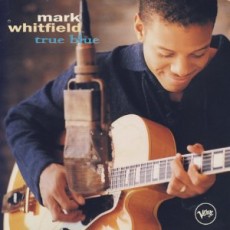
Mark Whitfield was born October 6, 1966 in Syosset, New York and graduated from Boston’s Berklee College of Music, studying composition, arranging and all styles of guitar performance. Upon graduation he returned to New York embarking on a career that afforded him the opportunity to collaborate with many artists including Dizzy Gillespie, Art Blakey, Clark Terry, Jimmy Smith, Carmen McCrae, Herbie Hancock, Quincy Jones, Jack McDuff, Betty Carter, Shirley Horn, Ray Charles, Gladys Knight, Burt Bacharach, Joe Williams, Wynton Marsalis, Bradford Marsalis, Stanley Turrentine and his greatest teacher and mentor George Benson.
The New York Times dubbed Whitfield “The Best Young Guitarist in the Business” and in 1990 Warner Bros. released his debut, “The Marksman”. The success of this release has led to a recording career that has produced 14 projects as a leader and collaborations with Sting, D’Angelo, Mary J. Blige, Chaka Khan, John Mayer, Jill Scott, Roy Hargrove, Diana Krall, Lauryn Hill, Sy Smith and Chris Botti.
In 2005, Whitfield accepted the invitation to join the faculty at Berklee, teaming up with Joe Lovano, Ralph Peterson, Danilo Perez, and Terry Lynn Carrington as “Artists in Residence”. While maintaining a teaching schedule the guitarist performs, tours worldwide and records, his latest project being “Songs of Wonder”, with two projects in the works with Christian McBride and Nicholas Payton.
More Posts: guitar
From Broadway To 52nd Street
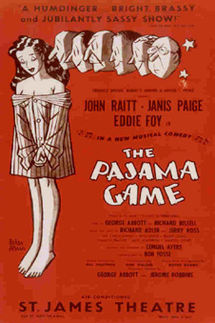
The Pajama Game drew back the first curtain at the St. James Theatre on May 13, 1954 and ran a record 1063 performances catapulting the show into the register of blockbuster musicals. Eddie Foy Jr., John Raitt, Janis Paige and Shirley MacLaine starred in the musical with music written and composed by Richard Adler & Jerry Ross. Jazz has had the privilege to give the song Hey There perpetual encores.
The Story: Adapted from the Broadway play, it’s a story of Sid, a workshop superintendent who must deal with a union demand for a 7.5-cent raise at the Sleep-Tite Pajama Factory. A strike is imminent and Babe the leader of the grievance committee leads the fight. However Sid is attracted to Babe and ensues a course of romance but is deflected. With slowdowns and machinery breakdowns promoting her cause, Sid reluctantly fires her. However he is convinced there is merit to Babe’s championship of the union and plots to get a peek at the books kept by Gladys.
Taking Gladys out to a nightclub Sid wheedles the keys from her but before he can leave the two are discovered by Babe. Sid gets a look at the books, sees that the boss has already tack on the 71/2 cents to production but has keeping the profits for himself. Sid confronts the boss, gets him to agree to the raise, goes to the union rally to bring the news and peace to his love life. Finally accepting her feelings for Sid, she falls for him. Everyone goes out to celebrate at Hernando’s Hideaway.
Jazz History: The free jazz movement, coming to prominence in the late ’50s, spawned very few standards. Free jazz’s unorthodox structures and performance techniques are not as amenable to transcription as other jazz styles. However, “Lonely Woman”, a blues by saxophonist Ornette Coleman, is perhaps the closest thing to a standard in free jazz, having been recorded by dozens of notable performers.
Free jazz is an approach to the music that was first developed in the 1950s and 1960s. Though the music produced by free jazz composers varied widely, the common feature was a dis-satisfaction with the limitations of bebop, hard bop and modal jazz, which had developed in the 1940s and 1950s. Each in their own way, free jazz musicians attempted to alter, extend, or break down the conventions of jazz, often by discarding hitherto invariable features chord changes or tempos. While usually considered experimental and avant-garde, free jazz has also oppositely been conceived as an attempt to return jazz to its “primitive”, often religious roots, and emphasis on collective improvisation.
Sponsored By

www.whatissuitetabu.com
Daily Dose Of Jazz…
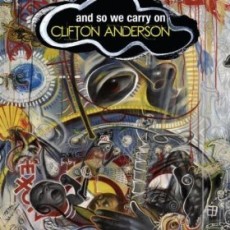
Clifton Anderson was born October 5, 1957 in Harlem, New York City, grew up surrounded by music and exhibited an affinity for music at an early age. His father was a church organist/choir director, his mother a singer and pianist. When he was just seven years old he got his first trombone, a gift from his uncle Sonny Rollins.
Clifton attended the prestigious Fiorello LaGuardia High School of Music and Art followed by a year at SUNY – Stony Brook in 1974, then matriculating through the Manhattan School of Music, along with his friends Angela Bofill and Kenny Kirkland. It was during this tenure that he became involved in jazz organizations, ensembles and workshops that led to his first recording date with Carlos Garnett in 1976.
By the time he graduated Anderson was established as one the young “in demand” trombonists on the New York scene. He became a part of Slide Hampton’s “World of Trombones” and played alongside folks like Steve Turre, Clifford Adams, Papo Vazquez, Frank Lacy, Conrad Herwig and Robin Eubanks among others. However, it was J.J. Johnson who remained Clifton’s greatest influence.
The early 1980’s found Clifton working with a “who’s who” of diverse musical giants: from Frank Foster, McCoy Tyner, Clifford Jordan, Stevie Wonder, Dizzy Gillespie, Merv Griffin and The Mighty Sparrow to Lester Bowie, Paul Simon, Muhal Richard Abrams, T.S. Monk and Dionne Warwick among others. During this period Clifton also played on the Broadway shows Dreamgirls and Nine.
In 1983 Anderson got the call to join his uncle, Sonny Rollins, touring worldwide and appearing on his recordings. As a leader he has recorded three albums “Landmarks”, “Decade” and “And So We Carry On”. Between musical and administrative duties, running Sonny’s merchandising company, he has given academia much, teaching both privately and publicly and as an artist in residence at Duke University. He continues to perform, tour and record.
More Posts: trombone
Daily Dose Of Jazz…
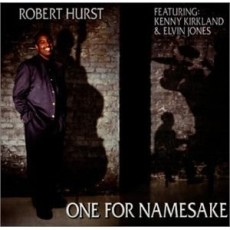
Robert L. Hurst III was born on October 4, 1964 in Detroit, Michigan and began his early music studies playing the guitar before concentrating on the bass. In 1985 he began working with Out Of The Blue and adding such jazz luminaries and contemporaries as Tony Williams, Mulgrew Miller, Harry Connick Jr., Geri Allen, Russell Malone, Terence Blanchard, Pharaoh Sanders, Sting, Carl Allen and Steve Coleman among others to his roster.
From 1986 to 1991 Hurst played in Wynton Marsalis’s ensemble, played with Branford Marsalis in the early nineties, and debuted as a leader in 1993 recording “Robert Hurst Presents” that reached #13 on the Billboard Top Jazz Albums chart. He has won four Emmy and five Grammy awards and directed, arranged and composed while a member of The Tonight Show Band.
He has scored original music for the films The Wood and Brown Sugar; performed music for Ocean’s 11, Ocean’s 12, Ocean’s 13, and on the Good Night, and Good Luck the soundtrack featuring Dianne Reeves, in which she won the Jazz Vocal Grammy in 2008. His recent recordings with Kenny Garrett and Diana Krall were each nominated for a 2007 Grammy.
No stranger to education Hurst has been involved with the Education of Jazz and Jazz History, receiving the Presidential Scholarship from President Ronald Reagan. He currently holds a position of Associate Professor teaching jazz bass at the University of Michigan’s School of Music, Theatre & Dance, and holds a seat with the Board of Directors for the John Coltrane Foundation.
More Posts: bass