

Daily Dose Of Jazz…
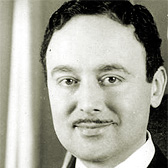
Peter DeRose was born on March 10, 1900 in New York City and as a boy exhibited a gift for music. His older sister taught him to play piano but composing was his true love and by 18 had published his first song. After high school he worked as a music store stock clerk but his successful 1920 composition “When You’re Gone, I Won’t Forget” led him to a job with Italian music publisher G. Ricordi & Company.
In 1923 he met his soon to be wife May Singhi Breen and the duet of piano and ukulele became popular entertainment on NBC’s musical radio show “Sweethearts of the Air” which ran for sixteen years. The show also offered a spotlight for DeRose to introduce many of his compositions.
Collaborating with lyricists Charles Tobias, Al Stillman, Carl Sigman and Billy Hill some of his best known works were “Somebody Loves Me”, Wagon Wheels, Rain, Lamp Is Low, On A Little Street In Singapore and Deep Purple. His songs have been performed by the likes of Bing Crosby, Paul Robeson, Ella Fitzgerald, Frank Sinatra, Johnny Mathis, Sarah Vaughan and Duke Ellington among others.
He wrote religious sheet music; composed for the 1941 Ice Capades show and ventured into Hollywood scoring music for several motion pictures. In 1970 he was inducted into the Songwriters Hall Of Fame.
The Hall of Fame composer of jazz and pop during the Tin Pan Alley era, composer Peter DeRose passed away on April 23, 1953 in his hometown of New York City.
More Posts: composer
From Broadway To 52nd Street
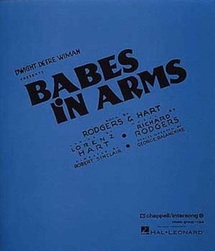
Babes In Arms opened at the Shubert Theatre on April 14, 1937 and ran for two hundred and eighty-nine performances. The musical starred Mitzi Green (Billie Smith), Ray Heatherton (Valentine “Val” LaMar), Alfred Drake and the Nicholas Brothers.
The music composed by Richard Rodgers and the lyrics were provided by Lorenz Hart and from their score arose five songs that are jazz standards – I Wish I Were In Love Again, Johnny One Note, The Lady Is A Tramp, and Where Or When.
The musicals most famous and recorded composition, My Funny Valentine, in which Billie sings to Val first poking fun at some of Valentine’s characteristics but ultimately affirming that he makes her smile and that she doesn’t want him to change.
The Story: With a threat of being assigned to a work farm, the children of traveling vaudevillians band together to mount a musical revue. The show wins critical acclaim but loses money. So the children are sent to the farm. They are rescued when a French aviator on a transatlantic flight, makes an emergency landing on the farm, coming to their aid.
Jazz History: In the 1930s swing jazz emerged as a dominant form in American music, in which some virtuoso soloists became as famous as the bandleaders. Key figures in developing the “big” jazz band included bandleaders and arrangers Count Basie, Cab Calloway, Jimmy and Tommy Dorsey, Duke Ellington, Benny Goodman, Fletcher Henderson, Earl Hines, Glenn Miller and Artie Shaw.
Ellington and his band members composed numerous swing era hits that have become standards: “It Don’t Mean A Thing (If It Ain’t Got That Swing), Sophisticated Lady, Caravan were among them. Also during this period trumpeter, bandleader and singer Louis Armstrong was a much-imitated innovator of early jazz.
More Posts: broadway
Daily Dose Of Jazz…
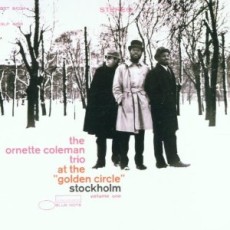
Ornette Coleman was born March 9, 1930 hailing from Fort Worth, Texas where he began performing R&B and bebop on the tenor. He found his way out of Texas taking a job with traveling shows, first Silas Green and then rhythm and blues. After his tenor was destroyed in an attack, Ornette switched to alto that has remained his primary instrument.
From the beginning Coleman was ear was unorthodox, his approach to harmony and chord progression was less rigid than that of bebop musicians who considered him out-of-tune. However there were some who heard the same sound and by the 50s he was making music with Paul Bley, Don Cherry, Billy Higgins, Don Payne, Walter Norris, Shelly Manne and Charlie Haden.
Regarded by some as iconoclastic, others like conductor Leonard Bernstein and composer Virgil Thomson saw his genius and innovation. Ornette became one of the major influences in the free jazz movement and a major player in the genesis of avant-garde jazz. Throughout the sixties and seventies he played with Freddie Hubbard, Eric Dolphy, Scott LaFaro and Ed Blackwell and introduced brief thematic dissonant fanfares, regular but complex pulse and solos where band mates were able to chime in as they wish.
His friendship with Albert Ayler influenced his development of the trumpet and violin. His evolution continued and subsequent quartets included his son Denardo, Sunny Murray, Jimmy Garrison, Elvin Jones, and Dewey Redman. It also forwarded his sojourn into electrified instruments, adopting a jazz-fusion mode fashionable at the time and bringing in such artists as Jerry Garcia of the Grateful Dead. He has brought to his recordings Pat Metheny, Geri Allen, and Joachim Kuhn but seldom appeared as a sideman.
Ornette Coleman is a saxophonist, violinist, trumpeter, and composer whose timbre is easily recognized with his keen, crying sound drawing upon the blues. In 2007 he won a Pulitzer for his album Sound Grammar and honored with a Grammy for lifetime achievement He continued to push the envelope with younger musicians from radically different cultures until his passing on June 11, 2015 in Manhattan, New York.

Daily Dose Of Jazz…
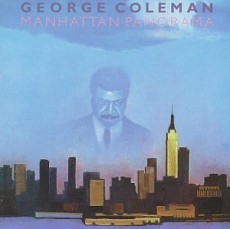
George Edward Coleman, born March 8, 1935 in Memphis, Tennessee, taught himself to play alto saxophone during his teen years inspired by Charlie Parker. Growing up his classmates were Harold Mabern, Booker Little, Frank Strozier, Hank Crawford and Charles Lloyd.
He began his career working with Ray Charles and by 1953 joined B. B. King where he switched to tenor. Moving to Chicago with Booker Little in 1956 he started working with Gene Ammons and Johnny Griffin before joining Max Roach in ’58. Coleman recorded with Jimmy Smith, Lee Morgan, Curtis Fuller, Eddie McFadden, Kenny Burrell and Donald Bailey before moving to New York with Max Roach.
Subsequent gigs with Ron Carter, Slide Hampton, Jimmy Cobb and Wild Bill Davis led him to become a part of the Miles Davis Quintet, recording among others Seven Steps to Heaven, My Funny Valentine and Four and More. This was followed up with his joining Herbie Hancock on his seminal work Maiden Voyage.
A foray into Hollywood placed Coleman on the sets of Freejack with Estevez, Jagger and Hopkins and on the Preacher’s Wife set with Denzel Washington and Whitney Houston.
The hard bop tenor, bandleader, composer and educator George Coleman has an impressive list of performances and recordings too numerous to name but suffice it to say he has worked with everyone from Mingus to Jamal to Hampton from the 60’s to the present day. He continues to lead his own groups, performing and recording regularly both as a leader and sideman.
More Posts: saxophone
Daily Dose Of Jazz…
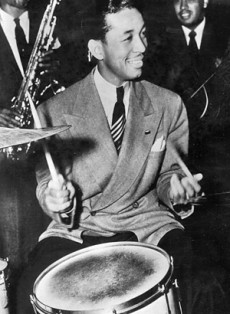
Drummer and singer Lee Young was born on March 7, 1914 as Leonidas Raymond Young in New Orleans, Louisiana to parents who were both musicians and teachers. The younger brother of tenorist Lester Young, his father drilled music into his children long before they started school, preparing them for the carnival and vaudeville road. The family finally settled in Los Angeles.
Steeped in the roots deep in New Orleans jazz, Lee played and recorded with Fats Waller in the thirties, and helped forge a burgeoning and vibrant jazz scene in Los Angeles in the ‘40s, and in 1944 he was drumming with Les Paul, J. J. Johnson, and Illinois Jacquet at Norman Granz’s first Jazz At The Philharmonic. In the Fifties he conducted and drummed for Nat King Cole.
Young was the first Black musician to be a regular studio musician in Hollywood and taught Mickey Rooney to play drums for a movie. By the 60’s he was a successful A&R man and record producer for Vee-Jay and Motown with a reputation for predicting what would sell.
Young is considered one of the most significant figures in jazz who directly connected the world to the early glories of jazz: the birth of jazz in New Orleans, the jazz age, the swing era and bebop. He led an integrated band at a time when it was not fashionable. He worked with Duke Ellington, Count Basie, Benny Goodman, Lionel Hampton and Les Hite. Lee Young passed away at the age of 94 on July 31, 2008.
Lee Young: 1914-2008 / Drums

More Posts: drums