
Daily Dose Of Jazz…
Art Themen was born Arthur Edward George Themen on November 26, 1939 in Manchester, England. In 1958 he began his medical studies at the University of Cambridge, going on in 1961 to complete his studies at St. Mary’s Hospital Medical School in London, qualifying in 1964. He specialized in orthopedic medicine and eventually became a consultant.
Themen started playing saxophone with the Cambridge University Jazz Group, and then in London playing with blues musicians Jack Bruce and Alexis Korner. In 1965 he played with the Peter Stuyvesant Jazz Orchestra in Zurich, going on to play with such English luminaries as Michael Garrick and Graham Collier’s Music.
In 1974 Art entered into what was to be one of his central musical relationships when he started playing with Stan Tracey that took him throughout the United Kingdom and all over the world. He has also played and toured with musicians such as Nat Adderley, Ian Carr, George Coleman and Al Haig. In 1995 he formed a quartet with pianist John Critchinson.
Themen’s style originally owed much to the influence of Dexter Gordon and Sonny Rollins, but later influences included such disparate saxophonists Coleman Hawkins, Evan Parker and John Coltrane.

More Posts: saxophone
Daily Dose Of Jazz…
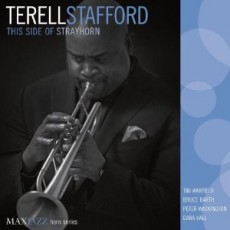
Terell Stafford was born in Miami, Florida on November 25, 1966 and raised in Chicago, Illinois and Silver Spring, Maryland. He went on to get a degree in music education from University of Maryland in 1988 branching out from classical trumpet to jazz with their jazz band. He went on to obtain a degree in classical trumpet performance from Rutgers University.
His career in jazz soon picked up and has played with McCoy Tyner, Shirley Scott, Christian McBride, John Clayton, Steve Turre, Stephen Scott, Bobby Watson, Dave Valentin, Lafayette Harris, Cecil Brooks III, Cornell Dupree, Ed Wiley, Victor Lewis, Melissa Walker, Herbie Mann and Russell Malone among others. He has graced the stages such as Carnegie Hall and The Tonight Show.
Stafford’s educator hat has him as the Director of Jazz Studies at Temple University and has also worked with the Juilliard School’s jazz program, at the Lincoln Center’s Essentially Ellington program, and with the 2006 All-Alaska Jazz Band. He has recorded eight albums to date and continues to perform and tour.

More Posts: trumpet
Daily Dose Of Jazz…
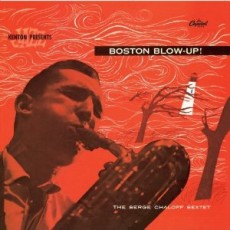
Serge Chaloff was born on November 24, 1923 in Boston, Massachusetts to noted piano teachers, Margaret and Julius. He was among the few major jazz performers on his instrument, and until his arrival on the jazz scene the only prominent baritone player was Harry Carney of the Duke Ellington Orchestra.
Originally influenced by Charlie Parker, Serge became the first major bebop baritone saxophonist, opening the way for others to follow. He first became well known as one of the “Four Brothers” reed section in Woody Herman’s Second Herd. He also played with Boyd Raeburn, Georgie Auld, Jimmy Dorsey and Count Basie.
Recording as a leader Chaloff produced five records working with Stan Kenton, Sonny Clark, Leroy Vinnegar, Philly Joe Jones and the metronome All-Stars, however, his career was greatly limited by addiction to heroin. After successfully giving up drugs, baritone saxophonist Serge Chaloff developed cancer of the spine which caused his early death on July 16, 1957 at he young age of 33.

More Posts: saxophone
From Broadway To 52nd Street
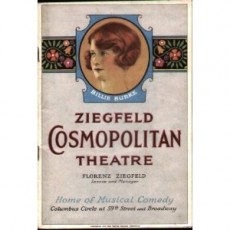
It was just seven days before the panic began leading to the crash an ambitious new musical appeared on October 17, 1929 on the stage of the Cosmopolitan Theatre by the title of Great Day. Music composed by Billy Rose and Vincent Youmans,however the show only experienced a run of only thirty-six performances due to the Crash, one good thing came out of the experience is the composition More Than You Know that went on to become a jazz standard.
The Story: Set in Louisiana on the Randolph Plantation, the Spanish Casino, the Mississippi river and the Levee.
Broadway History: By 1929 as the Roaring Twenties was coming to a close, the country was still reeling in widespread euphoria during this period of peace and great prosperity fueled by increased industrialization and new technologies, such as the radio, the automobile, even had air flight becoming widespread. Millionaires were made overnight as they mortgaged homes and sank life savings into hot stocks like Ford and RCA. Little did they know what lied beneath the horizon. The Fed had raised interest rates several times to cool down the overheated stock market and on October 24th panic selling occurred as investors realized the stock boom had been an over-inflated bubble. Millionaire margin investors were decimated and became bankrupt immediately as the stock market crashed on October 28th and 29th.
At the end of 1929, sixteen billion dollars had been shaved off stock capitalization, 140 billion of depositor money disappeared and 10,000 banks failed ushering in the Great Depression that would last till the mid 1930’s. Though the country would suffer financially, Broadway still mounted plays and entertained audiences.
Sponsored By

www.whatissuitetabu.com
More Posts: broadway
Daily Dose Of Jazz…
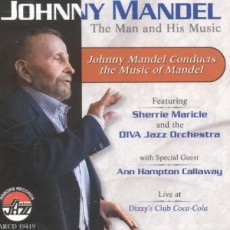
Johnny Mandel was born John Alfred Mandel on November 23, 1925 in New York, New York. His mother, an opera singer, discovered he had perfect pitch at age five. Piano lessons ensued but Johnny switched to the trumpet and later the trombone.
Johnny studied at the Manhattan School of Music and the Julliard School. By 1943 he was playing trumpet with Joe Venuti, in 1944 with Billy Rogers and then trombone in the bands of Boyd Raeburn, Jimmy Dorsey, Buddy Rich, George Auld and Chubby Jackson. In 1949 he accompanied singer June Christy in the Bob Cooper Orchestra, then with Elliot Lawrence’s outfit, followed by a stint with Count Basie and a move to Los Angeles, California to play with Zoot Sims.
In the late Forties and into the Fifties he wrote jazz compositions like “Not Really the Blues” for Woody Herman, “Hershey Bar” and “Pot Luck” for Stan Getz, “Straight Life” and “Low Life” for Count Basie as well as “Tommyhawk” for Chet Baker. Mandel composed, conducted and arranged the music for numerous movie sound tracks with his earliest credited contribution to “I Want To Live” in 1958 being nominated for a Grammy. Mandel’s most famous compositions include “Suicide Is Painless” from M*A*S*H, “Close Enough for Love”, “Emily”, “A Time for Love”, and “The Shadow Of Your Smile” which won an Oscar for Best Song and a Grammy for Song Of The Year in 1966.
Mandel is a recipient of the 2011 NEA Jazz Masters Award, has won several Grammy Awards for Best Instrumental Arrangements Accompanying Vocals for Quincy Jones’ Velas, Natalie & Nat King Cole’s Unforgettable and Shirley Horn’s Here’s To Life. He has composed music with lyricists Alan & Marilyn Bergman, Paul Williams and Johnny Mercer; and arranged for Frank Sinatra, Tony Bennett, Barbra Streisand, Diana Krall, The Diva Jazz Orchestra and Ann Hampton Calloway among numerous others.