

Daily Dose Of Jazz…
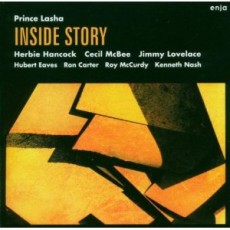
Prince Lasha (pronounced “La-shay“) was born William B. Lawsha on September 10, 1929 in Fort Worth, Texas. He came of age studying and performing alongside fellow I.M. Terrell High School students John Carter, Ornette Coleman, King Curtis, Charles Moffett and Dewey Redman.
Lasha moved to California during the 1950s. In the 1960s, Prince Lasha was active in the burgeoning free jazz movement, of which his Fort Worth cohort Ornette Coleman was a pioneer. Lasha worked closely with saxophonist Sonny Simmons, with whom he recorded two albums, The Cry and Firebirds no the Contemporary label, the latter receiving five stars and an AMG Albumpick at Allmusic.
Lasha worked as a sideman appearing on recordings with Eric Dolphy, Elvin Jones/Jimmy Garrison Sextet featuring McCoy Tyner, and with Michael White. In the 1970s, Lasha and Simmons made additional recordings under the name Firebirds. In 2005, Lasha recorded the album The Mystery of Prince Lasha with the Odean Pope Trio.
Saxophonist, flautist and clarinetist Prince Lasha died on December 12, 2008, in Oakland, California. He left a small legacy of six recordings as a leader marking his place in jazz history.

Daily Dose Of Jazz…
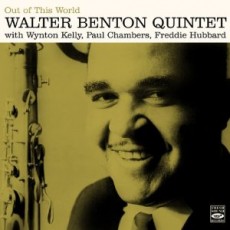
Walter Benton was born September 9, 1930 in Los Angeles, California and first began playing saxophone as in high school. After three years of service in the Army in the early 1950s, he played in 1954 with Kenny Clarke, Max Roach and Clifford Brown.
From 1954 to 1957 he played Afro-Latin jazz with Perez Prado, touring Asia with the band. Returning to the States, he went on to work with Quincy Jones in 1957 and Victor Feldman in 1958-59. He led his own group from 1959, recording under his own name in 1960 with Freddie Hubbard, Wynton Kelly, Paul Chambers and Tootie Heath.
That same year he worked again with Max Roach and Julian Priester. In 1961 he recorded with Abbey Lincoln, Roach once more, Eric Dolphy and Slide Hampton. By the late 1960s he was working with Gerald Wilson and John Anderson.
As so often happens with great players, in the late 60’s Benton became discouraged with the state of jazz and the overall music business, disappeared from the scene, sank into poverty never re-discovered. He stopped playing and lived the rest of his days in cheap rooming houses and collected a pittance of social assistance.
On August 14, 2000, West Coast tenor saxophonist Walter Benton, who played cool and bluesy, ventured into free and wild before returning to his roots with his beautiful dark and somewhat diffused sound coupled with his own ideas and phrasing, passed away in total obscurity in Los Angeles at the age of 69.

More Posts: saxophone
From Broadway To 52nd Street
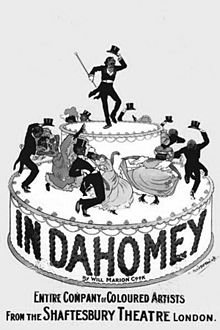
In Dahomey opened on February 18, 1903 at the New York Theater and ran for 53 performances, then considered a successful run. It was a landmark American musical comedy, in that it was “the first full-length musical written and played by blacks significantly marked the first full-length Black to be staged in an indoors venue at a major Broadway house and the first black musical to have its score published, albeit in England. As one of the most successful musical comedies of its era, it propelled composer Will Marion Cook, lyricist Paul Lawrence Dunbar and leading performers Bert Williams, James Smith and George Sisay to become household names. It was “the first African American show that synthesized successfully the various genres of American musical theatre popular at the beginning of the twentieth century—minstrelsy, vaudeville, comic opera and musical comedy.
Though a jazz standard did not emanate from this musical either, the In Dahomey poster features the famous “cake walk” with the character portrayed by Bert Williams and prompted Percy Grainger to write a highly virtuosic concert “rag” titled In Dahomey (Cakewalk Smasher), that he completed in 1909.
The Story: A tale of a group of Blacks, who, having found a pot of gold, move to Africa and become rulers of Dahomey (present-day Benin).
Broadway History: One of the most influential sources of the American musical was one of its most shameful. The minstrel show got its start in the early nineteenth century when a number of white entertainers, mostly of Irish descent, found they could connect with their more raucous audiences by applying burnt cork to their skin and caricaturing black people in various songs, dances and skits. However, the portrayals by white entertainers created a dialogue that became very fashionable, even though they perpetuated negative stereotypes. Black entertainers knew they didn’t speak like that and formed a troupe, and out of that came comic duos on Broadway like Flournoy Miller and Aubrey Lyles in the 20’s, William Gaxton and Victor Moore in the 30’s. But one man transcended minstrelsy’s denigration of his race and became not only the most popular comedian of his day, but the most famous African American since Frederick Douglass. He was Bert Williams, who denied entrance into Stanford University, worked as a banjo player in saloons and minstrels until he teamed up with George Walker. The team gained fame, which led them to head the cast of “In Dahomey” in 1903, the first full-length musical written and played by blacks performed at a major Broadway house.
Sponsored By

www.whatissuitetabu.com
Daily Dose Of Jazz…
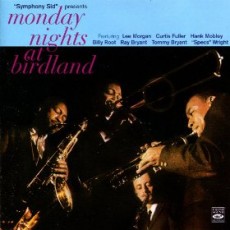
Specs Wright was born Charles Wright on September 8, 1927 in Philadelphia, Pennsylvania. He played drums in an Army band until his discharge in 1947. Following this he played in a group with Jimmy Heath and Howard McGhee. By 1949 he had joined Dizzy Gillespie’s band alongside John Coltrane, remaining until it disbanded in mid-1950.
Wright would rejoin Dizzy late in the decade as a member of his sextet with Coltrane, Jimmy Heath, Percy Heath and Milt Jackson. He would go on to play with Earl Bostic, Kenny Drew, Cannonball Adderley, Art Blakey and Carmen McRae as well as a member of the Hank Mobley sextet with Curtis Fuller, Ray Bryant, Tommy Bryant, Billy Root and Lee Morgan.
Not one to be idle, though never a leader, he was a sought after sideman playing with Sonny Rollins, Betty Carter, Red Garland, Coleman Hawkins and Lambert, Hendricks and Ross in the early Sixties. Drummer Specs Wright passed away on February 6, 1963. He was 36 years old.

More Posts: drums
Daily Dose Of Jazz…
Michael Jay Feinstein was born September 7, 1956 in Columbus, Ohio. At the age of five, he studied piano for a couple of months until his teacher became angered that he wasn’t reading the sheet music she gave him, since he was more comfortable playing by ear. As his mother saw no problem with her son’s method, she took him out of lessons and allowed him to enjoy music his own way.
After graduating from high school, Feinstein worked in local piano bars for two years, moving to Los Angeles when he was 20. He catalogued Ira Gershwin’s extensive collection of phonograph records, unpublished sheet music and rare recordings. This led to the development of a close relationship with Gershwin’s neighbor, Rosemary Clooney.
By the mid-1980s, Feinstein was a nationally known cabaret singer-pianist who dedicating himself to the Great American Songbook and recorded his debut titled Pure Gershwin in 1986. This led to more Americana with Irving Berlin, a live album from the Algonquin, “Over There” featuring music of the WWI era and “Pure Imagination” – a children’s album in 1992.
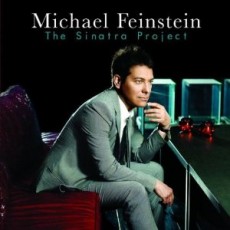
He has starred on Broadway, recorded several “composer” albums, and a series of “romance” albums and a Sinatra project. Michael was appointed by the Library of Congress to the National Recording Preservation Board to safeguard America’s musical heritage; he is the artistic director of The Center for the Performing Arts, which is home to the Michael Feinstein Initiative, and is the owner of a nightclub in Manhattan, “Feinstein’s” in the Regency Hotel.

More Posts: vocal