Daily Dose Of Jazz…
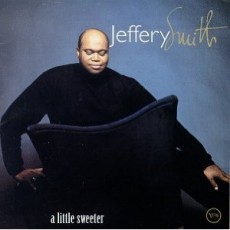
Jeffery Smith was born on September 14, 1955 in Queens, New York and began honing his voice at a very early age, under the influence of his mother, a classical singer. At the age of 18, he moved to Los Angeles and worked as a singer, actor and artist, landing several bit parts in television, and film, while performing in the local clubs.
In 1980 he starred in the production of “Hollywood & Highland” and was awarded the coveted 1981 Drama Critic’s Award, from Drama Logue Magazine. Returning to New York in 1985, the baritone co-starred on stage in “Jesus Christ Superstar”, “Hair” and “Capitol Cakewalk”, as well as performing in most of the city’s major clubs through 1991.
By 1991, Smith’s visit to Paris lasted for 7 years and while working with Claude Bolling, he recorded four albums, had two world tours with the big band, sang commercial jingles, and was signed with Universal/Verve for a 3-album deal, all of which received international acclaim. His 1995 debut recording “Ramona” was dedicated to his mother, and his U.S. debut came in 1998 with the release of “A Little Sweeter” on the Verve label.
Jeffery Smith has worked with Wynton Marsalis, the LCJ Orchestra, Dianne Reeves, Kenny Barron, Regina Carter, Ernie Watts, Pete Levin, Winard Harper, Joe Lovano, Dee Dee Bridgewater and TK Blue. He was the founder of the jazz cultivation not-for-profit Tri-Loxodonta Productions, a not-for-profit music organization cultivating jazz in upstate New York. Vocalist Jeffery Smith continued to perform internationally and record until he passed away on July 5, 2012..

More Posts: vocal
Daily Dose Of Jazz…
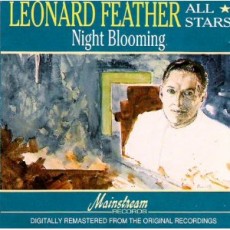
Leonard Geoffrey Feather was born on September 13, 1914 in London, England and learned to play the piano and clarinet without formal training and started writing about jazz and film by his late teens. At age of twenty-one, Feather made his first visit to the United States and after working in the U.K. and the U.S. as a record producer finally settled in New York City in 1939, where he lived until moving to Los Angeles, California in 1960.
His compositions have been widely recorded, including “Evil Gal Blues” and “Blowtop Blues” by Dinah Washington, and what is possibly his biggest hit, “How Blue Can You Get?” by blues artists Louis Jordan and B. B. King, and some of his own recordings as a bandleader are still available. But it was as a journalist, critic, historian, and campaigner that he made his biggest mark as one of the most widely read and most influential writer on jazz, and having written the liner notes for hundreds of jazz albums.
Leonard wrote the lyrics to the Benny Golson jazz composition “Whisper Not” which was then recorded by Ella Fitzgerald on her 1966 Verve release of the same name. He was co-editor of the Metronome Magazine and served as the chief jazz critic for the Los Angeles Times until his death on September 22, 1994 in Sherman Oaks, California at age eighty.
He leaves a legacy of a talented daughter, vocalist Lorraine Feather, a couple of dozen albums and several books such as The Encyclopedia Yearbook of Jazz in the Sixties, Inside Jazz and From Satchmo to Miles among others.
Daily Dose Of Jazz…
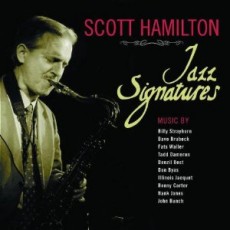
Scott Hamilton was born on September 12,1954 in Providence, Rhode Island. He emerged in the 1970s and at the time he was considered to be one of the few musicians of real talent who carried the tradition of the classic jazz tenor saxophone in the style of Ben Webster and Coleman Hawkins as well as Zoot Sims and Don Byas forward.
Hamilton began playing in various rhythm & blues outfits in his hometown, but subsequently shifted to jazz and the tenor saxophone. In 1976 he moved to New York City, in part the recommendation of Roy Eldridge and joined Benny Goodman for a period of time. In 1977 he recorded his debut album for Concord Records, with whom he would have a long recording career in his own name and as one of their Concord Jazz All Stars. He also worked backing singer Rosemary Clooney and others.
In the early 1980s he had formed his own quintet and toured all over the world. By then free from his drinking habit, in 1982 he had matured sufficiently to be able to break away from the spell of mainly Ben Webster and Zoot Sims, whom he had been criticized of imitating. From this point on both his playing and his tone were very much his own.
By the early 1990s Scott was ready for a next step and by 1994 when he released Organic Duke, he had developed a quite singular style: a large, well-rounded but still focused tone and improvising, ostensibly still based on the swing idiom. Tenor saxophonist Scott Hamilton has amassed a catalogue of over forty albums and continues to compose, perform and tour.

More Posts: saxophone
Daily Dose Of Jazz…
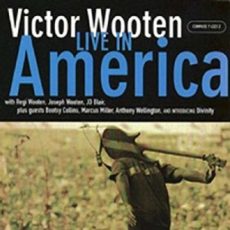
Victor Lemonte Wooten was born on September 11, 1964 in Mountain Home, Idaho and was the youngest of the five Wooten Brothers; Regi, Roy, Rudy and Joseph, all of whom are musicians. Regi began to teach him to play bass when he was two, and by the age of six was performing with his brothers in their family band, The Wooten Brothers Band. As a United States Air Force family, they moved around a lot when he was very young, but the family finally settled in the Warwick Lawns neighborhood of Newport News, Virginia in 1972.
While in high school, he and his brothers played in the country music venue at Busch Gardens theme park in Williamsburg, Virginia, Graduating from Denbigh High School in 1982, by 1987 Victor was traveling to Nashville, Tennessee to visit friends that he made at the theme park, one of whom was a studio engineer who introduced him to Béla Fleck, with whom he still collaborates musically.
As an educator Wooten has created a music program called Bass/Nature camp that has since expanded into the Victor Wooten Center for Music and Nature and now includes all instruments. All of his camps are held at his location called Wooten Woods which is a 147 acre retreat center located in Only, Tennessee, outside of Nashville. He also co-leads the Victor Wooten/Berklee Summer Bass Workshop at Berklee College of Music in Boston, MA. He collaborates with Berklee Bass Dept. chair, Steve Bailey and the two bassists have been teaching together since the early 1990s.
He has been featured on the cover of Making Music Magazine, has won the “Bass Player of the Year” award from Bass Player magazine three times, is the first to win the award more than once, and was named #10 in the “Top 10 Bassists of All Time” by Rolling Stone. As a leader he has recorded ten albums, another seven with various groups and with Bela Fleck, fourteen. He has authored a novel titled “The Music Lesson: A Spiritual Search for Growth Through Music” and has a sequel in the making. Bassist, composer, author, producer, educator, and five-time Grammy Award winner Victor Wooten, who has recorded an album titled SMV with Stanley Clarke and Marcus Miller, continues to compose, perform and record.

More Posts: bass
Daily Dose Of Jazz…
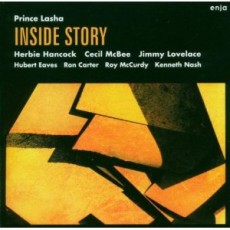
Prince Lasha (pronounced “La-shay“) was born William B. Lawsha on September 10, 1929 in Fort Worth, Texas. He came of age studying and performing alongside fellow I.M. Terrell High School students John Carter, Ornette Coleman, King Curtis, Charles Moffett and Dewey Redman.
Lasha moved to California during the 1950s. In the 1960s, Prince Lasha was active in the burgeoning free jazz movement, of which his Fort Worth cohort Ornette Coleman was a pioneer. Lasha worked closely with saxophonist Sonny Simmons, with whom he recorded two albums, The Cry and Firebirds no the Contemporary label, the latter receiving five stars and an AMG Albumpick at Allmusic.
Lasha worked as a sideman appearing on recordings with Eric Dolphy, Elvin Jones/Jimmy Garrison Sextet featuring McCoy Tyner, and with Michael White. In the 1970s, Lasha and Simmons made additional recordings under the name Firebirds. In 2005, Lasha recorded the album The Mystery of Prince Lasha with the Odean Pope Trio.
Saxophonist, flautist and clarinetist Prince Lasha died on December 12, 2008, in Oakland, California. He left a small legacy of six recordings as a leader marking his place in jazz history.