
Requisites
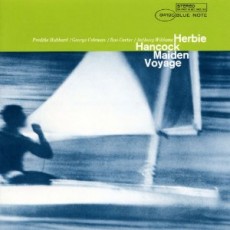
Maiden Voyage is a concept album aimed at creating an oceanic atmosphere. Many of the song titles refer to marine biology or the sea, and the musicians develop the concept through their use of space and almost tidal dynamics. Three of the albums tunes – Maiden Voyage, The Eye of the Hurricane and Dolphin Dance have become jazz standards. The album was presented with the Grammy Hall of Fame Award in 1999.
Personnel: Herbie Hancock – piano, Ron Carter – bass, Tony Williams –drums, Freddie Hubbard – trumpet, George Coleman – tenor saxophone
Supervised by: Rudy Van Gelder
Record Date: Blue Note / May 17, 1969
Cover: The sailboat lends to the nautical theme of a first outing.
Songs: Maiden Voyage, The Eye Of The Hurricane, Little One, Survival Of The Fittest and Dolphin Dance

More Posts: collectible,piano
Jazz In Film
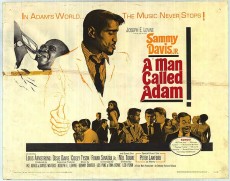
The Film: A Man Called Adam
The Year: 1966
The Director: Leo Penn
The Stars: Sammy Davis Jr., Ossie Davis, Cicely Tyson, Louis Armstrong, Frank Sinatra Jr., Peter Lawford, Mel Torme, Lola Falana, Jeanette Dubois, Johnny Brown, George Rhodes and Henry Silva.
The Music: Scored by Benny Carter with Sammy Davis ghosted by Nat Adderley. Performances by Louis Armstrong, Billy Kyle, Buster Bailey, Tyree Glenn, Kai Winding, Jo Jones, Frank Wes and Mel Torme.
The Story: Sammy Davis Jr. does a great job as the film’s central character Adam Johnson, a famous self-destructive, unlikable jazz trumpeter finds himself unable to cope with the problems of everyday life. He finds true love for the first time with a virginal bleeding heart: a sensible civil rights activist who wants to reform the hotheaded musician of his hard liquor and hard living. Adam, carrying around a multitude of shoulder-chips, lashes out at everybody and never seems to land on his feet; after burning all his bridges, he finds himself at the end of his professional rope; yet the faithful are still hopeful he can make a comeback. Much better are Ossie Davis as a friend with a strong center and endless patience, as well as love-interest Cicely Tyson. Mel Tormé stops the show with a terrific rendition of “All That Jazz”, while the superb soundtrack and Jack Priestley’s gleaming cinematography are first-rate throughout.
More Posts: film
Requisites
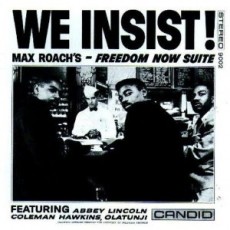
We Insist! Freedom Now Suite: This classic piece of art stands at the intersection of politics and music. It was recorded at a time when the civil rights movement was starting to heat up and drummer Max Roach composed and performed the seven-part suite dealing with black history, particularly slavery and racism.
Driva’ Man has a powerful statement by veteran tenor Coleman Hawkins and there is valuable solo space elsewhere for trumpeter Booker Little and trombonist Julian Priester, but it is the overall performance of Abbey Lincoln that is most notable. Formerly a nightclub singer, Lincoln really came into her own under Roach’s tutelage and she is a strong force throughout this intense set. On Triptych: Prayer / Protest / Peace, Lincoln is heard in duets with the drummer and her wrenching screams of rage are quite memorable.
Personnel: Max Roach – drums, Coleman Hawkins – tenor saxophone, Booker Little – trumpet, Julian Priester – trombone, Walter Benton – tenor saxophone, James Schenk – bass, Olantunji / Ray Mantilla – percussion, Abbey Lincoln / Oscar Brown Jr. – vocal
Record Date: Nola Penthouse Sound Studio, New York / August 31, 1960 & September 6, 1960 / Candid Records
Producer: Nat Hentoff
Songs: Driva’man, Freedom Day, Triptych: Prayer/Protest/Peace, All Africa, Tears For Johannesburg
More Posts: collectible,drums,vocal
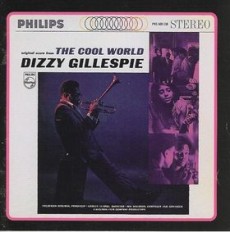
Jazz In Film
The Cool World
The Director: Shirley Clarke
The Writers: Shirley Clarke, Carl Lee, Warren Miller and Robert Rossen
The Actors: Rony Clanton, Carl Lee, Yolanda Rodriguez, Clarence Williams III, and Gloria Foster
The Music: The soundtrack of abstract jazz colorings was never officially released, however, this Dizzy Gillespie re-recording is the next best thing.
The Story: This 1964 film is a powerful, stark semi-documentary look at the horrors of Harlem ghetto slum life filled with drugs, violence, human misery and a sense of despair due to the racial prejudices of American society. There is no patronizing of the black race in this cinematic cry for justice. A fifteen-year-old boy called Duke is ambitious to buy a “piece” (a gun) from an adult racketeer named Priest, to become president of the gang to which he belongs, and to return them to active “bopping” (gang fighting) which has declined in Harlem. It is a clearly patent allegory of an attempt by Duke to attain manhood and identity in the only way accessible to him – the antisocial one.
More Posts: film

Requisites
The Leading Man: This 1993 issued session is considered a classic for both material and performances of the various ensembles Harold Mabern put together. With the exception of DeJohnette and Carter, all the other players rotate throughout the sessions. Style and grace fill this recording.
Personnel: Harold Mabern – piano, Ron Carter – bass, Jack DeJohnette – drums, Bill Easley – alto saxophone, Bill Mobley – trumpet, Kevin Eubanks – guitar, and Pamela Baskin-Watson – vocals
Record Date: Columbia Records / November 9, 1992 – April 12, 1993
Cover: The cover is an alternate cover used for the import version of this session is currently unavailable. The U.S. release is still available.
Songs: Look On The Bright Side, Save The Best For Last, Full House, Alone Together, It’s A Lonesome Old Town, Yes And No, Moment’s Notice, Au Privave, B And B, Mercury Retro
More Posts: collectible,piano