

Daily Dose Of Jazz…
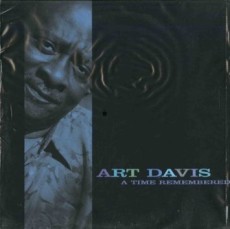
Art Davis was born in Harrisburg, Pennsylvania on December 5, 1934 where he began studying the piano at the age of five, switched to tuba, and finally settled on the bass while attending high school. He studied at Juilliard and the Manhattan School of Music, but graduated from Hunter College.
Davis earned a Ph.D in clinical psychology from New York University in 1982 and four years later he moved to Southern California, where he balanced his teaching as a professor at Orange Coast College and practicing of psychology with jazz performances.
Art recorded three albums as a leader with Herbie Hancock, Hilton Ruiz, Greg Bandy, John Hicks, Idris Muhammad, Pharoah Sanders, Ravi Coltrane, and Marvin Smith.
As a sideman he performed and recorded with Joe Albany, Gene Ammons, Count Basie, Art Blakey, John Coltrane, Curtis Fuller, Dizzy Gillespie, Eddie Harris, Freddie Hubbard, Elvin Jones, Etta Jones, Clifford Jordan, Roland Kirk, Abbey Lincoln, Booker Little, Lee Morgan, Tisziji Munoz, Dizzy Reece, Max Roach, Lalo Schifrin, Shirley Scott, Clark Terry, McCoy Tyner and Leo Wright.
He also launched a legal case that led to the current system of blind auditions for orchestras. Double bassist Art Davis passed away from a heart attack on July 29, 2007.

Inspire A Young Mind
More Posts: bass
Daily Dose Of Jazz…
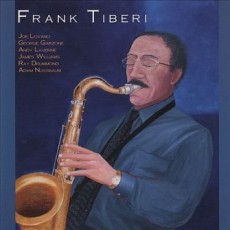
Frank Tiberi ws born December 4, 1928 in Camden, New Jersey. He plays the alto and tenor saxophone, clarinet, flute and bassoon. He has been performing and recording since the age of thirteen and has toured with Benny Goodman and Urbie Green, and has played with Dizzy Gillespie.
He is a part time professor at Berklee College of Music where he teaches improvisational techniques and pedagogy. He has served as the director for the Camden Jazz Festival. Tiberi specializes in modern and contemporary jazz techniques and has released EPs with fellow Berklee instructor George Garzone.
Saxophonist Frank Tiberi is currently the leader of the Woody Herman Orchestra. Herman handpicked him shortly before his death to lead the band. He has been doing so since 1987.
Dose A Day – Blues Away
More Posts: saxophone
Daily Dose Of Jazz…
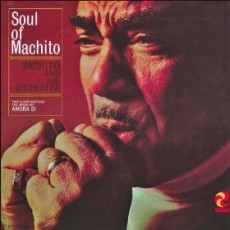
Machito was born Francisco Raúl Gutiérrez Grillo on December 3, 1909 in Havana, Cuba. He began playing music as a child and started playing professionally in his teens before emigrating to America in 1937 as a vocalist with La Estrella Habanera.
In the late 30s he worked with several Latin artists and orchestras, recording with bandleader Xavier Cugat. An attempt to launch a band with his brother-in-law Mario Bauzá failed, but in 1940 Machito founded the Afro-Cubans and was the front man, singer, conductor and maraca player. The following year he hired Bauzá as his music director, a working relationship that lasted for 35 years.
Under Bauzá’s influence, Machito began hiring jazz-oriented arrangers and his bands of the 40s were among the first to fuse Afro-Cuban rhythms with jazz improvisation that greatly inspired jazz giants Dizzy Gillespie and Stan Kenton. Throughout his career he played and recorded with Charlie Parker, Dizzy Gillespie, Buddy Rich, Cannonball Adderley, Herbie Mann, and Johnny Griffin, held a spot at the Palladium and recorded Decca, Mercury and Clef labels.
In 1983 he won the Grammy Award for Best Latin Recording for Machito & His Salsa Big Band ’82. In 2005, his 1957 album, “Kenya”, was added to the list of “1001 Albums You Must Hear Before You Die”. He played a huge role in the history of Latin jazz and passed away after suffering a fatal stroke on April 15, 1984 while playing on stage at Ronnie Scott’s in London. He was 74. A documentary of the great Cuban musician, Machito: A Latin Jazz Legacy was released in 1987.
Take A Dose On The Road
Daily Dose Of Jazz…
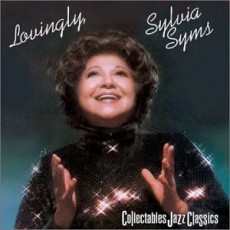
Sylvia Syms was born Sylvia Blagman on December 2, 1917 in Brooklyn, New York. As a child she contracted polio but overcame it and by the time she was a teenager she was hanging in the infamous jazz haunts on 52nd Street. She received informal training from Billie Holiday and in 1941 she made her debut at Kelly’s Stable.
In 1948, performing at the Cinderella Club in Greenwich Village she was seen by Mae West, who gave her a part in a show she was doing. Among others who observed her in nightclubs was Frank Sinatra who considered her the “world’s greatest saloon singer.” Sinatra subsequently conducted her 1982 album, Syms by Sinatra.
Signing a redocrd deal with Decca Records in 1956, Sylvia had her major success with a recording of I Could Have Danced All Night selling over a million copies garnering a gold disc. She would appear regularly at the Carlyle in Manhattan, at times, impromptu, while enjoying a cocktail in the bar of the Carlyle, she would walk on stage and perform with the cabaret’s other regular, Bobby Short.
She had a lung removed in 1972, despite which, she shortly thereafter performed as a well received Bloody Mary in South Pacific for several months at the Chateau de Ville Dinner. Vocalist Sylvia Syms, who recorded seventeen albums, appeared in six films and guested on The Tonight Show, Merv Griffin, Dinah Shore, Mike Douglas, Dick Cavett, Playboy’s Penthouse, and American Masters, passed away of a heart attack while on stage at the Oak Room in the Algonquin Hotel in New York City at age 74 on May 10, 1992.
Give The Gift Of Knowledge
More Posts: vocal
Daily Dose Of Jazz…
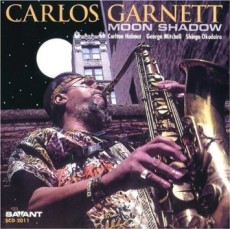
Carlos Garnett was born on December 1, 1938 in Red Tank, Panama Canal Zone. He became interested in jazz music after hearing the music of Louis Jordan and James Moody in film shorts He taught himself to play the saxophone as a teenager and played with soldiers from the nearby United States Army base. In 1957 he started playing in calypso and Latin groups.
After moving to New York in 1962 Garnett played in a rock ‘n’ roll group led by Leo Price. Around this time he also started learning music theory, being self-taught and having always played by ear. Jazz trumpeter Freddie Hubbard hired him in 1968 and introduced him to many New York musicians. His first recording was Hubbard’s 1969 album A Soul Experiment that contained two of his original compositions.
By the late 1960s and early 1970 Carlos played with Art Blakey’s Jazz Messengers, Charles Mingus and Miles Davis. He led his own group called the Universal Black Force, recording five albums between 1974 and 1977. In 1982 suffering from depression and drug abuse, he experienced a spiritual awakening and stopped playing music for years. He began performing again in 1991 and released the albums Fuego En Mi Alma, Under Nubian Skies and Moon Shadow.
In 2000 Garnett moved back to Panama, where he continues to perform actively and has assumed the role of Maestro, “Teacher”, to pass on to the next generation of young musicians in Panama, the music of jazz.
He has recorded with Russell Gunn, Dee Dee Bridgewater, Onaje Allan Gumbs, Mtume, Guilherme Franco, Norman Connors, Billy Hart, Kenny Kirkland, Anthony Jackson, Brad Jones, Andrew Hill and Pharoah Sanders.
As he continues to perform, he has performed in Japan, Austria and at three editions of the annual Panama Jazz Festival. The 9th Annual Panama Jazz Festival in 2012, organized by Panamanian pianist Danilo Perez, was dedicated to tenor saxophonist Carlos Garnett in recognition of his contribution to music.
Put A Dose In Your Pocket
More Posts: saxophone