

Daily Dose Of Jazz…
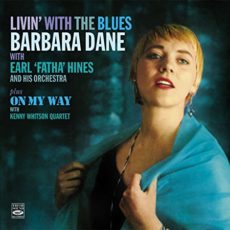
Barbara Dane was born May 12, 1927 in Detroit, Michigan. Out of high school she began singing regularly at demonstrations for racial equality and economic justice and while still in her teens, she sat in with bands around town and won the interest of local music promoters. Getting an offer to tour with Alvino Rey’s band, she turned it down in favor of singing at factory gates and in union halls.
Moving to San Francisco,California in 1949, Dane began raising her own family and singing her folk and topical songs around town as well as on radio and television. When a jazz revival was then shaking the town by the 1950s she became a familiar figure at clubs along the city’s Embarcadero with her own versions of women’s blues and jazz tunes. New Orleans jazz musicians like George Lewis and Kid Ory and locals like Turk Murphy, Burt Bales, Bob Mielke and others regularly invited her onto the bandstand.
Her first professional jazz job was with Turk Murphy at the Tin Angel in 1956. Ebony Magazine did a seven page spread on the alto voiced songstress who would moan of trouble, two-timing men and freedom aided and abetted by some of the oldest names in jazz who helped give birth to the blues, with photos of her performing with Memphis Slim, Willie Dixon, Muddy Waters, Clara Ward, Mama Yancey, Little Brother Montgomery and others.
By 1959 she appeared with Louis Armstrong on the Timex All-Star Jazz Show hosted by Jackie Gleason. She went on to tour the East Coast with Jack Teagarden, appeared in Chicago with Art Hodes, Roosevelt Sykes, Otis Spann and others, played New York with Wilbur De Paris and his band, and appeared on The Tonight Show Starring Johnny Carson as a solo guest artist. She would guest perform on The Steve Allen Show, Bobby Troop’s Stars of Jazz, and Alfred Hitchcock Presents.
In 1961, the singer opened her own club, Sugar Hill: Home of the Blues, on San Francisco’s Broadway in the North Beach district, with the idea of creating a venue for the blues in a tourist district where a wider audience could hear it. There Dane performed regularly with her two most constant musical companions: Kenny “Good News” Whitson on piano and cornet and Wellman Braud, former Ellington bassist.
During the Sixties while working as a solo performer on the coffeehouse circuit Barbara also became an activist in the peace and civil rights movements, touring around the nation and performing at demonstrations and anti-war establishments worldwide and became the first U.S. musician to tour post-revolutionary Cuba.
In 1970 Dane founded Paredon Records with husband Irwin Silber, a label specializing in international protest music. She produced 45 albums, including three of her own, over a 12-year period. The label was later incorporated into Smithsonian-Folkways, a label of the Smithsonian Institution, and is available through their catalog. Arhoolie Records, Tradition Records, Runt Distribution, and DBK Works label have issued a compact discs of her music within the last twenty years. She as well has released her earlier blues and jazz recordings on CD on the Barbara Dane CDs site.
At 90 years old vocalist Barbara Dane has retired from music but has left these accolades in her wake: Jazz critic Leonard Feather wrote “Bessie Smith in stereo,” in the late 1950s, Time Magazine stated “The voice is pure, rich … rare as a 20 karat diamond” and quoted Louis Armstrong’s exclamation upon hearing her at the Pasadena Jazz Festival: “Did you get that chick? She’s a gasser!”
Sponsored By


#preserving genius
Daily Dose Of Jazz…
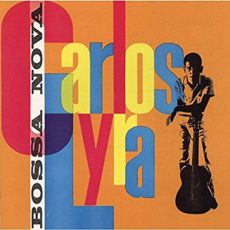
Carlos Lyra was born on May 11, 1939 in Botafogo, Rio de Janeiro, Brazil. His first song to be recorded was Menina (Girl) in 1954, released as a single by Sylvia Telles in 1955, with Foi a noite (It Was The Night)by Antonio Carlos Jobim on the other side of the record. The composers met for the first time because of this single, when Jobim called Lyra, the other side of the record. Both were composing their own music and writing lyrics and created a colloquial and completely new style. Writing about their own experiences and feelings was a completely different lyrical style from most songs written at that time.
His first compositions from 1954 to 1956 included Quando chegares (When you Arrive), Barquinho de Papel (Paper Boat), Ciúme (Jealuosy), Criticando (Criticizing) and Maria Ninguém (Maria Nobody). By 1957 Carlos began collaborating with the lyricist Ronaldo Bôscoli, songs such as Lobo bobo, Saudade fez um samba (Saudade Made A Samba) and Se é tarde me perdoa (If it’s Late Forgive Me).
In 1958 wrote Aruanda and Quem quiser encontrar o amor (Whoever Want To Find Love), with Geraldo Vandré. In 1960 he started to compose together with Vinicius de Moraes, songs as Você e eu (You And Me), Coisa mais linda (Most Beautiful Thing), Sabe você? (Do You Know), Samba do Carioca (Samba From Rio), Maria Moita (Maria Bush) and many others. They wrote together a musical play in 1962 called Pobre Menina Rica (Poor Little Rich Girl Blue).
In 1959 Carlos and Antonio Carlos Jobim, were the first two music composers, together with lyricists Vinicius de Moraes and Ronaldo Boscoli, to be recorded by João Gilberto on his first LP titled Chega de Saudade, (Enough Of Saudade) which was called the first generation of Bossa Nova.
1961 saw Lyra as one of the five founders of Center of Popular Culture aka CPC, where he started to write songs for cinema and theater. He also wrote the song Influência do Jazz (Influence Of Jazz), one of the songs he sang at the Bossa Nova Concert at Carnegie Hall in 1962.
Composer, lyricist, guitarist and vocalist Carlos Lyra, who penned many bossa nova and Música popular brasileira classics, continues to compose, record, and perform today.
Sponsored By
#preserving genius
More Posts: guitar
Daily Dose Of Jazz…
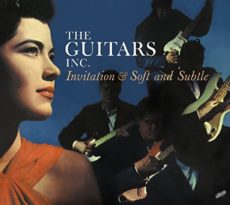
Alton Reynolds Hendrickson was born May 10, 1920 and grew up in Eastland, Texas before moving to the West Coast. In 1940 he worked for Artie Shaw and performed in Fred Astaire ‘s second chorus. By the mid-1940s he was in the coast guard but in the post-war period he played guitar in the bands of Freddie Slack, Ray Linn and Benny Goodman, whose sextet he also belonged to.
As a baritone Hendrickson was recorded on Goodman’s On a Slow Boat to China , which became a big hit in the USA in 1947. The 1950s saw him as a busy studio session player for both film and television soundtracks, The Danny Kaye Show, as well as for pop productions from Columbia Records since 1959. He worked in the productions of The Weavers and The Monkees, with country singer Sheb Wooley and jazz pianist Dodo Marmarosa.
In the field of jazz and popular music his was involved from 1940 to 1986 to 493 recording sessions with Rosemary Clooney, Bing Crosby, Doris Day, Lee Hazlewood, Eartha Kitt, Frankie Laine, Henry Mancini, Ann-Margret, Dean Martin, Ella Mae Morse, Harry Nilsson, Louis Prima, Elvis Presley Shorty Rogers, Bud Shank and Frank Capp’s Juggernaut big band.
Retiring to Oregon in the late Eighties he authored the Encyclopedia of Bass Chords, Arpeggios and Scales and Al Hendrickson Jazz Guitar Solos: Complete Book. Guitarist Al Hendrickson, who also played banjo, mandolin and was a vocalist, passed away on July 19, 2007 in North Bend Oregon.
Sponsored By

#preserving genius
More Posts: guitar
Daily Dose Of Jazz…
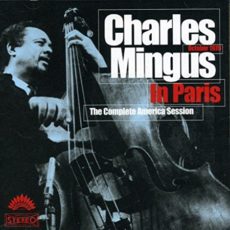
Eddie Preston was born in Dallas, Texas on May 9, 1925 and didn’t begin playing in the big bands until after World War II. From 1955 to 1972 he did stints with Lionel Hampton, Ray Charles, Louis Jordan, Duke Ellington, and Count Basie.
He played with Charles Mingus between 1963 and 1965 and again in 1969–72. During this period in between his working with Mingus, Eddie spent time freelancing with musicians such as Sonny Stitt and Frank Foster. He returned once more to work with Ellington in 1971 and then led a few groups, as well as working with Roland Kirk in 1977 and Archie Shepp in 1979.
Trumpeter Eddie Preston, who never released an album as a leader, passed away on June 22, 2009 in Palm Coast, Florida.

#preserving genius
More Posts: trumpet
Daily Dose Of Jazz…
Jerry Rusch was born Jerome A. Rusch on May 8, 1943 in St. Paul, Minnesota and studied at the University of Minnesota from 1962 to 1964. Afterward he played trumpet in an Army Reserve band before moving to Los Angeles, California in 1966.
During his time in Los Angeles Rusch played with the Gerald Wilson Big Band beginning in 1967, then backed Ray Charles from 1972 to ‘73, followed by Clifford Jordan, Joe Henderson, Willie Bobo, Louie Bellson, Teddy Edwards, Frank Foster, and Thad Jones & Mel Lewis.
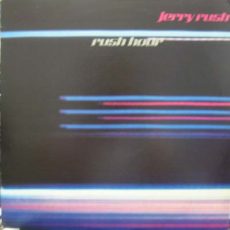
He played with Joe Haider’s orchestra in Europe from 1982 to 1984. As a leader he recorded five albums, Rush Hour on Inner City Records, Native L.A., Bright Moments and Back Tracks for Jeru and Serenata on Jazzschool Records. As a sideman Jerry recorded extensively; among his credits are work with Charles Kynard, Benny Powell, Stan Kenton, Moacir Santos, Henry Franklin, and Eddie Cleanhead Vinson.
Not limiting himself to jazz he also backed Gladys Knight, the Rolling Stones, Smokey Robinson, Diana Ross, and The Temptations. Though uncredited, he was one of the cornet players in the final parade scene in the 1962 film, The Music Man along with member of the University of Southern California’s marching band, the Spirit of Troy, and many junior high school students from Southern California.
Trumpeter, cornetist and composer Jerry Rusch, who was also credited as Jerry Rush, passed away from liver cancer on May 5, 2003 in Las Vegas, Nevada.
Sponsored By

Voices From The Community
#preserving genius