

Daily Dose Of Jazz…
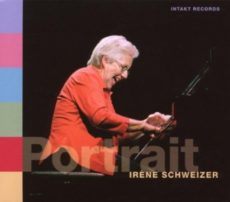
Irène Schweizer was born on June 2, 1941 in Schaffhausen, Switzerland. She studied piano and immersed herself in the free improvisation genre but is adept at playing various jazz styles.
She has performed and recorded numerous solo piano performances as well as performing as part of the Feminist Improvising Group with Lindsay Cooper, maggie Nichols, Georgie Born, and Sally Potter. Schweizer has played a series of duets with drummers Pierre Favre, Louis Moholo, Andrew Cyrille, Gunter Sommer, Han Bennink and Hamid Drake.
Irène has performed in trio and quartet sessions with John Tchicai, Evan Parker, Peter Kowald and with Yusef Lateef, Uli Trepte and Mani Neumeier at the Montreux Jazz Festival.. One of her most enduring collaborations is with the improvising musician Rudiger Carl.
Pianist Irène Schweizer continues to perform and record in the the free jazz, avant-garde and free improvisation genres.

Dose A Day-Blues Away

More Posts: piano
Daily Dose Of Jazz…
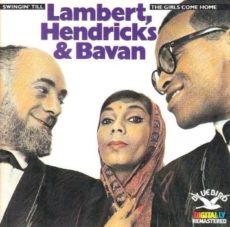
Yolande Bavan was born on June 1, 1942 in Ceylon, now known as Sri Lanka. She toured Australia and Asia as a singer with Graeme Bell’s band early in her career. She is best known for replacing Annie Ross in the legendary jazz vocal group Lambert, Hendricks & Ross after Ross was forced to leave the group due to poor health in 1962. She recorded three albums, all live recordings, with the group under the name of Lambert, Hendricks & Bavan. In 1964, she and Dave Lambert left the group, effectively ending the trio.
She appeared on “To Tell the Truth” in 1962 and in a rare feat, the singing group appeared and sang This Could Be The Start (of something big). In 1969,Peter Ivers and she made an album for Epic Records, called Knight of the Blue Communion. Bavan provided vocals for Weather Report’s 1972 album I Sing The Body Electric, and has made several recorded appearances in musicals including Salvation, Snow White and the Seven Dwarfs, and Bernarda Alba. She has performed in films, and continues to plays and currently continues to perform.
Take A Dose On The Road
More Posts: vocal
Daily Dose Of Jazz…
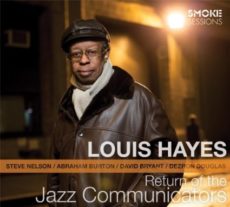
Louis Hayes was born May 31, 1937 in Detroit, Michigan. His father played drums and piano and his mother the piano. His early jazz influence was big bands on the radio, drummer Philly Joe Jones and was mentored by Papa Jo Jones.
As a teenager Hayes led a band in Detroit and worked with Yusef Lateef and Curtis Fuller from 1955 to 1956. Louis often teamed up with Sam Jones, in freelance settings, led a group at clubs in Detroit before he was 16. He moved to New York in August 1956 to replace Art Taylor in Horace Silver’s Quintet from 1956–1959, then joined the Cannonball Adderley Quintet from 1959–1965 followed by succeeding Ed Thigpen in the Oscar Peterson Trio from 1965–1967.
Leaving Peterson he formed a series of groups, which he led alone or with others; among his sidemen were Freddie Hubbard, Joe Henderson, Kenny Barron and James Spaulding. He rejoined Peterson in 1971. Forming the Louis Hayes Sextet in 1972, it evolved into the Louis Hayes-Junior Cook Quintet and the Woody Shaw-Louis Hayes Quintet with Rene McLean. After Shaw left the group in 1977, Hayes continued to lead it as a hard-bop quintet.
From the 1970s onward Louis recorded and performed with John Coltrane, Kenny Burrell, Freddie Hubbard, Joe Zawinul, Nat Adderley, Gene Ammons, Bobby Timmons, Hank Mobley, Booker Little, Al Cohn, Kenny Drew, James Clay, Dexter Gordon, Terry Gibbs, Bennie Green, Grant Green, Barry Harris, Johnny Hodges, Sam Jones, Clifford Jordan, Johnny lytle, Phineas Newborn Jr., Tommy Flanagan, Cecil Taylor, McCoy Tyner, Ray Brown, Gary Bartz, Tony Williams and the list goes on.
He has led recording sessions for Vee-Jay, Timeless, Muse, Candid, Steeplechase and TCB record labels. Drummer Louis Hayes mentors young jazz artists, continues to perform with a variety of other musicians both old and young, leads his own band and since 1989 with Vincent Herring formed the Cannonball Legacy Band.
Give The Gift Of Knowledge
More Posts: drums
Daily Dose Of Jazz…
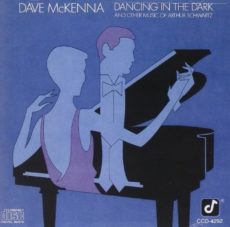
Dave McKenna was born May 30, 1930 in Woonsocket, Rhode Island and started out at the age of 15 playing with Boots Mussulli in 1947. He then worked with Charlie Ventura and Woody Herman’s Orchestra three years later. He went on to spend two years in the military, and re-joined Ventura in 1953.
He worked with a variety of swing and Dixieland musicians including Gene Krupa, Joe Venuti, Stan Getz, Zoot Sims, Al Cohn, Bob Wilbur, Eddie Condon, and Bobby Hackett but became primarily a soloist after 1967 operating nearly exclusively in the Northeast United States. McKenna performed with Louis Armstrong at the 1970 Newport Jazz Festival. He was an accompanist, recording with singers such as Rosemary Clooney, Teddi King, Donna Byrne and Tony Bennett.
During the 1970s his star rose but chose to play in his local area rather than travel extensively playing in clubs and hotels over center stage in major venues. He retired around the turn of the millennium due to increasing mobility problems brought on by his long battle with diabetes. Pianist Dave McKenna passed away in Pennsylvania on October 18, 2008 from lung cancer.
Jazz Is Global – Share
More Posts: piano
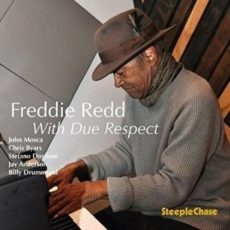
Daily Dose Of Jazz…
Freddie Redd was born on May 29, 1928 and grew up in New York City and after losing his father when he was a one year old, he was raised by his mother, who moved around Harlem, Brooklyn and other neighborhoods. An autodidact, he began playing the piano at a young age and took to studying jazz seriously upon hearing Charlie Parker during his military service in Korea.
Upon discharge from the Army in 1949 he worked with drummer Johnny Mills, and then in New York played with Tiny Grimes, Cootie Williams, Oscar Pettiford and the Jive Bombers. In 1954 he was playing with Art Blakey, followed with a tour of Sweden in 1956 with Ernestine Anderson and Rolf Ericson. Freddie’s greatest success came in the late 1950s when he was invited to compose the music and perform as actor and musician in both The Living Theatre’s New York stage production of The Connection, which was also used in the subsequent 1961 film. Redd led a Blue Note album featuring his music for the play. which featured Jackie McLean on alto sax. However, his success in the theater production did not advance his career in the United States, and shortly afterwards he moved to Europe living in Denmark and France.
Returning to the West Coast in 1974 he became a regular on the San Francisco scene and recorded intermittently up until 1990. His creative lines, particular voicings and innovative compositions have led him to work with Jackie McLean, Tina Brooks, Paul Chambers, Howard McGhee, Milt Hinton, Lou Donaldson, Benny Bailey, Charles Mingus, Louis Hayes, Al McKibbon, Billy Higgins, Osie Johnson, Gene Ammons, Tommy Potter, Joe Chambers and many more. He contributed organ to James Taylor’s original 1968 recording of Carolina In My Mind.
Over the course of his career hard-bop pianist and composer Freddie Redd, who passed away in New York City on March 17, 2021, aged 92, recorded fourteen albums as leader and was one of the last of the pioneers of the hard-bop golden age.
Sponsored By
Voices From The Community
More Posts: piano