

Daily Dose Of Jazz…
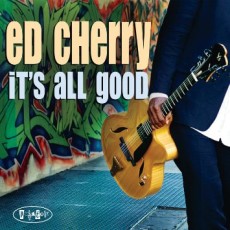
Ed Cherry was born in New Haven, Connecticut on October 12, 1954. Moving to New York City, the guitarist began a long association with Dizzy Gillespie playing in his quartet, big band and the United Nation Orchestra from 1978 until shortly before the trumpeter’s death in 1993. During this tenure he was a part of the Grammy winning recording Live At Royal Festival Hall.
Ed recorded his debut album as a leader in 1993 titled First Take and was a part of the recording session for Paquito D’Rivera’s Havana Café. His sophomore project A Second Look was released in 1995.
As an educator Cherry has taught guitar at Essex Community College in Newark, New Jersey, at the Henry Street Settlement in New York City, has been a faculty member at Montclair State University, School of Fine and Performing Arts for J.O.Y. (Jazz Opportunity for Youth) and is currently a staff member at Jazzmobile in New York City.
When not leading his own groups he is in the studio holding down sideman duties working with Paquito D’ Rivera, Jon Faddis, John Patton, Hamiet Bluiett, Henry Threadgill, Mark Weinstein, C.I. Williams and Paula West to name a few. He has recorded several albums as a leader, more than a dozen as a sideman and continues to perform with his current trio.

Take A Dose On The Road
More Posts: guitar
Daily Dose Of Jazz…
Brian Robert Jackson was born October 11, 1952 in Brooklyn, New York to a New York State parole officer and librarian at the Ford Foundation. Spending the first two years of his life in Bedford-Stuyvesant and later stayed with his uncle in Flatbush until his parents separated when he was five. Then with his mother they moved into a one-bedroom apartment in Crown Heights, Brooklyn until she remarried in 1968.
Jackson studied music in Fort Greene with his mother’s childhood teacher, Hepzibah Ross with whom he took lessons for seven years. From 1965-1969 Jackson attended Brooklyn’s Erasmus Hall High, where he met other musicians and began to form bands on the outside while participating in school music programs.
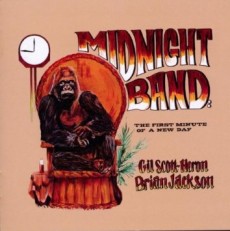
Brian met Gil Scott-Heron while the two were attending Lincoln University in Pennsylvania. They began a decade-long writing, producing, and recording partnership with Jackson composed most of the music that he and Scott-Heron together performed and recorded. In 1973, the two released their first album together, Pieces of A Man with bassist Ron Carter. Tey would go on to record the landmark albums Free Will and Winter In America. His biggest hit was with Scott-Heron, 1974’s The Bottle. By 1979, they had recorded ten albums, with other unreleased material surfacing on subsequent Scott-Heron releases following their 1980 split.
He remained active in the 1980s and 1990s, switching to R&B to work with Earth, Wind & Fire, Stevie Wonder, Will Downing, Gwen Guthrie, Kool & The Gang and Janis Siegel. Enlisting guest appearances by Gil and Roy Ayers, he recorded his first solo album Gotta Play in 2000. Pianist and flutist Brian Jackson is still actively performing and recording.
Give The Gift Of Knowledge
Daily Dose Of Jazz…
Edward Joseph Blackwell was born on October 10, 1929 in New Orleans, Louisiana. His drumming style was greatly influenced by the second line parade music. His early career began in his hometown in the 1950s playing in a bebop quintet that included pianist Ellis Marsalis and clarinetist Alvin Battiste. For a brief stint he toured with Ray Charles.
Blackwell first came to national attention as the drummer with Ornette Coleman’s quartet around 1960, when he took over for Billy Higgins in the quartet’s legendary stand at the Five Spot in New York City. Known as one of the great innovators of free jazz of the 1960s, fusing New Orleans and African rhythms with bebop.
In the 1970s and 1980s Blackwell toured and recorded extensively with fellow Ornette’s Quartet veterans Don Cherry, Charlie Haden and Dewey Redman in the Old and New Dreams Quartet. By the late 1970s he became an Artist-in-Residence at Wesleyan University in Middletown, Connecticut and was a beloved figure on the Wesleyan Campus until he died.
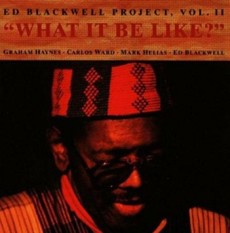
In 1981 he performed at the Woodstock Jazz Festival, held in celebration of the tenth anniversary of the Creative Music Studio. The Ed Blackwell Project was comprised of members Mark Helias on bass, alto saxophonist and flautist Carlos Ward and Graham Haynes on cornet. He played with Ray Anderson, Karl Berger, Jane Ira Bloom, David Bond, Charles Brackeen, Anthony Braxton, Marlon Brown, Steve Coleman, Anthony Davis, Jane Cortez, Stanley Cowell, Eric Dolphy, Albert Heath, Clifford Jordan, Joe Lovano, Yoko Ono, David Murray, Hilton Ruiz and numerous others.
After years of kidney problems, drummer Ed Blackwell passed away on October 7, 1992. The following year he was inducted into the Down Beat Jazz Hall of Fame.
Put A Dose In Your Pocket
More Posts: drums
Daily Dose Of Jazz…
Chucho Valdés was born Jesús Valdés Rodríguez, the son of famed pianist Bebo Valdés, on October 9, 1941 in Quivican, La Habana, Cuba. His first recording sessions as a leader took place in early 1964 at Areíto Studios of Havana. These early sessions included Paquito D’Rivera on alto saxophone and clarinet, trombonist Alberto Giral, flutist Julio Vento, Carlos Emilio Morales on guitar, Kike Hernández on double bass, Emilio del Monte on drums and Óscar Valdés Jr. on congas.
Throughout the 1960s and 1970s, these would be the members of his jazz combo, whose lineup would often change, sometimes including bassists Cachaito and later Carlos del Puerto, and drummers Guillermo Barreto and later Enrique Pla. In 1967, Valdés and his band mates became founding members of Orquesta Cubana de Música Moderna, together with many other well-known Cuban musicians. This all-star big band would back singers such as Elena Burke and Omara Portuondo.
By 1973, Chucho along with other members of the Orquesta founded Irakere that bridged songo and Afro-Cuban jazz. He would simultaneously continue his solo career, eventually signing with Blue Note Records, which allowed him to realize international exposure.
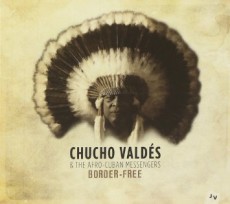
In the late 1990s, he focused on his solo career, leaving directorship of Irakere to his pianist son Chuchito. He played occasionally with his father until his death in 2013. Since 2010, Chucho performs with a backing band known as The Afro-Cuban Messengers.
Pianist, bandleader, composer and arranger Chucho Valdés, whose career spans over 50 years, has received critical media acclaim, won five Grammy Awards, contributed two original compositions to Roy Hargrove’s Crisol band’s Havana project, and was nominated Goodwill Ambassador of the Food and Agriculture Organization of the United Nations. He has two dozen albums recorded as a leader and continues to perform, compose record and tour.
Jazz Is Global – Share
More Posts: piano
Daily Dose Of Jazz…
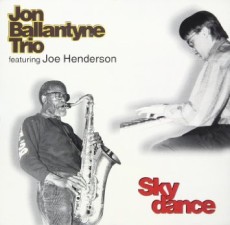
Jon Ballantyne was born on October 8, 1963 in Saskatchewan, Canada and started playing piano at a very early age with formal study at the age of six. His father Fred a pianist and both parents jazz enthusiasts, he was listening to Miles Davis, Thelonious Monk, Bill Evans and Duke Ellington records from the time he was born. His mother also took him to see Oscar Peterson when he was five.
After the early years of trying to understand his father’s blues-based approach to piano, classical piano studies, and a stint in a garage rock band as a young teenager, Jon decided to immerse himself in jazz and won a scholarship to North Texas State University. As an honors student there, he was asked to play in small group formats with visiting artists Elvin Jones, Ron Carter, Joe Henderson, Nat Adderley, Michael Brecker, Emily Remler, Bob Mintzer and Peter Erskine.
He went on to study at the Banff Centre in Alberta, Canada with Dave Holland, Dave Liebman, Ed Blackwell, Lee Konitz, Cecil Taylor, Kenny Wheeler, John Abercrombie, Don Thompson, Julian Priester, Karl Berger, Eddie Marshall and Steve Coleman. He also studied in New York with Barry Harris, Kenny Barron, Richie Beirach, Hal Galper and JoAnn Brackeen.
This led to a performance career sharing the stage and studio with Joe Henderosn, Roy Haynes, Dewey Redman, Pepper Adams, Billy Hart, Paul Bley, Phil Woods, Bill Goodwin, Drew Gress, Don Braden, Joe LaBarbera, Ray Drummond, Bennie Wallace, Avishai Cohen, Clark Terry, Jimmy Guiffre, P. J. Perry and a host of others.
An educator, Jon has conducted clinics at the Sibelius Academy in Helsinki, the University of Colorado at Boulder, University of Northern Colorado, McGill University, University of Toronto and Concordia University in Montreal. He has recorded nine jazz albums and received two Juno Awards. Based in Manhattan, pianist Jon Ballantyne continues to perform, record and lead a quartet featuring bassist Boris Kozlov, drummer Jeff Hirshfield and saxophonist/bass clarinetist Douglas Yates.
Give A Gift Of Jazz – Share
More Posts: piano