

Daily Dose OF Jazz…
Demas Dean was born on October 6, 1903 in Sag Harbor, New York. He began playing trumpet at age 10 and later picked up the violin but professionally became a trumpeter.
While in high school he played in Mazzeo’s Brass Band, and worked with Beatrice Van while still in his teens. He attended Howard University from 1922 – 23 and played with Elmer Snowden, Doc Perry, Russell Wooding and Lucille Hegamin in the first half of the decade.
Through the end of the 1920s Dean played with Billy Butler, Ford Dabney and Leon Abbey, touring South America. In 1928 he recorded with Bessie Smith and the following year worked with Noble Sissle in the Blackbirds revue in Europe.
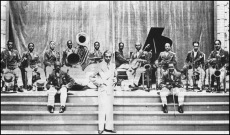
By the early 1930s Demas was working with bandleaders Joe Jordan and Pike Davis but returned to play with Sissle from 1934 to 1944. Shortly after 1944 he quit music and took a post office position in Los Angeles, working there until his retirement in 1965. Jazz trumpeter Demas Dean passed away in 1991 in Los Angeles, California. (in picture – 2nd from left)

Inspire A Young Mind
More Posts: trumpet
Daily Dose OF Jazz…
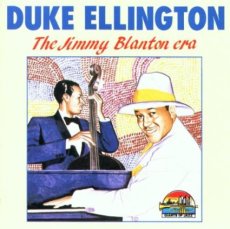
Jimmy Blanton was born on October 5, 1918 in Chattanooga, Tennessee and originally learned to play the violin but took up the bass while at Tennessee State University. During his matriculation in the mid-thirties he performed with the Tennessee State Collegians, and during the vacations with Fate Marable. Blanton left school to play full time in St. Louis with the Jeters-Pillars Orchestra. Making his first recordings with the orchestra, he then went on to join Duke Ellington’s band in 1939.
Though he stayed with Ellington for only two years, Blanton made an incalculable contribution in changing the way the double bass was used in jazz. Moving from quarter notes in ensemble or solos to soloing more in a ‘horn like’ fashion, Blanton began sliding into eighth and sixteenth-note runs, introducing melodic and harmonic ideas that were totally new to jazz bass playing.
His virtuosity put him in a different class from his predecessors, making him the first true master of the jazz bass and demonstrating the instrument’s unsuspected potential as a solo instrument. Such was his importance to Ellington’s band at the time, together with the tenor saxophonist Ben Webster, that it became known as the Blanton-Webster band.
In 1941, Blanton was diagnosed with tuberculosis, cutting short his tenure with Ellington. However, he recorded a series of bass and piano duets with Ellington. Double bassist Jimmy Blanton, credited as the originator of pizzicato and bowed bass solos, died the following year on July 30, 1942 after retiring to a sanatorium in California at the age of 23.
Give A Gift Of Jazz – Share
More Posts: bass
Daily Dose OF Jazz…
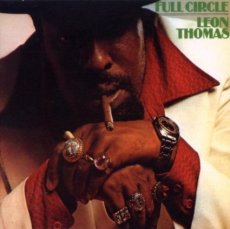
Amos Leon Thomas Jr was born on October 4, 1937 in East St. Louis, Illinois. He studied music at Tennessee State University and went on to become the vocalist for Count Basie and others in the Sixties. In 1969, Leon released his first solo album for the prestigious Flying Dutchman label, however, an earlier album he recorded still remains unreleased.
Thomas is best known for his work with Pharoah Sanders, particularly the 1969 song “The Creator Has a Master Plan” from the Karma album. His most distinctive attribute was that he often broke out into yodeling in the middle of a vocal, developed after he fell and broke his teeth before a show. This style influenced singers James Moody and Tim Buckley.
Thomas toured and recorded as a member of the band Santana in 1973 but was largely forgotten until a resurgence of interest in soul jazz and several of his tracks have been sampled in hip-hop and down-tempo records. Leon Thomas, jazz singer, often in the avant-garde genre, died of heart failure on May 8, 1999.
Jazz Is Global – Share
More Posts: vocal
Daily Dose OF Jazz…
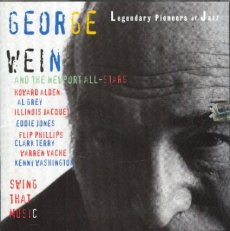
George Wein was born on October 3, 1925 in Boston, Massachusetts. As a youth he was a jazz pianist and while studying at Boston University led a small group, playing professionally around the Boston area. In 1950 he opened a jazz club and record label called Storyville.
In 1954 Newport residents Louis and Elaine Lorillard invited him to organize a festival in their hometown of Newport, Rhode Island, with funding to be provided by them; the subsequent festival was the first outdoor jazz festival in the United States, becoming an annual tradition. Wein went on to start a number of festivals in other cities, including the New Orleans Jazz & Heritage Festival, the Playboy Jazz Festival in Los Angeles and the Newport Folk Festival. In the 60s he set up Festival Productions, a company dedicated to promoting large-scale jazz events.
Pioneering the idea of corporate sponsorship, his “Schlitz Salute to Jazz” and “Kool Jazz Festival” were the first jazz events to feature title sponsors. His JVC Jazz Festivals are worldwide hosting New York, Los Angeles, Chicago, Paris, Warsaw and Tokyo.
Wein has received a wide array of honors for his work with jazz concerts being honored at the White House by both Presidents Carter and Clinton. He has also received the Patron of the Arts from the Studio Museum in Harlem, France’s Legion d’Honneur and appointed Commandeur de L’Ordre des Arts et Lettres and named a Jazz Master by the National Endowment for the Arts to name a few.
He has written his autobiography, Myself Among Others: A Life in Music, received honorary degrees from the Berklee College of Music and the Rhode Island College of Music, is a Lifetime Honorary Trustee of Carnegie Hall and sits as a distinguished member of the Board of Directors Advisory committee of The Jazz Foundation of America.
Put A Dose In Your Pocket
Daily Dose OF Jazz…
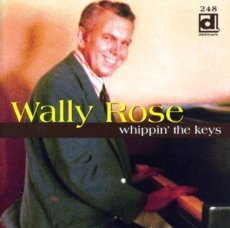
Wally Rose was born on October 2, 1913 in Oakland, California. A mainstay of the jazz scene in San Francisco during the 1940s and 1950s, he was the pianist in Lu Watter’s group, and the Yerba Buena Jazz Band, for its entire existence from 1939 to 1950. During this period he recorded for the Jazz Man imprint in 1941-42, did several albums for Good Time Jazz and also recorded for Columbia Records.
Following this tenure, through the 1950s Rose played with Bob Scobey and Turk Murphy then did mainly solo work for the rest of his career. He did an album in 1982, which was his first release as a leader in 24 years.
Wally Rose, jazz and ragtime pianist passed away on January 12, 1997 in Walnut Creek, California.
Give The Gift Of Knowledge
More Posts: piano