

Daily Dose Of Jazz…
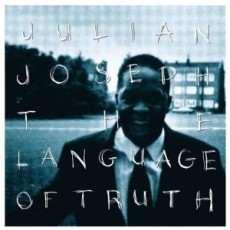
Julian Joseph was born May 11, 1966 in London, England. As a jazz pianist, bandleader, composer, arranger and broadcaster he has worked solo, in his all-star big band, trio, quartet, forum project band or electric band.
Joseph’s style combines a respect for the modern developments in jazz piano with its history and works in both contemporary and traditional situations with his music. He is also active in jazz education helping to form the jazz syllabus for the Associated Board of the Royal Schools of Music in Great Britain.
Starting with his first album The Language of Truth in 1991, Julian has a total of seven albums to date, one single, and a soundtrack to his credit, and a baker’s dozen as a sideman. He has focused on live performance such as, at the London Jazz Festival, also broadcasting as he hosts several radio shows on BBC Radio 3, including Jazz Line-up and the celebrated Jazz Legends as well as composing and teaching.
He has also made two jazz television series for Meridian, a jazz series for Sky TV’s Artsworld Channel and the documentary A Festival of Jazz Piano for the BBC in Wales directed by Celia Lowenstein. He continues to perform and record.

Jazz Is Global – Share
More Posts: arranger,broadcaster,composer,educator,piano
Daily Dose Of Jazz…
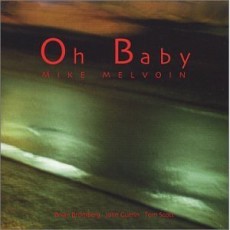
Mike Melvoin was born on May 10, 1937 in Oshkosh, Wisconsin and began playing piano at age three. He studied English at Dartmouth College but after graduating decided to pursue a career in music.
In 1961 he moved to Los Angeles and began playing with Frank Rosolino, Leroy Vinnegar, Gerald Wilson, Paul Horn, Terry Gibbs, Joe Williams, Peggy Lee, Tom Waits and others.
He worked extensively as a studio musician, in addition to playing Los Angeles clubs, accompanying singer Bill Henderson and playing with Herb Ellis and Plas Johnson on concord Jazz releases. As a composer he lent his scoring talents to the Partridge Family, Fame and MacGyver.
Pianist, composer and arranger Mike Melvoin served as chairman and president of The Recording Academy, was nominated for a Grammy for Best Jazz Instrumental Solo from his album It’s Always You, played between the jazz, rock and pop genres. A prolific studio musician he associated with among numerous others Frank Sinatra, Natalie Cole, The Jackson 5, The Beach Boys, Barbra Streisand, John Lennon, and The Wrecking Crew, passed away at the age of 74 in Burbank, California on February 22, 2012.
Put A Dose In Your Pocket
Daily Dose Of Jazz…
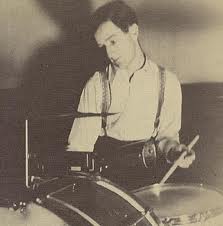
George Thomas Simon was born on May 9, 1912 in New York City into a wealthy and talented family, with his brother co-founding the publishing house Simon & Schuster and also his niece, singer Carly Simon. He began as a drummer and was an early drummer in Glenn Miller’s orchestra.
After graduating from Harvard University in 1934 he began working for the Metronome magazine the following year, then became editor-in-chief from 1939 to 1955and shifted it, from writing technical articles, to being a chronicler of the swing era. Simon was probably the most influential jazz commentator during the swing era and with his inside connections in the jazz world, he was able to report information about bands and their personnel with great accuracy.
Leaving Metronome he went to the Jazztone Society, consulted for the Timex Jazz Shows, wrote about jazz for the New York Herald Tribune and the New York Post newspapers. He also did liner notes for a variety of jazz musicians including Thelonious Monk who was stylistically quite different from the swing-era musicians Simon championed.
In 1978, he won a Grammy Award for Best Album Notes, was inducted into the Big Band and Jazz Hall of Fame and on February 13, 2001 after years of suffering from Parkinson’s disease, he died of pneumonia in New York City.
Give The Gift Of Knowledge
More Posts: commentator,editor,writer
Daily Dose Of Jazz…
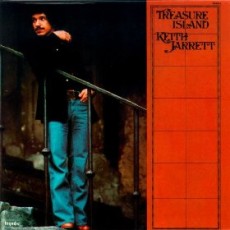
Keith Jarrett was born on May 8, 1945, in Allentown, Pennsylvania and had significant early exposure to music. He possessed absolute pitch and displayed prodigious musical talents as a young child. He began piano lessons just before his third birthday, and at age five he appeared on a TV talent program and by seven had given his first classical piano recital. During his teens he began leaning towards jazz, turned down classical training in Paris and attended Berklee College of Music
He started his career with Art Blakey and after his tenure as a Jazz Messenger moving on to play with Charles Lloyd and Miles Davis. Since the early 70s he has enjoyed a great deal of success in jazz, jazz-fusion, and classical music; as a group leader and a solo performer. His improvisations draw not only from the traditions of jazz but from other genres as well, especially Western classical music, gospel, blues, blues and ethnic folk music.
Jarrett has received the Polar Music Prize, the Leonie Sonning Music Prize, was inducted into the Down Beat Down Beat Hall of Fame, played with Jack DeJohnette, Charles Lloyd, Charlie Haden, Paul Motian, Dewey Redman, Airto Moreira, Palle Danielson and Jan Garbarek among others.
Jarrett’s compositions and the strong musical identities of the group members gave this ensemble a very distinctive sound. The quartet’s music is an amalgam of free jazz, straight-ahead post-bop, gospel music, and exotic, Middle-Eastern-sounding improvisations. He has played as a soloist, trio, returned also to classical music, incorporates vocalizations of grunts, squeals and tuneless singing. He continues to compose, record, perform and tour.
In 2003, Jarrett received the Polar Music Prize, the first (and to this day only) recipient not to share the prize with a co-recipient,[1] and in 2004 he received the Leonie Sonning Music Prize. In 2008, he was inducted into the Down Beat hall of Fame in the magazine’s 73rd Annual Readers’ Poll. He continues to tour and record.
Take A Dose On The Road

Daily Dose Of Jazz…
Teresa Brewer was born Theresa Veronica Breuer on May 7, 1931 in Toledo, Ohio and at the age of two her mother took her to audition for a radio program, “Uncle August’s Kiddie Show” on Toledo’s WSPD, performing for cookies and cupcakes. Although she never took singing lessons, she took tap dancing lessons and from age five to twelve, she sang and danced on the “Major Bowes Amateur Hour,” then a popular touring radio show.
At the age of 12, Theresa returned to Toledo, ceased touring, went back to school and continued to perform on local radio. By 1948 at 16 she won a local competition, went to New York, won a number of talent shows and played New York nightclubs including the Latin Quarter.
Discovered by agent, Richie Lisella she signed with London Records and in 1949 recorded her first session that sold over a million copies and “Music! Music! Music!” became her signature song.
In 1951 she switched labels, going to Coral Records and had a string of hits. Since she never learned to read music, she had demos sent to her to learn the melodies of the songs she would record. During those years she continued to play nightclubs in New York, Chicago, Las Vegas and elsewhere. In the mid-50s, she did a number of covers of rhythm and blues and country songs, and co-wrote “I Love Mickey” for Yankees center fielder Mickey Mantle, appeared in the musical “Those Redheads From Seattle” stealing the show fro veterans Rhonda Fleming, Agnes Moorehead and Guy Mitchell.
By 1962 she switched to Philips Records, recorded many singles and albums over a five-year period, also re-recorded her earlier material with new arrangements and instrumentation. In 1977 Teresa guest starred on The Muppet Show and Sha Na Na.
Throughout the ‘80s and ‘90s she re-emerged as a jazz singer paying tribute to Bessie Smith, Louis Armstrong, Fats Waller and Irving Berlin. She recorded with Count Basie, Duke Ellington, Earl “Fatha” Hines and Bobby Hackett.She recorded nearly 600 song titles, received a star on the Hollywood Walk of Fame and inducted into the Hit Parade Hall of Fame.
Singer Teresa Brewer passed away on October 17, 2007 in New Rochelle, New York of Progressive Supranuclear Palsy, a rare degenerative brain disease at 76.
Dose A Day-Blues Away
More Posts: vocal