

Daily Dose Of Jazz…
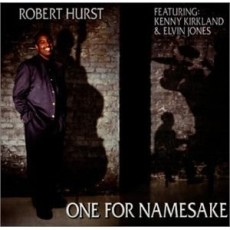
Robert L. Hurst III was born on October 4, 1964 in Detroit, Michigan and began his early music studies playing the guitar before concentrating on the bass. In 1985 he began working with Out Of The Blue and adding such jazz luminaries and contemporaries as Tony Williams, Mulgrew Miller, Harry Connick Jr., Geri Allen, Russell Malone, Terence Blanchard, Pharaoh Sanders, Sting, Carl Allen and Steve Coleman among others to his roster.
From 1986 to 1991 Hurst played in Wynton Marsalis’s ensemble, played with Branford Marsalis in the early nineties, and debuted as a leader in 1993 recording “Robert Hurst Presents” that reached #13 on the Billboard Top Jazz Albums chart. He has won four Emmy and five Grammy awards and directed, arranged and composed while a member of The Tonight Show Band.
He has scored original music for the films The Wood and Brown Sugar; performed music for Ocean’s 11, Ocean’s 12, Ocean’s 13, and on the Good Night, and Good Luck the soundtrack featuring Dianne Reeves, in which she won the Jazz Vocal Grammy in 2008. His recent recordings with Kenny Garrett and Diana Krall were each nominated for a 2007 Grammy.
No stranger to education Hurst has been involved with the Education of Jazz and Jazz History, receiving the Presidential Scholarship from President Ronald Reagan. He currently holds a position of Associate Professor teaching jazz bass at the University of Michigan’s School of Music, Theatre & Dance, and holds a seat with the Board of Directors for the John Coltrane Foundation.
More Posts: bass
Daily Dose Of Jazz…
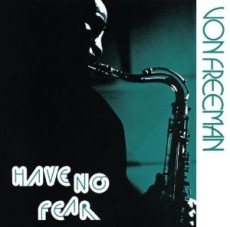
Von Freeman was born Earl Lavon Freeman Sr. on October 3, 1922 in Chicago, Illinois and learned to play the saxophone as a child. Attending DuSable High he studied under band director Walter Dyett. By the time he was 16 he was playing professionally with Horace Henderson’s Orchestra.
After serving in the Navy and playing in the band during WWII, Von returned to Chicago, where he has lived ever since, playing with his brothers George on guitar and Bruz (Eldridge) on drums at the Pershing Hotel Ballroom. Over the years various leading jazzmen such as Charlie Parker, Roy Eldridge and Dizzy Gillespie played with the Freemans as the backing band. In the early 1950s, Von played in Sun Ra’s band.
Freeman’s first venture into the recording studio took place in 1954, backing a vocal group called The Maples for Al Benson’s Blue Lake label. He appeared on Andrew Hill’s second single on the Ping label in 1956, followed by recording for Vee-Jay with Jimmy Witherspoon and Al Smith in the late fifties, and a recorded appearance at a Charlie Parker tribute concert in 1970.
It was not until 1972 that Von recorded under his own name, the album “Doin’ It Right Now” with the support of Roland Kirk. His next effort was a marathon session in 1975 released over 2 albums by Nessa. Since then he has lived, played regularly and recorded in Chicago, his recordings including 3 albums with his son, the tenorist Chico Freeman and “You Talkin’ To Me” with 22-year old saxophonist Frank Catalano, following their successful appearance at the Chicago Jazz Festival in 1999.
Freeman is considered a founder of the “Chicago School” of jazz tenorists along with Gene Ammons, Johnny Griffin and Clifford. His music has been described as “wonderfully swinging and dramatic featuring a large rich sound”. The hard bop tenor saxophonist holds down a regular Tuesday night set and jam session at the New Apartment Lounge on Chicago’s south side, and can also be heard at Andy’s Jazz Club on select weekends. Hard bop tenor saxophonist Von Freeman passed away on August 11, 2012 at age 88 in Chicago, Illinois.
More Posts: saxophone
Daily Dose Of Jazz…
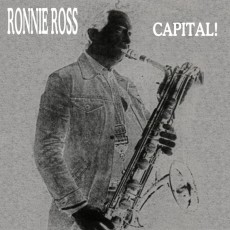
Ronnie Ross was born Albert Ronald Ross on October 2, 1933 in Calcutta, India. A move to London at 13 was where he began his interest in playing saxophone and started out on the tenor. In the ‘50s he played with Tony Kinsey, Ted Heath and Don Rendell and it was during his tenure with Rendell that he switched to the baritone.
Ross played the Newport Jazz Festival in 1958 and formed his own group that year called the Jazz Makers with drummer Allan Ganley. In 1959 he toured the United States and later Europe with the Modern Jazz Quartet. From 1961 to 1965 he played with Bill LeSage, Woody Herman, John Dankworth, Friedrich Guida and Clark Terry.
Ronnie was a saxophone tutor for a young David Bowie, and years later was the soloist on the Lou Reed song “Walk On The Wild Side”, which was co-produced by Bowie. He also had guest appearances as a soloist on several Matt Bianco albums.
Baritone saxophonist Ronnie Ross passed away on December 12, 1991 in London, England. He was 58.
More Posts: saxophone
Daily Dose Of Jazz…
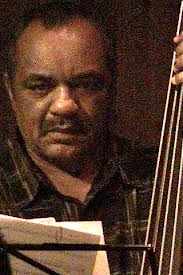
Tony Dumas was born in Los Angeles, California on October 1, 1955. By the age of 14, he started playing bass first crafting his sound in his high school orchestra. After graduation he went on to study music at Pasadena City College.
Dumas’ first started playing professionally with organist Johnny Hammond Smith followed by a stint with trumpeter Freddie Hubbard. To say he was sought after would be an understatement as his list of credentials as a sideman is impressive to say the least.
Tony has been privileged to have toured, played and recorded with such luminaries as Herbie Hancock, Carmen McCrae, Sarah Vaughan, Joe Williams, Cedar Walton, Billy Higgins, Rufus Reid, Chick Corea, Eddie Gladden, George Cables and Art Pepper as well as The Manhattan Transfer, Joe Farrell, Etta James, Mariah Carey, Bill Cosby and the Playboy Jazz Festival Band, Patrice Rushen, Bob Berg, and the list goes on and on.
Bassist Tony Dumas continues to add to the legacy of jazz through his performing and recording.
More Posts: bass
Daily Dose Of Jazz…
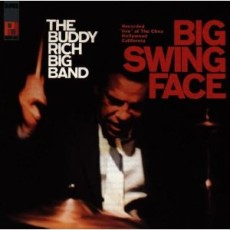
Buddy Rich was born Bernard Rich on September 30, 1917 in New York City to vaudevillians. His father first noticed his musical talent to keep a steady beat with spoons at the age of one. He began playing drums at eighteen months in vaudeville billed as “Traps the Drum Wonder”. At the height of his childhood career he was reportedly the second-highest paid child entertainer in the world, after Jackie Coogan.
By age 11 he became a bandleader without any formal drum instruction, claiming that instruction would only degrade his musical talent; never admitted to practicing, played drums only during performance, and was not known to read music. Buddy’s first major jazz gig was in 1937 with Joe Marsala and guitarist Jack Lemaire was followed with Bunny Berigan, Artie Shaw, Vic Schoen Orchestra, Tommy Dorsey and Frank Sinatra.
In 1942 he enlisted in the Marines and two years later was back with Dorsey. With financial backing from Sinatra in ’46 he formed his own band and continued to lead different groups into the early fifties. In addition he performed with Benny Carter, Harry James, Les Brown, Charlie Ventura, Jazz at the Philharmonic and led several successful big bands in an era that didn’t popularize them, played on sessions with Ella Fitzgerald and Louis Armstrong for their late-career comeback recordings, Oscar Peterson and his famous trio with Ray Brown and Herb Ellis.
Rich always have a drummer there during rehearsals to read and play the parts initially on new arrangements. He’d listen to a chart once, have it memorized, run through it and he’d know exactly how it went, how many measures it ran and what he’d have to do to drive it.
Buddy, once billed as “The World’s Greatest Drummer”, was known for his virtuosic technique, power, groove and speed and remained an active performer until the end of his life. On April 2, 1987 in Los Angeles, California drummer, bandleader and songwriter Buddy Rich succumbed to heart failure following surgery for a malignant brain tumor. He was 69.
More Posts: drums