

Daily Dose Of Jazz…
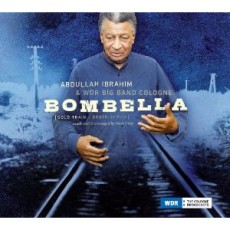
Abdullah Ibrahim was born October 9, 1934 in Cape Town, South Africa, formerly known as Adolph Johannes Brand, and as Dollar Brand. He first received piano lessons at age seven, was an avid consumer of jazz records brought by American sailors, and was playing jazz professionally by 1949. In 1959 and 1960, he played alongside Kippie Moeketsi and Hugh Masekela with The Jazz Epistles in Sophiatown, later recording the first jazz LP by Black South African musicians in 1960. Ibrahim then joined the European tour of the musical King Kong.
Moving to Europe in 1962, it was in the following year that Duke Ellington heard the Dollar Brand Trio at Zurich’s Africana Club at the request of Brand’s wife-to-be Sathima Bea Benjamin. As a result, Duke Ellington presents The Dollar Brand Trio was recorded at Reprise followed by a second session of the trio with Duke Ellington and Billy Strayhorn also on piano performing with Sathima as the vocalist. The recording, A Morning In Paris, remained unreleased until 1996 and then under Benjamin’s name. This led to wider appearances of the Dollar Brand Trio at many European festivals, as well as on radio and television.
Ibrahim has toured mainly in Europe, the United States, and South Africa, the band performing mainly in concert and club settings, and sometimes playing solo piano. Mainly playing the piano, he also plays the flute, saxophone, and cello, performing mostly his own compositions, although he sometimes performs pieces composed by others.
Abdullah Ibrahim to date has recorded more than forty albums as a leader, has written the soundtracks for a number of films, Chocolat and No Fear, No Die; and was a part of the 2002 documentary Amandla! – A Revolution in Four Part Harmony where he and others recalled the days of apartheid. He has ventured into orchestral performances with the inauguration of Nelson Mandela and the later initiation of the 18-piece Cape Town Jazz Orchestra in 2006.
A pianist and composer, Abdullah Ibrahim’s music reflects many of the musical influences of his childhood in the multicultural port areas of Cape Town, ranging from traditional African songs to the gospel of the AME church and ragas, to more modern jazz and other Western styles reflecting the influences of Thelonious Monk and Duke Ellington. He continues to perform, record and tour.
Daily Dose Of Jazz…
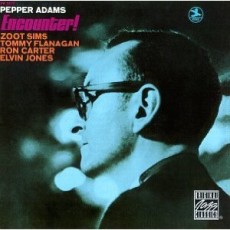
Park “Pepper” Adams III was born on October 8, 1930 in Highland Park, Michigan. His family moved to Rochester, New York when he was young and it was here that he began his musical endeavors. At 16 he moved back to Detroit and met several musicians who would later be important to his career, including trumpeter Donald Byrd. Adams became interested in Wardell Gray’s approach to the saxophone and later named Gray and Harry Carney as his influences.
After his Army band stint and a brief tour in Korea, Pepper moved to New York and recorded the “Dakar” album with Coltrane, with Lee Morgan on “The Cooker”, and briefly worked with Benny Goodman ‘s band in 1958. During this time, Adams also began working with Charles Mingus, performing on one of Mingus’s finest albums from this period, “Blues & Roots” and sporadically recording with Mingus until his death in 1979.
Adams would become a significant member of the Thad Jones/Mel Lewis Big Band from 1965 to 1978, and continued to record Jones’s compositions on many of his own albums. Adams also co-led a quintet with Donald Byrd that produced the live date, “10 to 4 at the 5 Spot” featuring Elvin Jones.
Pepper Adams, the baritone saxophonist nicknamed “The Knife” for his hearty tone, driving rhythmic sense, and big and intense sound that fit well in the up-tempo of hard bop, is considered, along with Gerry Mulligan, as setting the foundation for contemporary playing on the baritone. He died of lung cancer in Brooklyn, New York on September 10, 1986.
More Posts: saxophone
Daily Dose Of Jazz…
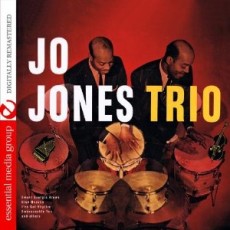
Jo Jones was born Jonathan David Samuel Jones on October 7, 1911 in Chicago, Illinois. He moved to Alabama where he learned to play several instruments, including saxophone, piano, and drums. He worked as a drummer and tap-dancer in carnival shows until joining Walter Page’s band “The Blue Devils” in Oklahoma City, Oklahoma in the late 1920s. He recorded with trumpeter Lloyd Hunter’s Serenaders in 1931, later joining pianist Count Basie’s band in 1934.
Jones, Basie, guitarist Freddie Green and bassist Walter Page were sometimes billed as an “All American Rhythm Section”. Taking a brief break for two years when he was in the military, he remained with Basie until 1948, participating in the Jazz At The Philharmonic concert series.
One of the first drummers to promote the use of brushes on drums and shifting the role of timekeeping from the bass drum to the hi-hat cymbal, Jo had a major influence on later drummers such as Buddy Rich, Kenny Clarke, Roy Haynes, Max Roach and Louie Bellson.
He performed regularly in later years at the West End jazz club at 116th and Broadway in New York City. He also starred in several films, most notably the musical short Jammin’ The Blues in 1944. In his later years, he was known as Papa Jo Jones and often omitted bass drum playing altogether. He continued a ride rhythm on hi-hat while it was continuously opening and closing instead of the common practice of striking it while it was closed. His style influenced the modern jazz drummer’s tendency to play timekeeping rhythms on a suspended cymbal that is now known as the ride cymbal.
In 1979, Jones was inducted into the Alabama Jazz Hall of for his contribution to the Birmingham, Alabama musical heritage and 1985 was the recipient of an American Jazz Masters fellowship awarded by the National Endowment for the Arts.
He recorded nearly a dozen albums as a leader and more as a sideman between 1950 and 1985 working with the likes of Gene Ammons, Art Blakey, Sonny Stitt, Coleman Hawkins, Oscar Peterson, Ella Fitzgerald, Illinois Jacquet, Ben Webster and Charles Mingus.
Drummer Jo Jones, who passed away on September 3, 1985 was often confused with drummer Philly Joe Jones, and ironically the two died a few days apart.
More Posts: drums
Daily Dose Of Jazz…
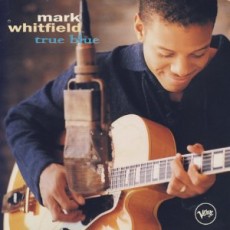
Mark Whitfield was born October 6, 1966 in Syosset, New York and graduated from Boston’s Berklee College of Music, studying composition, arranging and all styles of guitar performance. Upon graduation he returned to New York embarking on a career that afforded him the opportunity to collaborate with many artists including Dizzy Gillespie, Art Blakey, Clark Terry, Jimmy Smith, Carmen McCrae, Herbie Hancock, Quincy Jones, Jack McDuff, Betty Carter, Shirley Horn, Ray Charles, Gladys Knight, Burt Bacharach, Joe Williams, Wynton Marsalis, Bradford Marsalis, Stanley Turrentine and his greatest teacher and mentor George Benson.
The New York Times dubbed Whitfield “The Best Young Guitarist in the Business” and in 1990 Warner Bros. released his debut, “The Marksman”. The success of this release has led to a recording career that has produced 14 projects as a leader and collaborations with Sting, D’Angelo, Mary J. Blige, Chaka Khan, John Mayer, Jill Scott, Roy Hargrove, Diana Krall, Lauryn Hill, Sy Smith and Chris Botti.
In 2005, Whitfield accepted the invitation to join the faculty at Berklee, teaming up with Joe Lovano, Ralph Peterson, Danilo Perez, and Terry Lynn Carrington as “Artists in Residence”. While maintaining a teaching schedule the guitarist performs, tours worldwide and records, his latest project being “Songs of Wonder”, with two projects in the works with Christian McBride and Nicholas Payton.

More Posts: guitar
Daily Dose Of Jazz…
Clifton Anderson was born October 5, 1957 in Harlem, New York City, grew up surrounded by music and exhibited an affinity for music at an early age. His father was a church organist/choir director, his mother a singer and pianist. When he was just seven years old he got his first trombone, a gift from his uncle Sonny Rollins.
Clifton attended the prestigious Fiorello LaGuardia High School of Music and Art followed by a year at SUNY – Stony Brook in 1974, then matriculating through the Manhattan School of Music, along with his friends Angela Bofill and Kenny Kirkland. It was during this tenure that he became involved in jazz organizations, ensembles and workshops that led to his first recording date with Carlos Garnett in 1976.
By the time he graduated Anderson was established as one the young “in demand” trombonists on the New York scene. He became a part of Slide Hampton’s “World of Trombones” and played alongside folks like Steve Turre, Clifford Adams, Papo Vazquez, Frank Lacy, Conrad Herwig and Robin Eubanks among others. However, it was J.J. Johnson who remained Clifton’s greatest influence.
The early 1980’s found Clifton working with a “who’s who” of diverse musical giants: from Frank Foster, McCoy Tyner, Clifford Jordan, Stevie Wonder, Dizzy Gillespie, Merv Griffin and The Mighty Sparrow to Lester Bowie, Paul Simon, Muhal Richard Abrams, T.S. Monk and Dionne Warwick among others. During this period Clifton also played on the Broadway shows Dreamgirls and Nine.
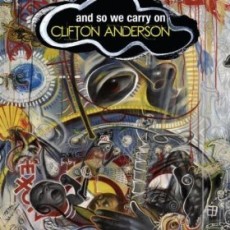
In 1983 Anderson got the call to join his uncle, Sonny Rollins, touring worldwide and appearing on his recordings. As a leader he has recorded three albums “Landmarks”, “Decade” and “And So We Carry On”. Between musical and administrative duties, running Sonny’s merchandising company, he has given academia much, teaching both privately and publicly and as an artist in residence at Duke University. He continues to perform, tour and record.
More Posts: trombone