

Daily Dose Of Jazz…
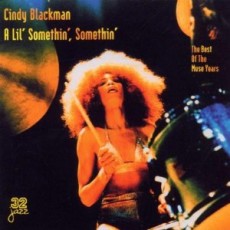
Cindy Blackman was born November 18, 1959 in Yellow Springs, Ohio into a musical family. Her mother and grandmother were classical musicians, an uncle was a vibraphonist and her dad was into jazz. Her first introduction to the drums happened when she was seven years old at a friend’s house she sat down at a drum set starting hitting and knew it was for her. Following this was joining the school band and convincing her parents to get a set of her own. By age 11 she was in Bristol, Connecticut, studying at the Hartt School of Music in Hartford and gaining an interest in jazz two years later after listening to Max Roach. It was at this time she got her first professional drum kit at fourteen.
One of her early influences was drummer Tony Williams who was the first drummer she ever saw perform live, later having the opportunity to participate in a William’s drum clinic. She soon moved to Boston, studying at the Berklee College of Music. She left after three semesters and moved to New York in 1982, became a street performer and got a chance to watch and learn from drummers like Billy Higgins, Elvin Jones, Roy Haynes, Philly Joe Jones and Art Blakey who became her mentor and major influence.
Blackman initially encountered resistance to a woman playing drums in the jazz world, both racial and gender prejudice along with her musical opinion and hairstyle. But persistence paid off in 1984 when she was showcased on Ted Curson’s “Jazz Stares of the Future”, then in 1987 her first compositions appeared on Wallace Roney’s Verses album, then Muse offered her a contract and in ’88 lead her debut session “Arcane” with Joe Henderson, Wallace Roney, Tony Williams, Clarence Seay, Kenny Garrett and Larry Willis.
Cindy has immersed herself in both jazz and rock leaving the former for a period recording and touring with Lenny Kravitz but returned to her love of jazz. She has recorded several straight-ahead jazz sessions since her 1994 release of “Telepathy” and continues to evolve the music playing with a who’s who list of luminary jazz musicians. In her own words, “To me, jazz is the highest form of music that you can play because of the creative requirements”.
More Posts: drums
Daily Dose Of Jazz…
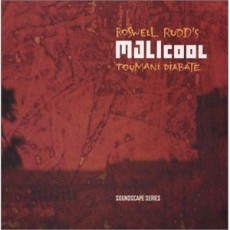
Roswell Rudd, born Roswell Hopkins Rudd, Jr. on November 17, 1935, grew up in Sharon, Connecticut. Graduating from Yale University where he had played and recorded two albums of boisterous trad-jazz with Eli’s Chosen Six, a Dixieland band of Yale students that Rudd joined in the mid-’50s. But his landmark collaborations with Cecil Taylor, Archie Shepp, John Tchicai and Steve Lacy grew out of the lessons learned while playing rags and stomps in college.
In the 1960s, Rudd participated in key free jazz recordings with his ultra avant-garde New York Art Quartet, the soundtrack of the 1964 film New York Eye and Ear Control, Michael Mantler & Carla Bley’s 1968 Jazz Composer’s Orchestra-Communications with Cecil Taylor; and has collaborations with Don Cherry, Pharoah Sanders, Larry Coryell and Gato Barbieri. A major factor in his career has been his lifelong friendships with saxophonists Archie Shepp and Steve Lacy, recording and performing the music of Thelonious Monk numerous times with the later.
Roswell is skilled in a variety of jazz genres but is best known for his avant-garde contributions. Rudd has taught ethnomusicology at Bard College and the University of Maine. Over a period of three decades he has assisted with world music song style – Cantometrics and Global Jukebox projects. He has collaborated and recorded with Malian, Mongolian and with Hispanic New Yorkers.
The Grammy Award-nominated jazz trombonist and composer Roswell Rudd conducts master classes and workshops around the world and since 1962 Rudd has worked extensively with saxophonist Archie Shepp.

Inspire A Young Mind
From Broadway To 52nd Street
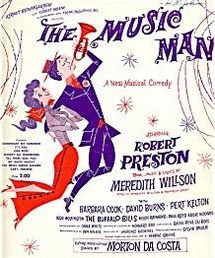
The Music Man opened at the Majestic Theatre on December 19,1957 and entered the ranks of “Blockbuster” with one thousand three hundred and seventy-five performances. The book, music and lyrics were written and composed by Meredith Wilson for Robert Preston and Barbara Cook, who held the starring roles. The cast album won five Grammy Awards for “Best Original Cast Album”, was on the Billboard charts for 245 weeks and spawned a 1962 film version in which Preston reprised his role with Shirley Jones as the lead love interest. The song “Till There Was You” remains a jazz standard today.
The Story: This is the tale of smooth talking con man Harold Hill who poses as a boys band organizer and leader and sells band instruments and uniforms to naive townsfolk before skipping town with the cash. In River City, Iowa the prim librarian and piano teacher Marian Paroo sees through him, but when Hill helps her younger brother overcome his fear of social interactions due to his lisp, Marian begins to fall in love with Harold. Harold, in turn falling for Marian, risks being caught to win her.
Jazz History: Swing music or simply “Swing” is a form of American music that developed in the early 1930s and became a distinctive style by 1940. Swing uses a strong rhythm section of double bass and drums as the anchor for a lead section of brass instruments such as trumpets and trombones, woodwinds including saxophones and clarinets and sometimes stringed instruments such as violin and guitar, medium to fast tempos, and a “lilting” swing time rhythm. The name swing came from the phrase “swing feel” where the emphasis is on the off–beat or weaker pulse in the music, unlike classical music. Swing bands usually featured soloists who would improvise on the melody over the arrangement.
The danceable swing style of big bands and bandleaders were the dominant form of American popular music from 1935 to 1946, a period known as the Swing Era.
Sponsored By
www.whatissuitetabu.com
Daily Dose Of Jazz…
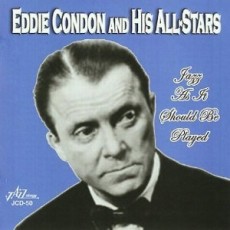
Albert Edwin Condon was born November 16, 1905 in Goodland, Indiana and started playing music on the ukulele before switching to guitar. By the time he was sixteen he was in Chicago playing professionally with Bix Beiderbecke, Jack Teagarden and Frank Teschmacher.
In 1928 Condon moved to New York City frequently arranging jazz sessions for various labels, sometimes playing with the artists he brought like Louis Armstrong and Fats Waller. He organized racially integrated recording sessions – when these were still rare – with Waller, Armstrong and Henry “Red” Allen. He played with the Red Nichols band, later forming a long association with Milt Gabler’s Commodore Records in 1938.
From the late 1930s on Eddie was a regular at Nick’s in Manhattan with Pee Wee Russell, Wild Bill Davison and Bobby Hackett. He went on to appear in a short film with Hackett, produced a series of jazz broadcasts from Town Hall during the last years of WWII that gave him national popularity.
From 1945 through 1967 he ran his own New York jazz club, Eddie Condon’s. In the 50s he recorded a sequence of classic albums for Columbia Records, toured Britain, Australia, Japan, the U. S. and performed at jazz festivals throughout the world until 1971. Two years later, Eddie Condon, jazz banjoist, guitarist, bandleader and arranger passed away on August 4, 1973 in New York City.
More Posts: arranger,bandleader,banjo,guitar
Daily Dose Of Jazz…
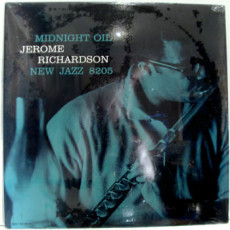
Jerome Richardson was born November 15, 1920 in Oakland, California and started on alto saxophone at the age of eight. In his teens Benny Carter, Johnny Hodges and Willie Smith were his idols. He became a professional musician at the age of fourteen, and had a brief stint with Lionel Hampton, and worked with Bay Area bands until 1941, during which time he also studied music at San Francisco State College. The flute was added to his working compliment in 1940. Both this and his alto sax were used to advantage in a Navy band, under the direction of Marshall Royal, at St. Mary’s Pre-Flight from 1942 to 1945. He joined the Lionel Hampton band again in 1949, with whom he recorded what is widely regarded as the first modern jazz solo played on flute on “Kingfish”, and was also a member of the Earl Hines big band.
Settling in New York in 1954 he began a very active session career, but continued to make his mark in a purely jazz context. He worked with bands led by Lucky Millinder and Cootie Williams, led his own quartet at Minton’s Playhouse in Harlem in 1955 and was part of Oscar Pettiford’s group that summer.
Over the next decade Jerome continued to lead his quartet, work the Roxy pit orchestra, regularly worked with Quincy Jones, toured Europe with Harold Arlen’s blues opera, was a founder member of the Thad Jones-Mel Lewis Orchestra, organizing and performing many Thad Jones tribute concerts. He played with a number of other notable big bands during his long career, including bands led by Jimmy Lunceford, Gerald Wilson, Gil Evans and Charles Mingus.
His standing as a superbly accomplished soloist on a range of reed and wind instruments was complemented by an equally strong reputation as an accompanist of singers, including the likes of Ella Fitzgerald, Frank Sinatra, Sarah Vaughan, Billie Holiday, Peggy Lee, Nancy Wilson, Billy Eckstine, and Lena Horne. Richardson performed with practically every significant post-war jazz artist, including Miles Davis, Dizzy Gillespie, Duke Ellington, Louis Armstrong, John Coltrane, Cannonball Adderley, Lionel Hampton, Herbie Hancock, Milt Jackson, Oliver Nelson, Art Farmer, Clifford Jordan, Slide Hampton, Horace Silver, Gerry Mulligan, Jimmy Smith, Wes Montgomery, Cal Tjader, and Antonio Carlos Jobim, as well as a whole range of blues, soul and pop artists.
Jerome Richardson played tenor, alto, baritone saxophone, clarinet, piccolo, and flute passed away in Englewood, New Jersey on June 23, 2000 recorded sparingly as a leader but was one of the most sought after session musicians for more than half a century was probably the most recorded saxophonist of his generation.