

Daily Dose Of Jazz…
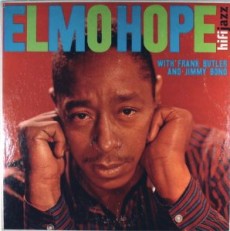
Elmo Hope was born St. Elmo Sylvester Hope on June 27, 1923 in New York City, he began his career with the Joe Morris band. From 1953 he recorded in New York as a leader and as a sideman with Sonny Rollins, Lou Donaldson, Clifford Brown and Jackie McLean. Losing his cabaret card in New York for drug use he moved to Los Angeles in 1957. On the West Coast he performed with Chet Baker before moving, followed with a stint with Lionel Hampton, then recorded with Harold Land and Curtis Counce.
Elmo led recording sessions with Frank Foster, John Coltrane, Hank Mobley, Art Blakey, Paul Chambers, and Philly Joe Jones. On a number of occasions Hope recorded in the trio format and more rarely as a leader of a quintet for Blue Note, Prestige, Riverside and other labels.
Disillusioned with the West Coast scene, Hope returned to New York in 1961, where he went to prison briefly on drug charges then returned to playing, recording duet albums with his pianist wife Bertha but recorded more rarely. Pianist Elmo Hope died of an overdose on May 19, 1967.
Though overshadowed by his contemporaries Bud Powell and Thelonious Monk, with his highly individual playing Hope holds a significant place alongside them, cited by later pianists Frank Hewitt and Sasha Perry, guitarist Kurt Rosenwinkel as their main influence, and Roswell Rudd composed “Hope No. 2” in his honor and during a concert with Archie Shepp, called Elmo Hope “ A great and fine composer and remains one of America’s well kept secrets”.
More Posts: piano
Daily Dose Of Jazz…
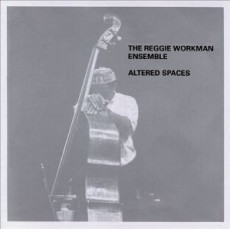
Reggie Workman was born Reginald Workman on June 26, 1937 in Philadelphia, Pennsylvania has been lauded for his work with both John Coltrane and Art Blakey. The double bassist, known for his avant-garde jazz and hard bop playing was a member of jazz groups led by Gigi Gryce, Roy Haynes, Wayne Shorter and Red Garland.
It was in 1961 that Workman joined Coltrane’s quartet, replacing Steve Davis and became a part of Trane’s “Live At The Village Vanguard” sessions, which has since become a legendary album. He also worked along with second bassist Art Davis on “Ole Coltrane”.
After a European tour Workman left the quartet and went on to play with James Moody, Yusef Lateef, Pharoah Sanders, Herbie Mann, Thelonious Monk, and became a Jazz Messenger. He has recorded several albums as a leader and with Archie Shepp, Lee Morgan and David Murray.
Reggie Workman has recorded seven albums as a leader and nearly four-dozen as a sideman working with Booker Little, Oliver Lake, Duke Jordan, Bobby Hutcherson and Grant Green among many others. He is currently a professor at The New School for Jazz and Contemporary Music in New York City.
More Posts: bass
Daily Dose Of Jazz…
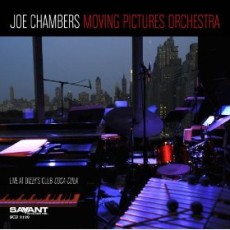
Joe Chambers was born June 25, 1942 in Stoneacre, Virginia into a musical family. He grew up listening to the rock and roll of Louis Jordan and Slim Gaillard along with classical composers like Vivaldi and Beethoven. At the tender age of four he was playing pots and pans, setting them up like a kit. More taken with Lester Young and Lionel Hampton, nonetheless, he soon joined a band that played the R&B hits and at thirteen hearing the esoteric sounds of Miles Davis, he was hooked.
Chambers earned an undergrad degree from the Philadelphia Conservatory and by the time he was twenty cut his first session on Freddie Hubbard’s Breaking Point. That single date led to road work with Harold Land, Sonny Rollins, Herbie Hancock, Eric Dolphy and Dizzy Gillespie.
As a member of the ‘60s Blue Note fraternity, Joe stands amongst some of the greatest jazz musicians of the 20th century. His intense drumming and trademark blend of cymbal-driven forward motion, deeply rhythmic continuity and explosive creativity has graced numerous landmark recordings like Hutcherson’s “Components”, Shorter’s “Schizophrenia” and “Etcetera”, and Tyner’s “Tender Moments”.
Joe Chambers is more than a drummer adding vibraphonist, pianist, composer and educator to his resume. He has eight albums as a leader, has scored several Spike Lee films, taught at the New School for Jazz and Contemporary Music in NYC and leads the Outlaw Band at the school; and he is the Thomas S. Kenan Distinguished Professor of Jazz in the University of North Carolina Wilmington’s Department of Music.
More Posts: drums,vibraphone
Daily Dose Of Jazz…
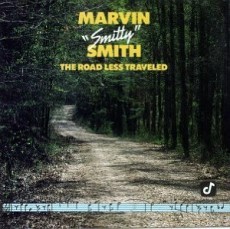
Marvin “Smitty” Smith was born on June 24, 1961 Waukegan, Illinois, son of a drumming father, exposing a young boy at a very young age. He began receiving formal musical training on drums at the age of three. An alumnus of Berklee, he has recorded over 200 albums including two as leader with a host of jazz contemporaries.
Marvin was the band drummer for the entire run of The Jay Leno show and from 1995 to 2009 sat in the drummer seat on The Tonight Show with Jay Leno, returning at its incarnation in 2010.
In addition, his jazz endeavors have seen Smith touring with the likes of Dave Holland and Sonny Rollins as well as Sting and Willie Nelson among others. He has been a member of The New York Jazz Quartet and has a group with fellow Tonight Show band mate Kevin Eubanks.
Drummer Marvin “Smitty” Smith is a frequent in-studio guest on The Loose Cannons sports radio show on KLAC in Los Angeles when the Tonight Show is on hiatus, and he continues to compose, play and tour.
More Posts: drums
Daily Dose Of Jazz…
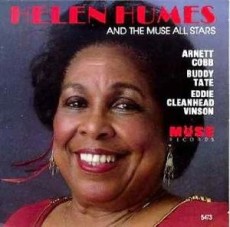
Jazz and blues singer Helen Humes was born on June 23, 1913 in Louisville, Kentucky. As a teenager she was a blues singer, band vocalist with Count Basie, a saucy R&B diva and a mature interpreter of the classy pop song.
Humes made her gramophone record debut in 1927 after being spotted by guitarist Sylvester Weaver. Moving to New York City in 1937 she became a recording vocalist with Harry James’ big band, then replaced Billie Holiday as the voice of the Count Basie Orchestra in 1938. During the 1940s and 1950s, she turned solo performer and worked with different bands and other vocalists including Nat King Cole.
In 1950 Helen recorded Benny Carter’s “Rock Me to Sleep”. She managed to bridge the gap between big band jazz swing and rhythm and blues. She appeared at the 1960 Monterey Jazz Festival with a styling reminiscent of Dinah Washington. Moving to Hawaii, then to Australia in 1964, she returned to the U.S. in 1967 to care for her ailing mother leaving the music industry for several years.
Vocalist Helen Humes received the key to the city of Louisville, the Music Industry of France Award and made a full comeback in 1973 at the Newport Jazz Festival and stayed busy until her passing from cancer at age 68 on September 9, 1981 in Santa Monica, California.
More Posts: vocal