

Daily Dose Of Jazz…
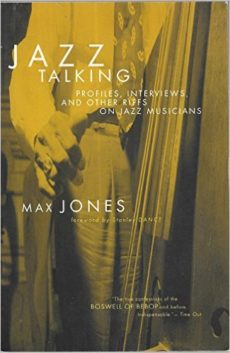
Ronald Maxwell Jones was born on February 28, 1917 in London, England and together with his brother Cliff, taught himself to play the saxophone, before the two of them founded the semi-professional Campus Club Dance Band in 1930. Dissolved in 1935 he tried to establish himself as a professional musician, becoming a member of a combo led by trumpeter Johnny Claes, with musicians who played in the style of Coleman Hawkins.
In 1942 and 1943, Max worked for the BBC radio program Radio Rhythm Club; and in 1942, together with authors Albert McCarthy and Charles Fox, founded the magazine Jazz Music, which became meritorious as it set out to reassert the pioneering role of the African-American, to emphasize the music’s social dimensions, and to attack the glossy commercialism of big-band swing.
Since 1944, Jones had a full-time job writing features for the Melody Maker in the column Collectors’ Corner. In the following years he gained more and more high recognition as a proven expert of New Orleans Jazz, swing, and mainstream jazz.
In 1971 Jones published a Louis Armstrong biography, Louis: The Louis Armstrong Story, together with John Chilton. He also wrote a number of liner notes, such as for the CD edition of the Kenny Clarke/Francy Boland Big Band, the Spirits of Rhythm, and wrote the preface for the Lee Collins, Mary Spriggs Collins, Frank Gillis, John W. Miner book Oh, Didn’t He Ramble: The Life Story of Lee Collins. A collection of his articles on musicians such as Coleman Hawkins, Johnny Hodges, Billie Holiday, and Mary Lou Williams was published as a book entitled Talking Jazz in 1987.
Jones was the first jazz musician to become a professional journalist and exclusively dealt with jazz in his publications. He was a model and a mentor for a younger generation of rock music critics and authors. Author, radio host, and journalist Max Jones passed away on August 1, 1993 in Chichester, England.

#preserving genius
More Posts: saxophone
Daily Dose Of Jazz…
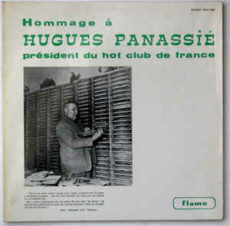
Hugues Panassié was born on February 27, 1912 in Paris, France and when he was fourteen, he was stricken with polio, limiting extracurricular physical activities. So he took-up the saxophone and fell in love with jazz in the late Twenties. In 1932 he was the founding president of the Hot Club de France.
During the Germans occupation of northern France the Nazi’sbanned American jazz because they regarded jazz as low music from an inferior people. However Hugues got past the censors by submitting alternate and obscure French titles and continue to broadcast. One example was La Tristesse de Saint Louis, which translates to Sadness of Saint Louis, but in reality it was Louis Armstrong’s The Saint Louis Blues.
Panassié would go on to produce several jazz records by artists that include Sidney Bechet and Tommy Ladnier, author thirteen books about jazz, was an ardent exponent of Dixieland and Black players and a controversial critic of bad musicians such as Benny Goodman’s clarinet being inferior to the likes of Jimmy Noone and Omer Simeon. He dismissed bebop as a form of music distinct from jazz and held in esteem a lone example of a white musician who played jazz authentically in Mezz Mezzrow.
But he was not without his critics and historians who saw him creating a wedge between Black and Caucasian musicians by insisting that Black jazz was superior. He penned the liner notes for a 1956 RCA Victor compilation Guide to Jazz that included 16 recording by prominent jazz artists. After spending five months in New York City, critic, record producer and impresario Hugues Panassié met his assistant Madeleine Gautier, married, returned and settled in Montauban, France until his passing away on December 8, 1974.
Sponsored By

Voices From The Community

#preserving genius
More Posts: saxophone
Daily Dose Of Jazz…
Don Randi was born Don Schwartz on February 25, 1937 in New York City and raised in the Catskill Mountains, where he received training in classical music. After his father’s death in 1954, he and his mother moved to Los Angeles, California and the following year he started working at a record distribution company where he heard and became influenced by jazz musicians, particularly Horace Silver.
He began his career as a professional pianist and keyboard player in 1956, gradually establishing a reputation as a leading session musician. By the early 1960s, he was a major contributor, as musician and arranger, to record producer Phil Spector’s Wall of Sound. He became a member of Nancy Sinatra’s touring band for decades and also played piano on These Boots Are Made For Walkin’ as well as every album she recorded, and played on the Beach Boys’ Good Vibrations.
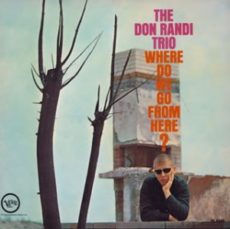
Playing on over three hundred hit records, Don worked with musicians such as Gerald Wilson, Quincy Jones, Cannonball Adderley, Herb Alpert, Sarah Vaughan, Linda Ronstadt and Frank Zappa. He recorded a number albums of piano jazz under his own name and as the leader of a trio with Leroy Vinnegar and Mel Lewis between 1960 and 1968 that included Feelin’ Like Blues, Where Do We Go From Here, Last Night, Revolver Jazz, and Love Theme From Romeo And Juliet. He also wrote film scores for Bloody Mama, Up in the Cellar, J. W. Coop, Stacey, and Santee in the Seventies.
In 1970 he opened The Baked Potato jazz club in Studio City, California, and forming his own group, Quest, serving as the house band. The band subsequently recorded over 15 albums and were nominated for a Grammy in 1980 for the album New Baby. In 2008, as a member of the Wrecking Crew, Randi was inducted into the Hollywood RockWalk.and in 2010 the club was named Best Jazz Club in Los Angeles magazine. Pianist, bandleader and songwriter Don Randi continues to perform, record and releasing his own jazz records.
Sponsored By

#preserving genius
More Posts: piano

Daily Dose Of Jazz…
Ralph Pena was born February 24, 1927 in Jarbidge, Nevada and started out playing baritone saxophone and tuba before switching to the bass. At age 15 he began playing professionally with Jerry Austin from 1942 to 1944. He went to college in San Francisco and became a fixture in the West Coast jazz scene.
Among his many associations were Nick Esposito, Art Pepper, Vido Musso, Cal Tjader, Billy May, Barney Kessel, Stan Getz, Charlie Barnet, Shorty Rogers, Jimmy Giuffre, Buddy DeFranco, Bob Brookmeyer. In the 1960s, Pena worked with Ben Webster, George Shearing, Frank Sinatra, Joe Pass, Nancy Wilson, Ella Fitzgerald, Anita O’Day and many others. He recorded and released a couple of albums with Pete Jolly between 1958 and 1962.
Bassist Ralph Pena, who lead one record session, he did lead his own groups on an occasional basis before his early death at age 42 on May 20, 1969 in Mexico City, Mexico.
Sponsored By

#preserving genius
More Posts: bass

Daily Dose Of jazz…
John E. Carisi was born on February 23, 1922 in Hasbrouck Heights, New Jersey. A self-taught musician early in his career began when he became a member of Babe Russin’s band, then from 1938 to 1943 he was a member of Herbie Fields’s Orchestra before becoming a part of Glenn Miller’s Army Air Force Band. After the war he left Miller he studied with acclaimed composer Stefan Wolpe and worked with Ray McKinley, Claude Thornhill, Charlie Barnet and Benny Goodman, among others.
His minor-blues composition Israel was quickly recognized as a unique jazz classic after it was recorded by Miles Davis at the sessions which later became known as the Birth of the Cool. Other notable versions have been recorded by Bill Evans, and the Gerry Mulligan Concert Jazz Band. Another well known Carisi piece, Springsville, was also recorded by Miles Davis and arranged by Gil Evans on the classic album, Miles Ahead.
In 1957 he arranged the music for Urbie Green’s album, All About Urbie Green and in 1959 with the music for a set by Harry Galbraith’s Guitar Choir. 1960 saw the trumpeter on a State Department tour of South East Asia and the Middle East. Visiting the Taj Mahal became the inspiration for an album he shared with Cecil Taylor that was released as Into the Hot under Gil Evans‘ name for Impulse! in 1961, and then Carisi arranged Marvin Stamm’s 1968 album Machinations.
Johnny continued to perform and arrange in both the jazz and classical fields with occasional forays into ballet and pop music. He composed and scored music for Jerry Lewis’s television show on the other. In 1969 he joined the faculty of the Manhattan School of Music, but continued to play jazz off and on until 1984. Trumpeter and composer Johnny Carisi passed away October 3, 1992 in New York City, New York.
Sponsored By

#preserving genius
More Posts: trumpet