


Daily Dose Of Jazz…
Azar Lawrence was born in Los Angeles, November 3, 1953 and started playing drums at the age of three. By five he began formal studies on piano and violin, encouraged by his mother, who was an elementary school music teacher. At 11, while performing with the USC Junior Orchestra, he became enamored with the sound of the alto saxophone and his father, a stalwart supporter of his son’s musical endeavors, promptly bought him a Selmer and his fate was sealed.
Playing in the Dorsey High Jazz Band, Lawrence met Herbert Baker, a piano prodigy who was playing with Freddie Hubbard. It was Baker who first introduced Lawrence to piano master Horace Tapscott, an important mentor who helped shape Lawrence’s musical philosophy and prepared him for the formidable task of playing with Elvin Jones.
Becoming a sideman with McCoy Tyner, replacing John Coltrane, he also worked with Miles Davis, Freddie Hubbard and Woody Shaw, released his album Bridge to the New Age in 1974 with Jean Carn, Julian Priester, Hadley Caliman and Ndugu Chancler followed by his sophomore project Summer Solstice working with Ron Carter and Albert Dailey.
He has release five albums as a leader and went on to work with Henry Franklin, Gene Harris, Patrice Rushen, Phyllis Hyman, Earth Wind & Fire, Lee Ritenour, Paul Jackson, Stanley Turrentine and Harvey Mason.
However, success has its monkey and Lawrence fell victim to drug abuse and all but disappeared from the jazz scene working only occasionally with Billy Higgins when he could borrow a saxophone. He eventually pulled himself into sobriety and embraced a new period of creativity releasing Mystic Journey in 2010 and the tenor saxophonist continues to perform.

Take A Dose On The Road
More Posts: saxophone
Daily Dose Of Jazz…
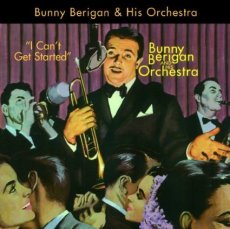
Bunny Berigan was born Rowland Bernard Berigan on November 2, 1908 in Hilbert, Wisconsin. Raised in Fort Lake the child prodigy learned violin and trumpet at an early age and played in local orchestras by his late teens. He joined the Hal Kemp Orchestra in mid 1930 recording his first trumpet solos and touring England. Upon his return in ’31 he was a sought after studio musician and recorded his first vocal “At Your Command”, then worked with the bands of Paul Whiteman and Abe Lyman by 1934.
He continued freelancing in the recording and radio studios, most notably with the Dorsey Brothers and on Glenn Miller’s earliest recording date as a leader in 1935, an association that graduated him to fame in his own right when he joined Benny Goodman’s re-formed band that included drummer Gene Krupa. The band made the legendary tour that ended with their unexpectedly headline-making stand at the Palomar Ballroom in Los Angeles, California, which has often been credited with the “formal” launch of the swing era.
Berigan went on to work with Tommy Dorsey recording one of his signature solos on the hit “Marie”, recorded under his own name his biggest hit “I Can’t Get Started”, led his own big band for three years that included Buddy Rich and Ray Conniff. He was a fixture on CBS Radio’s coast-to-coast broadcasts of Saturday Night Swing Club from 1937 to 1940, that helped further popularize jazz as the swing era climbed to its peak.
Already a heavy drinker and the band failing financially, Bunny drinking took a toll suffering pneumonia and then stricken with cirrhosis and ignoring his doctor’s advice, trumpeter, composer and bandleader Bunny Berigan, who modeled his playing in part on Louis Armstrong’s style lost his battle with alcoholism passing away of a massive hemorrhage on June 2, 1942 at age 33.
Dose A Day – Blues Away
More Posts: trumpet
Hollywood On 52nd Street
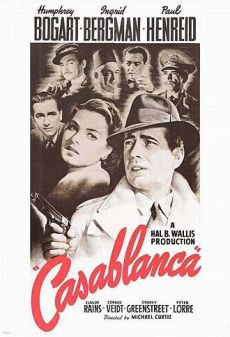
As Time Goes By is a now a jazz classic song that was originally written by Herman Hupfeld in 1931. However, it didn’t become most famous until it appeared in the 1942 romantic drama film Casablanca. Based on the un-produced stage play “Everybody Comes To Rick’s”, it was sung by the character Sam played by Dooley Wilson. The song was voted No. 2 on the AFI’s 100 Years…100 Songs Special, commemorating the best songs in film. It was used as a fanfare for Warner Bros. Pictures since 1999 and was the title and theme song of the 1990s British comedy series As Time Goes By.
The movie starred Humphrey Bogart, Ingrid Bergman and Paul Henreid the film also featured Claude Rains, Conrad Veidt, Sydney Greenstreet, Peter Lorre and Dooley Wilson.
The Story: Set during World War II, it focuses on a man torn between, in the words of one character, “love and virtue”. He must choose between his love for a woman and helping her Czech Resistance leader husband escape the Vichy-controlled Moroccan city of Casablanca to continue his fight against the Nazis.
Sponsored By

www.whatissuitetabu.com
More Posts: vocal
Daily Dose Of Jazz…
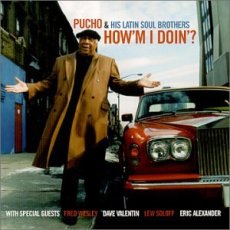
Pucho was born Henry Lee Brown on November 1, 1938 in New York City. Living in Harlem he cultivated a love for jazz, rhythm and blues, and mambo and largely self-taught imitating his favorite musician, Tito Puente. He started playing timbales professionally in New York City at the age of sixteen in bands led by Joe Panama in Harlem and the Bronx.
He formed his own band, Pucho & His Latin Soul Brothers in 1959 as a Latin jazz, soul jazz and R&B group and appeared at Count Basie’s club and a Carnegie Hall festival. Over the course of the group’s tenure of thirteen years, of the many musicians that worked in his group, Chick Corea is listed among them.
From 1966 until ’74 he recorded a series of albums for Prestige Records, and due to their musical range recorded with George Benson, Lonnie Smith and Gene Ammons. Disbanding the group in the mid Seventies he concentrated on more traditional Latin music. During the late ‘70s and ‘80s he worked the Catskill Mountain resorts with a small trio until a resurgence of interest through the acid-jazz movement in the Nineties gave way for him to re-form the group and tour Britain and Japan.
Pucho, the timbales player who just may have been to eclectic for a wider jazz audience acceptance, has since released new material, had his early material reissued and continues to perform.
Give A Gift Of Jazz – Share
More Posts: timbales
Daily Dose Of Jazz…
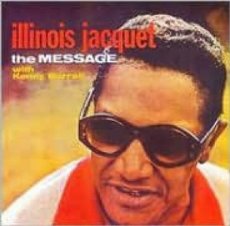
Jean-Baptiste Illinois Jacquet was born October 30, 1922 in Broussard, Louisiana to a Sioux mother and Creole father and bandleader. They moved to Houston, Texas when he was just an infant and grew up performing in his father’s band primarily on the alto saxophone.
At 15, Jacquet began playing with the Milton Larkin Orchestra, a Houston-area dance band. In 1939, he moved to Los Angeles, California where he met Nat King Cole and would sit in with the trio on occasion. In 1940, Cole introduced Jacquet to Lionel Hampton who hired him and asked him to switch to tenor.
In 1942, at age 19, Illinois soloed on the Hampton Orchestra’s recording of “Flying Home”, one of the very first times a honking tenor sax was heard on record. The song and solo became such a hit that every sax player who followed, notably Arnett Cobb, Dexter Gordon, Jimmy Forrest, Eddie “Lockjaw” Davis and Sonny Rollins, memorized them.
Quitting the Hampton band in 1943 and joined Cab Calloway’s Orchestra appearing with the band in Lena Horne’s movie Stormy Weather. Returning to California in 1944 he started a small band with his brother Russell and a young Charles Mingus.
It was at this time that Jacquet appeared in the Academy Award-nominated short film Jammin’ the Blues with Lester Young. He also appeared at the first Jazz at the Philharmonic concert and in 1946 he moved to New York City and joined Count Basie, replacing Young.
Through the 1960s and ‘70s he continued to perform mostly in Europe in small groups through the 1960s and 1970s, then led the Illinois Jacquet Big Band from 1981 until his death. He was the first jazz musician to be an artist-in-residence at Harvard University in 1983, played “C-Jam Blues” with President Clinton on the White House lawn during Clinton’s inaugural ball in 1993.
Illinois Jacquet, a skilled and melodic improviser, and a pioneer of the honking tenor saxophone that became the hallmark of early rock and roll, passed away of a heart attack in his home in Queens, New York on Thursday, July 22, 2004. He was 81 years of age.
Jazz Is Global – Share