
Daily Dose Of Jazz…
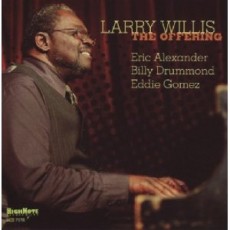
Lawrence Elliott Willis was born December 20, 1942 in Harlem, New York. He first got into music as a voice major at New York’s High School of Music and Art for gifted students and in his senior year he recorded an opera with the Music and Arts Chorale Ensemble under the direction of Leonard Bernstein.
Due to the barriers presented to Blacks in finding work in the classical arena, Willis changed directions, replacing voice with piano and concentrating on jazz. He taught himself to play piano and by the end of the winter was playing in a jazz trio with two of his classmates, Al Foster and Eddie Gomez.
He then entered and studied music theory at the Manhattan School of Music, was heard by Hugh Masekela and sent to John Mehegan for his first piano lessons ever, and by 19 began gigging regularly with altoist Jackie McLean and after graduating made his jazz recording debut on McLean’s “Right Now!” for Blue Note that featured two of Larry’s compositions.
Throughout his illustrious career pianist Larry Willis has performed and recorded as a leader and sideman on more than 300 recordings of bebop, avant-garde, jazz-fusion and rock with a wide range of musicians, Dizzy Gillespie, Lee Morgan, Carmen McRae, Clifford Jordan, Art Taylor, Shirley Horn, Stan Getz, Cannonball Adderley, Art Blakey, Woody Shaw and a stint of seven years beginning in 1972 as the keyboardist for Blood, Sweat & Tears.
He has composed and arranged for orchestras, big bands and symphonies for the Brooklyn Symphony with the Grammy-nominated Fort Apache Band, Roy Hargrove’s Grammy-winning Crisol Band, Vanessa Rubin and Joe Ford among others. He received the Don Redman award in 2011, and the Benny Golson Jazz Master Award at Howard University in 2012. He is currently still recording and touring around the world.
Daily Dose Of Jazz…
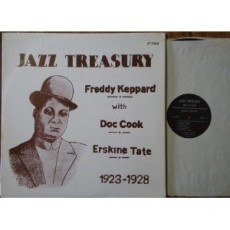
Erskine Tate born on December 19, 1895 in Memphis, Tennessee played violin and studied music at Lane College in Jackson, Tennessee. He moved to Chicago in 1912, studied at the American Conservatory and took his first professional gig at 17. By 1918 he was an early figure in the jazz scene and leading his band the Vendome Orchestra providing music during intermission and for the silent films that were shown in the Vendome Theatre at 31st and State streets.
The band was originally a nine-piece outfit but by the mid 20s had grown to 15. Among the members were Louis Armstrong, Freddie Keppard, Stomp Evans, Buster Bailey, Fats Waller and Teddy Wilson. They recorded during the period for Okeh and Vocalion Record labels.
By 1928 Erskine left the orchestra and led a band at the Metropolitan Theatre and then the Michigan Theatre. He had a long residency at the Cotton Club and continued to lead orchestras and play for dance marathons throughout the 1930s. In 1945 he retired from active performance, opened his own studio, began teaching music and became one of the city’s top instructors throughout the 50s and 60s.
Violinist, composer, conductor and bandleader Erskine Tate passed away on December 17, 1975 in Chicago, Illinois.
More Posts: bandleader,composer,conductor,violin
Daily Dose Of Jazz…
Ira Gitler was born December 18, 1928 in Brooklyn, New York and grew up listening to swing bands in the late 1930s and 1940s, before discovering the new music of Charlie Parker and Dizzy Gillespie. In the early 1950s, he worked as a producer for many recording sessions of Prestige Records and is credited with coining the term “sheets of sound” in the late 1950s, to describe the playing of John Coltrane.
Ira was the New York editor of Down Beat magazine during the 1960s and has written for Metronome Magazine, Jazz Times, Jazz Improv, Modern Drummer, the New York Times, the San Francisco Chronicle, the Village Voice, Playboy, World Monitor and New York Magazine along with international publications Swing Journal in Japan, Music Jazz – Italy, Jazz Magazine, France.
Gitler was awarded a Guggenheim Fellowship in 1974, received a Lifetime Achievement Awards by the New Jersey Jazz Society in 2001, and by the Jazz Journalists Association in 2002.
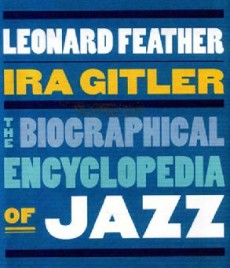
He is a jazz historian and journalist best known for “The Biographical Encyclopedia of Jazz, co-authored with Leonard Feather. He has written hundreds of liner notes for jazz recordings since the early 1950s and is the author of dozens of books about his two passions, jazz and ice hockey.
Daily Dose Of Jazz…
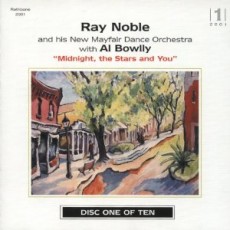
Raymond Stanley Noble was born on December 17, 1903 in Brighton, England and studied music at the Royal Academy. He became the leader of the HMV Records studio band, known as the New Mayfair Dance Orchestra that featured popular vocalist Al Bowlly and many musicians of the top hotel bands.
The Bowlly/Noble recordings achieved popularity in the United States, however, union bans prevented Noble from bringing British musicians to America so he arranged for Glenn Miller to recruit American musicians. Bowlly returned to England but Noble continued to lead bands in America, moving into an acting career portraying a stereotypical upper-class English idiot in films like Top Hat and Slumming On Park Avenue. He also played the “dense” character in love with Gracie Allen, or with his orchestra in an Edgar Bergen vehicle. Noble also provided music for many radio shows of the times like The Charlie McCarthy Show. His last major success as a bandleader came with Buddy Clark in the late 1940s.
Ray Noble arranged hits in the 1930s such as “Easy to Love”, “Mad About the Boy”, “Paris in the Spring”, wrote both lyrics and music for now jazz standards “Love Is The Sweetest Thing”, “Cherokee”, “The Touch of Your Lips”, “I Hadn’t Anyone Till You” and “The Very Thought Of You” and co-wrote “Goodnight, Sweetheart” and “You’re So Desirable”, recorded by Billie Holiday, Teddy Wilson and in 1990 by Robert Palmer.
Ray Noble, bandleader, composer, arranger, pianist, singer and actor passed away on April 3, 1978 at the age of 74.
More Posts: arranger,bandleader,composer
Daily Dose Of Jazz…
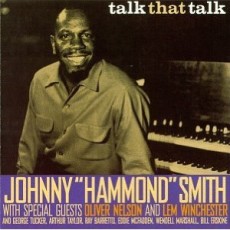
Johnny “Hammond” Smith was born John Robert Smith on December 16, 1933 in Louisville, Kentucky and earned the nickname “Hammond” for his renowned playing on the B3. In the early years of his career he played with Paul Williams and Chris Columbo before forming his own group. His bands featured singers Etta Jones, Byrdie Green, saxophonists Houston Person, Earl Edwards, guitarists Eddie McFadden, Floyd Smith, James Clark and vibist Freddie McCoy. However, his career took off as he was serving as accompanist to singer Nancy Wilson.
After a string of albums over a 10-year period at Prestige Records during the 60s, Johnny signed with CTI’s Kudu label, launching it with his soul/R&B project “Break Out” that featured Grover Washington Jr. as a sideman prior to the launch of his career as a solo recording artist. Three further albums followed and he became “Johnny Hammond”, dropping “Smith” from his name.
Adapting to the changing sound of the music Johnny’s style had become increasingly funky. This culminated in two popular albums with the Mizell Brothers, “Gambler’s Life” (1974) for the CTI offshoot, Salvation and then in 1975, “Gears” after switching to another jazz label, Milestone Records, incorporating electric and acoustic pianos as well.
As an educator he taught at Cal Poly Pomona music department for several years, penned “Quiet Fire” for Nancy Wilson’s 1989 “Nancy Now” album and remained a hard bop and soul jazz organist until his passing on June 10, 2004.
More Posts: organ