

Daily Dose Of Jazz…
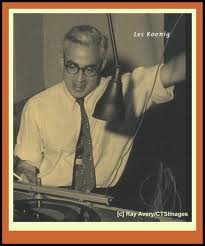
Lester Koenig founded the jazz label, Contemporary Records, in Los Angeles in 1951. It was known for seminal recordings embodying the West Coast sound, but also released recordings by jazz artists known throughout the world. Under his leadership, Contemporary recorded such artists as Sonny Rollins, Ornette Coleman, Cecil Taylor, Art Farmer, Benny Golson, the Curtis Counce Group featuring Harold Land, Jack Sheldon, Carl Perkins and Frank Butler; also Ben Webster, Miles Davis, Benny Carter, Chet Baker, Art Pepper, Phineas Newborn, Woody Shaw, Shelly Manne, Hampton Hawes, Barney Kessell and Leroy Vinnegar.
Les maintained extremely high audio standards. In 1956 he hired Roy DuNann from Capitol Records, who, out of the label’s shipping room turned studio, turned out some of the best sounding records of the 50s and 60s using German and Austrian condenser microphones that produced very high output of these microphones, especially close-in on jazz musicians’ dynamic playing. DuNann would achieve his signature sound for the label, a crisp, clear and balanced without distortion or unpleasant “peak presence” by keeping his microphone setups very simple, generally one per musician, and he avoided the use of pre-amplifiers.
In the mid 1960s the company fell into relative limbo, but limited new recordings were made in the late 1970s including a series of albums by Art Pepper recorded at the Village Vanguard in New York. After Koenig’s death in 1977, his son, John ran the label for seven years and continued the legacy producing albums by George Cables, Joe Henderson, Bobby Hutcherson and Chico Hamilton to name a few.
Fantasy Records purchased the Contemporary label and catalogue in 1984 but not before ushering in a number of major figures in the music business such as Nesuhi Ertegun, who went on to exec at Atlantic Records, and writers Nat Hentoff and Leonard Feather among others.
More Posts: producer
Daily Dose Of Jazz…
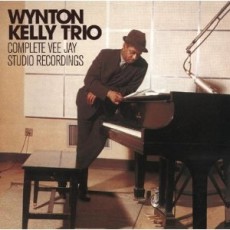
Wynton Kelly was born December 2, 1931 in Jamaica but grew up in Brooklyn, New York from age four when his parents emigrated to the United States. He started playing piano professionally as a teenager in R&B groups led by Eddie “Cleanhead” Vinson and Eddie “Lockjaw” Davis, then went on to work with Lee Abrams, Cecil Payne, Dinah Washington and Dizzy Gillespie.
Kelly recorded fourteen titles for Blue Note with a trio in 1951, worked with Dinah Washington, Dizzy Gillespie, and Lester Young during 1951-1952 followed by serving in the military. After his discharge he again worked with Washington, Charles Mingus and the Dizzy Gillespie big band but he would be most famous for his stint in the late 50s with the Miles Davis Quintet from 1959 – 63 and was part of the seminal “Kind Of Blue” replacing Bill Evans on “Freddie Freeloader”, along with notable albums “At The Blackhawk” and “Someday My Prince Will Come”. He would later replace Tommy Flanagan on the “Naima” on Coltrane’s “Giant Steps”.
Wynton left Davis in 1963 and took the rest of the rhythm section bassist Paul Chambers and drummer Jimmy Cobb with him to form his trio. He recorded as a leader for Blue Note, Riverside, Vee-Jay, Verve and Milestone.
Pianist Wynton Kelly passed away on April 12, 1971 in Toronto, Ontario, Canada of an epileptic seizure. At 39, he was one of the most prolific sideman pianists of his era, performing on scores of jazz albums and a superb accompanist and distinctive soloist who would decades later influence a new generation of jazz pianists.
More Posts: piano

Daily Dose Of Jazz…
Hadley Caliman was born December 1, 1932 in Los Angeles, California. While at Jefferson High School he studied with his fellow classmates trumpeter Art Farmer and saxophonist Dexter Gordon, and was known in the Central Avenue corridor as “Little Dex”. It was here during the 50s and by the 60s where he primarily gigged and the tenor was soon seen playing with Mongo Santamaria, the Gerald Wilson Big Band, Willie Bobo and Don Ellis and was briefly a member of a jazz-rock fusion group led by Ray Draper.
By the Seventies Hadley had moved to San Francisco and was performing and/or recording with Joe Henderson, Nancy Wilson, Carlos Santana, Joe Pass, Hampton Hawes, Bobby Hutcherson, Flora Purim, Elvin Jones, Freddie Hubbard, Jon Hendricks, Earl Andreza, Phoebe Snow and Patrice Rushen among others. He later moved to Seattle, Washington where he had been on the faculty of the Cornish College of the Arts and a featured soloist with the Seattle Repertory Jazz Orchestra.
Though one can hear Coltrane’s influence in his playing, it never overshadowed the earlier West coast bop or the myriad of musical genres he played that created his modern jazz sound. Tenor saxophonist and flautist Hadley Caliman passed away on September 8, 2010 at age 78 in Seattle, Washington where he had been an active player leading both a quartet and quintet.
More Posts: saxophone
Daily Dose Of Jazz…
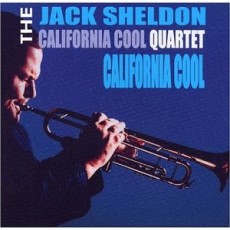
Jack Sheldon was born November 30, 1931 in Jacksonville, Florida became a professional trumpet player at the age of thirteen. It was during his teen years he moved to Los Angeles and subsequently joined the air force playing in military bands in Texas and California. He first gained recognition as part of the West Coast jazz movement in the 1950s performing and recording with Art Pepper, Gerry Mulligan and Curtis Counce.
Sheldon played the trumpet, sang, performed and was the sidekick and comedic foil on the Merv Griffin show. During the sixties he ventured further into television as an actor on such shows as Dragnet, The Girl With Something Extra, the Cara Williams Show and Run Buddy Run. He was also the voice used for “Conjunction Junction” and “I’m Just A Bill” on Schoolhouse Rock. He voice later appeared on such sitcoms as The Simpsons and Family Guy.
He has played with Jimmy Guiffre, Herb Geller, Mel Torme, Wardell Gray, Helen Humes, Gary Burton, June Christy, Rosemary Clooney and the big bands of Stan Kenton, Bill Berry, Tom Kubis and Benny Goodman.
Jack performed the trumpet solo for the theme song “The Shadow Of Your Smile” on the soundtrack of the 1965 movie, The Sandpiper, appeared in the Oscar-nominated documentary “Let’s Get Lost” about the life of fellow jazz trumpeter Chet Baker, performed a trumpet solo in the Coppola film “One From The Heart”, appeared as an ill-fated trumpeter in Radioland Murders, and is the subject of an award winning feature documentary, “Trying to Get God: The Jazz Odyssey of Jack Sheldon”. The trumpeter continued to be an active performer of the bebop and cool jazz schools until his transition on December 27, 2019.
Give A Gift Of Jazz ~ Share

#preserving genius
More Posts: trumpet
Daily Dose Of Jazz…
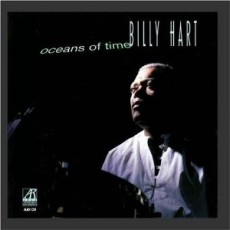
William “Billy” Hart was born November 29, 1940 in Washington, D.C. is a drummer who worked first with soul groups Sam & Dave and Otis Redding then later with locals Buck Hill and Shirley Horn. This led to work as a sideman with the Montgomery Brothers, Jimmy Smith, and Wes Montgomery prior to his death in 1968.
Hart moved to New York and started playing with Eddie Harris, Pharoah Sanders, Marian McPartland and recording with McCoy Tyner, Wayne Shorter and Zawinul. In 1969 he became a member of Herbie Hancock’s sextet followed by another stint with McCoy Tyner, then Stan Getz, Quest and Miles Davis along with extensive freelancing. In the nineties he worked with Charles Lloyd, Joe Lovano, Tom Harrell and performed with the Three Tenors – Dave Liebman, Joe Lovano and Michael Brecker.
Billy Hart is one of the most in-demand jazz drummers and educators alive and has recorded more than 500 albums as a sideman. Since the early 1990s has spent considerable time at the Oberlin Conservatory of Music, is an adjunct professor at the New England Conservatory of Music and at Western Michigan University. He conducts private lessons through The New School and New York University. He also often contributes to the Stokes Forest Music Camp and the Dworp Summer Jazz Clinic in Belgium, while leading a quartet Mark Turner, Ethan Iverson and Ben Street.
More Posts: drums