

From Broadway To 52nd Street
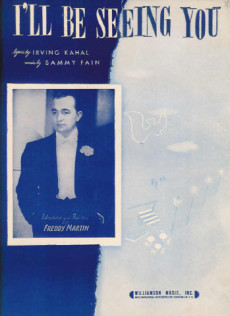
Right This Way came to fruition on January 5, 1938 as the production opened at the 46th Street Theatre. Brad Greene and Fabian Storey composed the music with Marianne Brown Waters writing the lyrics for the majority of the musical that was categorized as an original musical comedy set in Paris and Boston. The show starred Henry Arthur, Nelson Barcliff, Christine Bromley and Maude Carroll. Though the show only ran for 15 performances, the one song written by Irving Kahal and Sammy Fain, “I’ll Be Seeing You” was featured and became destined to be a jazz classic.
Broadway History: While Broadway prospered with a variety of shows being produced on The Great White Way not realizing that just some eight months away the city would be struck by what would be labeled as the “Long Island Express” or “The Great New England Hurricane of 1938”. The storm claimed 700 lives, injured another 700 more, destroyed 4500 homes, cottages and farms, damaged another 15,000 along with 26,000 cars, wiping out power above 59th Street, flooding subways and causing the East River to overflow to an estimated tune of three hundred million dollars. Despite the destruction, one unexpected positive outcome did emerge from the storm. The devastation reportedly helped solve the unemployment crisis that had been lingering since the Great Depression, as thousands of people were able to find work on Long Island helping to clean up and repair the damage.
Sponsored By

www.whatissuitetabu.com
More Posts: broadway
Daily Dose Of Jazz…
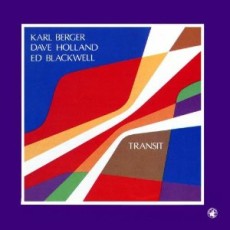
Karl Hanns Berger was born March 30, 1935 in Heidelberg, Germany and began playing piano when he was ten. By the time he reached young adulthood he had landed a job at Club 54 in his hometown as the house pianist and accompanied visiting American musicians such as Leo Wright, Lex Humphries and Don Ellis. During their stays he was able to learn the complexities of modern jazz.
Berger eventually picked up the vibraphone and in the early sixties became intrigued with free jazz. By 1965 he was a part of Don Cherry’s Paris-based quintet and the next year they came to New York to record Symphony For Improvisers on Blue Note. Staying in the U.S. Berger recorded his first album the following year.
Most of his output has been experimental in the free jazz circles playing with the likes of Carla Bley, Lee Konitz, John McLaughlin, Dave Holland, Sam Rivers, Pharoah Sanders, The Mingus Epitaph Orchestra and many others. From 1969 to 1975 Karl Berger continuously won the Down Beat critics poll for best jazz vibraphone player of the year.
In 1972 along with his friend and mentor Ornette Coleman, he founded the Creative Music Studio in Woodstock, New York, which was geared toward encouraging young students to explore their own creative ideas instead of imposing traditional concepts upon them. With visiting educators like Jack DeJohnette, Sam Rivers, and Anthony Braxton amongst other prominent musicians the school flourished until the mid eighties when Berger decided to venture back into performing.
From 1985 on Berger has led a 28-piece big band, played festivals worldwide, recorded as a leader and sideman, extending his educator talents to teaching jazz and ensemble playing in Frankfurt, and chaired the Music Department at U Mass-Dartmouth.
The musicologist, composer, pianist and vibraphonist was directly influenced by Ornette Coleman and his playing eschews four-mallet technique with an understanding and ability to play any meter from standard time signatures to odd meters and polyrhythms based on core elements of swing and coherent melody. Karl Berger continues to pursue the range of his instrument through recording, performing and touring.

More Posts: piano,vibraphone

Daily Dose Of Jazz…
Pearl Mae Bailey, born March 29, 1918 in Southampton County, Virginia was raised in the Newport News, Virginia. She began singing at the age of three, making her stage debut at 15 when prompted by her brother Bill she entered an amateur contest winning first prize at Philadelphia’s Pearl Theatre. She went on to do the same at The Apollo, which cemented her decision to pursue an entertainment career.
Singing and dancing in Philly’s black nightclubs and other east coast cities in the thirties, by WWII she was touring the country with the USO and then settling in New York. Her success as a solo nightclub performer brought her work with Noble Sissle, Cootie Williams, Cab Calloway and Duke Ellington.
In 1946 she made her debut on Broadway in St. Louis Woman, which was later followed by House Of Flowers. Broadway led to the silver screen and in 1954 she took the role of Frankie in Carmen Jones, Maria in Porgy and Bess in ’59, both starring Dorothy Dandridge and Aunt Hagar in the film version of St. Louis Blues. In between demanding stage and screen commitments she continued to tour and record.
Returning to Broadway with Cab Calloway in David Merrick’s 1967 production of Hello Dolly won her a Tony award a year later. Throughout the next two decades she would sing the national anthem at the World Series, have her own television show, continue to perform on Broadway, be the voice for several animated film characters, earn a B.A. in theology from Georgetown University, become a spokesperson for Duncan Hines, win a Daytime Emmy, be appointed Ambassador of Love by President Nixon, be awarded the Bronze Medallion from New York City and a Presidential Medal of Freedom.
Pearl Bailey, an uninhibited vaudevillian, singer and actress passed away on August 17, 1990 in Philadelphia of arteriosclerotic coronary artery disease. The sultry voice was best known for her signature songs “Takes Two To Tango”, “Baby It’s Cold Outside” and “Won’t You Come Home Bill Bailey”.

More Posts: vocal
Daily Dose Of Jazz…
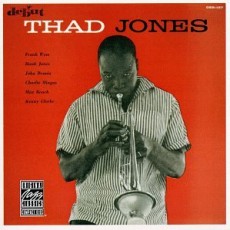
Thaddeus Joseph Jones was born in Pontiac, Michigan on March 28, 1923 into a musical family of ten. His older brother Hank was a pianist and a younger brother Elvin, a drummer. A self-taught musician, Thad was performing professionally by the age of sixteen. Enlisting in the Army from 1943 – 1946, he played in the U.S. Army bands during World War II.
By 1954 Thad joined the Count Basie Orchestra and was a featured soloist on such tunes as April In Paris, Shiny Stockings and Corner Pocket. But his main contribution to the orchestra was his compositions and arrangements of The Deacon, Counter Block and H.R.H. in honor of their command performance in London for the Queen. This was followed by a hymn like ballad by Jones titled “To You” performed by the Basie and Ellington bands in their only performance together, and “Dance Along With Basie” recording with nearly all Jones un-credited arrangements of standards.
1963 saw Jones leaving Basie to become a freelance arranger and studio player in New York. Two years later he and drummer Mel Lewis would form The Thad Jones/Mel Lewis Orchestra that began as an informal jam session amongst New York’s studio elite. They found a home at the Village Vanguard with Thad at the helm for twelve years and in 1978 they won a Grammy for the recording “Live In Munich”.
That same year Jones moved to Copenhagen to the surprise of his New York colleagues. The band continued under Lewis’ direction until his death and is still currently in residence as the Village Vanguard Orchestra. During his life in Copenhagen he composed for the Danish Radio Big Band, taught jazz at the Royal Danish Conservatory, formally studied composition and took up the valve trombone. Ill health began to take its toll on Jones by the mid- eighties and on August 21, 1986 the composer, arranger, trumpeter and flugelhornist passed away in Copenhagen.
Thad Jones’ most notable album was “Suite For Pops” featuring intense bebop improvisations of saxophonist Billy Harper and high note screeching of trumpeter Jon Faddis. His most well known composition is “A Child Is Born”.
More Posts: flugelhorn,trumpet
Daily Dose Of Jazz…
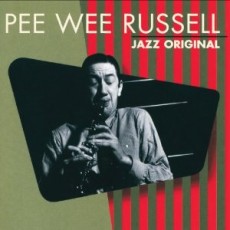
Charles Ellsworth Russell, much better known by his nickname Pee Wee Russell was born on March 27, 1906 in Maplewood, Missouri but grew up in Muskogee, Oklahoma. He began music studying the violin, followed by the piano and then drums. While none of these satisfied his musical acumen he became attracted to the clarinet when his father snuck him into an Elks Club dance and he witnessed the five-piece band. He bought an Albert-system instrument and took lessons from Charlie Merrill, a clarinetist in the pit band at the Broadway Theatre.
His family moved to St. Louis in 1920 and while in school at the Western Military Academy, Pee Wee played with various dance and jazz bands. By 1922 he was traveling and performing professionally with tent shows and riverboats but two years later settled in Chicago playing with notables as Bix Beiderbecke and Frankie Trumbauer.
Over the next two decades Russell built a career with his distinctive style that was somewhat unorthodox to his contemporaries and often was accused of playing out of tune. Yet he played with the likes of Coleman Hawkins, Louis Prima, Red Nichols, Art Hodes freelanced recording sessions and took up residence at “Nick’s” in Greenwich Village.
By 1940 Pee Wee’s health began to deteriorate exacerbated by his bout with alcoholism. In and out of hospitals and a breakdown was coupled with had periods when he could not play. In his latter years he played jazz festivals and international tours organized by George Wein including Newport in 1963 with Thelonious Monk. Playing Richard Nixon’s inaugural was his last gig with George Wein.
Clarinetist Pee Wee Russell died in an Alexandria, Virginia hospital just three weeks later on February 15, 1969. His greatly imaginative improvisations remain inspiration to clarinetists and in 1987 he was inducted into the Big Band and Jazz Hall of Fame.

More Posts: clarinet