Daily Dose Of Jazz…
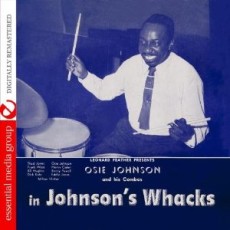
Osie Johnson was born James Johnson in Washington, DC on January 11, 1923. He started his drumming career in 1941 in Boston with the Sabby Lewis band and then during the war years in the Navy Band. Upon discharge from the service he freelanced around Chicago until he joined the Earl Hines band from 51-53.
He played stints with Dorothy Donegan and Illinois Jacquet prior to becoming one of the most in-demand drummers in the 50’s and first half of the 60’s in New York. As a busy session musician working with the likes of Coleman Hawkins, Dinah Washington, Wes Montgomery and Sonny Stitt, Paul Gonsalves, Zoot Sims and Mose Allison among the many who’s who list of musicians he kept time for.
On February 10, 1966 drummer, composer, arranger and singer Osie Johnson, who made a countless recordings as a leader and studio musician, passed away in New York City at the age of 43.
Daily Dose Of Jazz…
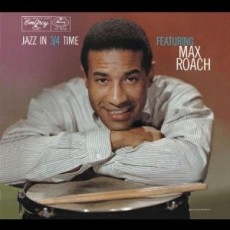
Max Roach was born Maxwell Lemuel Roach into the musical family of Alphonse and Cressie Roach on January 10, 1924 in the township of Newland in Pasquotank County, North Carolina. At the age of 4 the family moved to Bedford–Stuyvesant in Brooklyn, New York and few years later he was playing bugle and by 10 he was drumming in gospel bands. Upon graduation from Boy’s High School in 1942, the eighteen year old was called up to the majors filling in for Sonny Greer in the Duke Ellington Orchestra.
Roach’s most significant innovations came in the 1940s, when he and jazz drummer Kenny Clarke devised a new concept of musical time. By playing the beat-by-beat pulse of standard 4/4 time on the “ride” cymbal instead of on the thudding bass drum, Roach and Clarke developed a flexible, flowing rhythmic pattern that allowed soloists to play freely. The new approach also left space for the drummer to insert dramatic accents on the snare drum, “crash” cymbal and other components of the trap set. By matching his rhythmic attack with a tune’s melody, Roach brought a newfound subtlety of expression to his instrument.
Max along with Kenny Clarke were the first drummers to play bebop and performed in the bands of Dizzy Gillespie, Thelonious Monk, Coleman Hawkins, Bud Powell, Charles Mingus, Sonny Rollins, Clifford Brown, Duke Ellington, Miles Davis and Charlie Parker. He played on many of Parker’s most important records including the Savoy 1945 session, a turning point in recorded jazz.
Roach went on to lead his own groups, and made numerous musical statements relating to the Black civil rights movement. He once observed, “In no other society do they have one person play with all four limbs.” Jazz percussionist, drummer, composer and innovator Max Roach left the jazz world on August 16, 2007.

More Posts: drums
Daily Dose Of Jazz
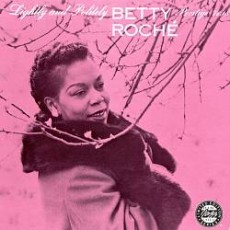
Betty Roché was born in Wilmington, Delaware on January 9, 1920. She began her career by taking the amateur contest on the famed stages of the Apollo Theatre in Harlem. Famous for her strong, dramatic way of singing the blues, she sang with the Savoy Sultans in 1941 and then joined Duke Ellington two years later replacing Ivie Anderson just days before his Carnegie concert.
Betty rose to the occasion to critical acclaim performing a section of Black, Brown & Beige. But it was her rendition of Take The “A” Train that gained her greatest fame. She performed it in the 1943 film “Reveille With Beverly” but because of WWII it would be nearly a decade later before she would record the tune.
Roché performed and recorded with pianist Earl ‘Fatha’ Hines, trumpet master Clark Terry and pianist/singer Charles Brown. In the late 50’s and early 60’s she recorded for both Bethlehem and Prestige and her contribution to the jazz scene is larger than most think as she is credited with being a major influence on bebop singers and the public’s ability to deal with the musical adventure.
Vocalist Betty Roché, known for her blues and jazz renderings, died on February 16, 1999.

More Posts: vocal
Daily Dose Of Jazz…
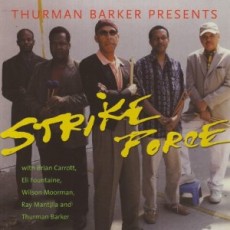
Drummer Thurman Barker was born January 8, 1948 in Chicago, Ilinois. His first professional gig was at the age of 16 with Mighty Joe Young but went on to finish his studies at Empire State College, the American Conservatory of Music and Roosevelt University.
Thurman has accompanied Billy Eckstine, Bette Midler, and Marvin Gaye; was the house percussionist at the Shubert Theatre in the 60’s. Late in the decade and through the 70’s he played with Muhal Richard Abrams, Pheeroah Aklaff, Anthony Braxton, Billy Bang, Henry Threadgill and Kalaparusha Maurice McIntyre.
Barker reunited with Braxton, recording and touring with him from 1978-80 and with Sam Rivers from 1979-80. In 1985 he joined the Jarman/Rivers trio and in 1987 played marimba with Cecil Taylor.
Since 1993 he has been an Associate Professor at Bard College.

More Posts: drums
Daily Dose Of Jazz…
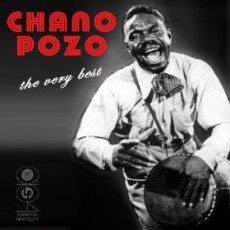
Chano Pozo was born Luciano Pozo Gonales was born in Havana, Cuba on January 7, 1915 and Chano showed an early interest in drumming, gaining his musical background performing ably in Afro-Cuban religious ceremonies in which drumming was a key element.
Growing up in poverty in the foul and dangerous area of El Africa solar where even the police feared to tread, By 13 he was in reformatory learning to read and write, study auto repair and hone his already exceptional drumming skill. Upon his release and during a series of lackluster jobs he composed music. His reputation grew among the people each year for the compositions he wrote for carnival and he quickly became the most sought after rumbero in Cuba.
At the beginning of 1947 Pozo moved to New York City with the encouragement of Miguelito Valdes with who he recorded along with Arsenio Rodriguez, Carlos Vidal Bolado and Jose Mangual. By September he was a featured performer with Dizzy Gillespie’s Big Band at Carnegie Hall and subsequently on a European tour. Their most notable material was ‘Cubana Be, Cubana Bop, Tin Tin Deo and Manteca, the latter two co-written by Pozo.
A conguero, percussionist, singer, dancer and composer, Chano became one of the founding fathers of Latin jazz, which was essentially a blend of bebop and Cuban folk music. Chano Pozo, a hot-tempered Cuban, was killed in a Harlem bar, a little more than a month shy of his 34th birthday on December 2, 1948.
Chano Pozo: 1915-1948 / Drums, Percussion
More Posts: conga,percussion,vocal