
Daily Dose Of Jazz…
Barry Altschul was born on January 6, 1943 in New York City was a major contributing drummer to the avant-garde movement that had been steadily evolving since the innovations of Cecil Taylor, Ornette Coleman and John Coltrane. Gaining fame as a drummer in the late 60’s playing in the “outside” style of jazz, his first major gig in pianists Paul Bley’s trio. By 1969 he joined up with Chick Corea, Dave Holland and Anthony Braxton forming the group Circle, which arguably might be the most technically adept free jazz ensemble ever.
At the time, he made use of a high-pitched Gretsch kit with add-on drums and percussion instruments, which he integrated seamlessly in a whirlwind of sound. His drumming was stylistically all encompassing – in his own words “from ragtime to no time” – thanks to his foundation in traditional jazz styles. No one sounded quite like him at the time, and his nuclear energy served him well when he teamed up with Sam Rivers and Anthony Braxton throughout the 1970s.
Much of Altschul’s power as a rhythm player stemmed from his subtle touch, his sound being very tight and well defined with a strict attention to rhythmic and tonal detail. He also made albums as a leader but by the mid-80’s he was rarely seen in concert or on recordings. He recently has become a little more visible as a sideman with the FAB trio with violinist Billy Bang and guitarist Joe Fonda, and with bassist Adam Lane. He has played and recorded with Roswell Rudd, Dave Liebman, Andrew Hill, Sonny Criss, Hampton Hawes and Lee Konitz.

More Posts: drums

From Broadway To 52nd Street
In the thirties one name was destined for stardom and it belonged to Ethel Waters. Growing up in a solitary and restless childhood in Philadelphia’s poor and violent 8th Ward, she quickly became distrustful of authority, wary of kindness or commitment but connected to the songs “her people” sang and the stories they carried with them. She began singing in black nightclubs and the on the Chitlin’ Circuit, belting out gutsy and raunchy songs delivered with impeccable diction.
Debuting on Broadway in an unsuccessful revue called Africana, she soon was playing Rhapsody in Black making an unprecedented $2500 a week. But it was a gig in Harlem’s Cotton Club in 1933 where she introduced a Harold Arlen/Ted Koehler tune Stormy Weather that brought her unique talents to a wider audience. Irving Berlin was in the audience and when he heard Ethel, he knew she was right for one of the bravest range of songs ever produced on Broadway.
A revue cleverly tied together by the device of pretending that each song and skit was derived from headlines in one imaginary newspaper, was the basis for a new musical, As Thousands Cheer. It opened on September 30, 1933 at the Music Box and held the stage for 400 consecutive performances.
But it was Irving Berlin who brought a vibrant and exciting young singer named Ethel Waters downtown from Harlem and centered two songs composed by Berlin that went on to establish themselves in jazz history. The first headline simply said “Heat Wave” in which a young woman starts a heat wave by letting her seat wave! The second headline read: Unknown Man Lynched By Frenzied Mob and behind Ethel Waters was the silhouette of a man with a rope around his neck hanging from a tree as she sang “Supper Time”.
Sponsored By

www.whatissuitetabu.com
More Posts: broadway
Daily Dose Of Jazz…
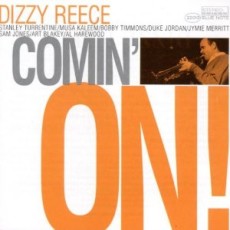
Dizzy Reece was born Alphonso Son Reece on January 5, 1931 in Kingston, Jamaica. The son of a silent film pianist, Reece attended the Alpha Boys School, which was famed for its musical alumni. He first took up the baritone saxophone but switched to trumpet at 14. From the age of 16 he was a full-time musician, moving to London in 1948 and spending the 50’s working in Europe with much of his time in Paris.
Reece found himself overshadowed by the innovators of the hard bop style, even though the trumpeter had his own distinctive sound and compositional style. He did, however, work with Don Byas, Kenny Clarke, Frank Foster and Thad Jones among others and winning praise from Miles Davis and Sony Rollins he emigrated to New York in 1959. Struggling through the 60’s, Reece recorded a series of critically acclaimed projects for Blue Note such as “Blues In Trinity”, “Star Bright”, “Comin’ On!” and “Soundin’ Off”.
Remaining active as a musician and writer, Dizzy Reece has recorded over the years with Victor Feldman, Tubby Hayes, the Paris Reunion Band, the Clifford Jordan Big Band, Dexter Gordon, Ted Curson, Duke Jordan, Sun Ra alumni John Gilmore and Philly Joe Jones.
More Posts: trumpet
Daily Dose Of Jazz…
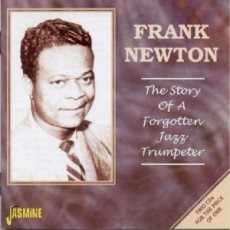
Frankie Newton was born William Frank Newton on January 4, 1906, growing up in Emory, Virginia. The trumpeter’s mellow and thoughtful style sometimes seemed out of place in during the swing era, however, he played in several New York bands in the 1920s and 1930s, including bands led by Lloyd Scott, Elmer Snowden, Cecil Scott, Sam Wooding, Chick Webb, Charlie Barnet, Andy Kirk and Charlie “Fess” Johnson.
In the 40s he played with bands led by Lucky Millinder, Pete Brown and Mezz Mezzrow. He played in clubs in New York and Boston, with musicians such as pianist James P. Johnson, drummer Sid Catlett and clarinetist Edmond Hall.
He accompanied Bessie Smith on her final recordings (November 24, 1933), Maxine Sullivan on “Loch Lomond” and several of Billie Holiday’s Café Society recordings, most notably Strange Fruit in 1939.
Although the lyrical trumpeter had a relatively brief but artistically rewarding career producing a couple of recordings, “At The Onyx Club” and “At The Cotton Club”, by the end of the 40’s he became less interested in music and gradually faded from the scene and concentrating more on painting.
Politically, Newton was known to be a communist and as an homage, historian Eric Hobsbawn has written jazz criticism for the New Statesmen under the pen name “Francis Newton”. Trumpeter Frankie Newton passed away on March 11, 1954 in New York City.

More Posts: trumpet
Daily Dose Of Jazz…
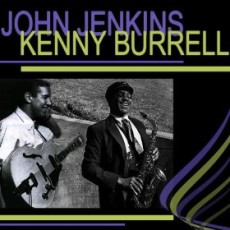
The hard bop alto saxophonist John Jenkins was born January 3, 1931 in Chicago, IL where he initially studied clarinet in high school but switched to saxophone after six months on the instrument. He played in jam sessions led by Joe Segal at Roosevelt College from 1949-1956 going on to play with Art Framer in 1955 and led his own group in Chicago later that year.
Jenkins had a sound similar to Jackie McLean and the 50’s saw his most active period. In 1957 he played with Charles Mingus s and recorded two albums as a leader, “Jenkins, Jordan & Timmons” on the New Jazz label and “John Jenkins with Kenny Burrell” on Blue Note.
He played as a sideman with Donald Byrd, Hank Mobley, Paul Quinichette, Clifford Jordan, Sahib Shihab and Wilbur Ware. in the late 1950s and early 1960s, but essentially dropped out of music after 1962, aside from a few dates with Gloria Coleman.
After leaving the jazz world John worked as a messenger in New York and dabbled in jewelry; he sold brass objects at street fairs in the 1970s. After 1983 he began practicing again and playing live on street corners and he played with Clifford Jordan shortly before his death on July 12, 1993.

More Posts: saxophone