Daily Dose Of Jazz…
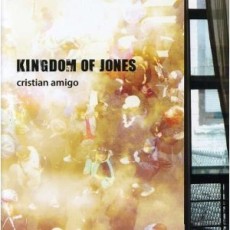
Cristian Amigo was born January 2, 1963 in Santiago, Chile. He emigrated with his family to the United States as a young child. At 12 years old, he began studying guitar seriously and two years later the family moved to Miami and began performing with a rock band he formed, Six Feet Under. He attended Hialeah-Miami Lakes Senior School and while a student there taught classes in guitar to his peers. During high school he took courses in music theory, classical guitar and jazz at Miami-Dade Community College.
Amigo entered the music program at Florida State University at age 17, studied classical guitar, then enrolled in the University of Miami and became an active recording session player. His first recording session at age 17 was with Narada Michael Walden prior to moving to Los Angeles to continue his education studying jazz with Kenny Burrell and composition with Wadada Leo Smith, earning a doctorate in Ethnomusicology.
Cristian would go on to become a film composer, bandleader, music producer, jingle producer, concert producer and music teacher at Plaza de la Raza and others. He has performed in African, Arabic, funk, hard rock, free jazz, jazz, and reggae groups working with Hans Zimmer, Wadada Leo Smith, David Ornette Cherry and Carlos Hayre.
His awards include Guggenheim and Van Leir Fellowships, he has been produced by Brooklyn Philharmonic, New York Foundation for the Arts, American Composers Forum, Danish Arts Council among numerous others. Amigo moved to New York City from Los Angeles in 2003 and quickly established himself on the Latin music, free improv, “new music”, and theater scenes, and continues to perform, record and produce.

More Posts: guitar
Daily Dose Of Jazz…
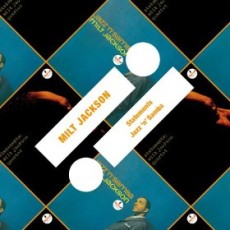
Milt Jackson was born Milton Jackson on January 1, 1923 in Detroit, Michigan. Discovered by Dizzy Gillespie and hired in 1946 for his sextet and also for his larger ensembles. He quickly acquired experience working with the most important figures in jazz of the era, including Woody Herman, Howard McGhee, Thelonious Monk and Charlie Parker.
In the Gillespie big band, Jackson fell into a pattern that led to the founding of the Modern Jazz Quartet. He was part of Gillespie’s small group swing tradition within a big band, consisting of pianist John Lewis, bassist Ray Brown and drummer Kenny Clarke. They would become a working group in their own right around 1950 and became the Milt Jackson Quartet but by the time Percy Heath replaced Ray Brown, in 1952 they became the Modern Jazz Quartet.
After some twenty years the MJQ disbanded in 1974 and Jackson pursued more money and his longed for improvisational freedom. The group reformed in 1981, however, and continued until 1993, after which Jackson toured alone, performing in various small combos, although agreeing to periodic MJQ reunions.
He recorded prolifically, his tunes, “Bluesology”, “Bags & Trane”, “The Late, Late Blues” and “Bag’s Groove” are jazz standards. He has recorded with J.J. Johnson, Roy McCurdy, B.B. King, John Coltrane, Wes Montgomery, Hank Mobley, Oscar Peterson, Stanley Turrentine, Don Sebesky, Cannonball Adderley and Ray Charles on the very short list.
A very expressive player, Bags, as he was affectionately known and referring to the bags under his eyes from staying up all night, differentiated himself from other vibraphonists in his attention to variations on harmonics and rhythm. He became one of the most significant vibist and was at the top of his game for 50 years playing bop, blues, and ballads with equal skill and sensitivity. Vibraphonist Milt Jackson, thought of as a bebop player but equally remembered for his cool swinging solos, left the jazz world on October 9, 1999 in Manhattan, New York.

More Posts: vibraphone
Daily Dose Of Jazz…
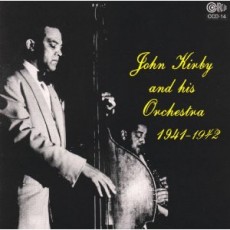
John Kirby was born in Winchester, Virginia on December 31, 1908 though some sources say he was born in Baltimore, Maryland orphaned, and adopted. He hit New York at 17, but after his trombone got stolen, he switched to tuba.
Kirby joined Fletcher Henderson’s orchestra as a tuba player in 1929. In the early 1930s, he performed some amazingly complicated tuba work on a number of Henderson’s recordings. He picked up on the double bass at the time when tuba was falling out a favor as the primary bass instrument of jazz bands.
About 1933 Kirby left Henderson to go with Chick Webb, went back with Henderson, then with Lucky Millinder and briefly led a quartet in 1935 but generally kept busy as bassist in others’ groups. Securing a gig at the Onyx Club and really got going as a bandleader in 1937. Soon the sextet was known as the Onyx Club Boys.
“The Biggest Little Band in the Land,” as it was called began recording in August 1937 and immediately had a hit with a swing version of “Loch Lomond” and though the group’s name would vary with time this would become one of the more significant “small groups” in the Big Band era and was also notable for making the first recording of the Shavers song “Undecided”. He recorded with Maxine Sullivan for Vocalion Records and accompanied Billie Holiday.
John tended toward a lighter, classically influenced style of jazz, often referred to as chamber jazz. He kept trying to lead a group in clubs and in the studio, occasionally managing to attract such talents as Dizzy Gillespie, Benny Carter, Ben Webster, Clyde Hart, Budd Johnson and Zutty Singleton and Sarah Vaughan.
As John Kirby’s career declined, he drank too much, was beset by diabetes and moved to Hollywood, California, where he died on June 14, 1952 just before a planned comeback.

Daily Dose Of Jazz…
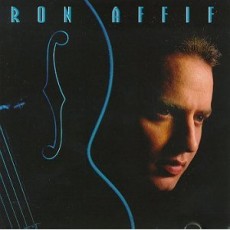
Ron Affif was born on December 30, 1965 in Pittsburgh, Pennsylvania of mixed Lebanese and Italian origin. His father, a jazz fan, initiated him in music and his uncle, renowned jazz guitarist Ron Anthony, with whom he would study from age 12. He also studied with Jerry Conderata and Joe Negri.
Moving to Los Angeles he took lessons from the jazz guitarist Joe Pass, then worked with everybody from Al Martino to Roger Williams and learned a ton of Gershwin tunes before moving to New York City in late 1989. By the late 1990s, he recorded five albums under the Fantasy record label, of which the best known is “52nd Street”. In 1998, he formed the Ron Affif Trio alongside fellow musicians bassist Essiet Okon Essiet and drummer Jeff “Tain” Watts.
Affif’s style is bop-based reminiscent of Wes Montgomery and George Benson. He has played with Dick Berk, Dave Pike, Pete Christlieb and Jack Sheldon. His singing quality is what distinguishes Ron from most of the other guitarists. He phrases with a sense of rhythm and pace allowing each note to blossom and recede with a breath-like purity and relaxation that belies his fiery chops. Hard bop guitarist Ron Affif continues to perform, compose, record and tour.
More Posts: guitar
From Broadway To 52nd Street
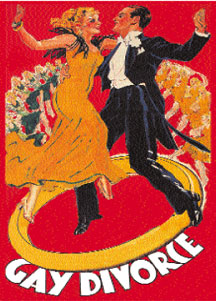
The stage of the Ethel Barrymore Theatre opened its curtains on November 29, 1932 to the Gay Divorce. The musical starred once again Fred Astaire, this time in his last Broadway show, and teaming up with Claire Luce and Erik Rhodes. Although Gay Divorce ran for only 248 performances, Night and Day, composed by Cole Porter, emerged to become a jazz classic.
The Story: In this musical unfolds the story of a husband and wife who are having marital difficulties and in an effort to give her husband grounds for divorce, Mimi Pratt arranges to be caught with a paid co-respondent, by the name of Tonetti. But a young man named Guy falls for Mimi and manages to get himself confused with Tonetti; yet, amidst the confusion he pursues his courtship.
Broadway History: The theatre on Madison Square at the end of the 19th century was located at the intersection of Broadway and Fifth Avenue at W. 23rd Street. The Flatiron Building now occupies the site. By midway through the following decade, the street blazed with electric signs as each theatre announced its shows and stars in white lights. By the turn of the 20th century the street had an entirely different look with as many as sixteen theatres on Broadway itself and many others located on side streets or other avenues.
Broadway became much more than a mere twelve blocks. It started at 13th Street and wound its way a mile and a half up the avenue to 45th Street ending in the heart of Longacre Square. The first decade of the century also saw the construction of many theatres, most notably The New Amsterdam on 42nd Street in 1903 along with four others the same year that are still standing today. Longacre Square had the first moving electric signs and it was when the Times Building was erected in 1904 that Longacre Square ceased to exist. It was now known as Times Square.
Sponsored By

www.whatissuitetabu.com
More Posts: broadway