

Daily Dose Of Jazz…
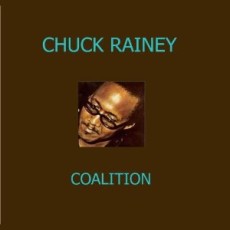
Chuck Rainey was born Charles Walter Rainey III on June 17, 1940 in Cleveland, Ohio. His youthful pursuits included violin, piano and trumpet but switched to baritone horn in order to join the Lane College traveling ensemble while matriculating. But it was while on active military duty that he learned the rhythm guitar, however, his lack of improvisational skills led him to pick up the bass. He soon found steady work as a studio bassist in New York, recording and touring with many of the greats of the time.
Through the 1970s he played with Jerome Richardson, Grady Tate, Mose Allison, Gato Barbieri, Gene Ammons and Eddie Vinson. He was a member of the King Curtis All Stars, toured with the Beatles second U.S. run and had firmly established himself as New York City’s “first call” session bass guitarist.
In 1972, he released his first solo album “The Chuck Rainey Coalition” consisting of notable session musicians Richard Tee, Warren Smith, Specs Powell, Eric Gale, Bernard Purdie, Herb Lovelle, Cornell Dupree and Billy Butler. He moved to Los Angeles that same year working with Quincy Jones and his big band but continued as a studio musician playing for Betty Davis, Steely Dan and Aretha Franklin.
Rainey’s style has always been to provide a rhythmic and melodic bottom that works with the drummer for the benefit of the song. His books on bass study refer to ”sensitivity to music” and a dedication to studying the fundamentals of music theory. While his “sideman” philosophy of bass has not brought him the level of recognition of star players such as Jaco Pastorious, Rainey is by far more recorded than his more famous contemporaries.
More Posts: bass

Daily Dose Of Jazz…
Kenny Drew, Jr. was born on June 14, 1958 in New York City is the son of jazz pianist Kenny Drew. His initial study was in classical music with his mother and grandmother. In his teens he gigged in clubs became interested in jazz and pop, but initially worked in funk bands. Kenny attended Iona College in New Rochelle, NY for a spell from 1977 to 1978. There, he became pianist for the Iona College Singers, an entertainment troop promoting the College’s name and goodwill among local high schools, retirement homes and the like in the Northeast region of the USA.
Later he went into jazz piano and in 1990 Kenny won the Great American Jazz Piano competition at the Jacksonville Jazz Festival in Florida. He has continued to perform jazz, but has also performed some chamber music. He made his recording debut with Charnett Moffet, worked with Stanley Jordan and OTB, and recorded with Eddie Gomez, Sadao Watanabe and the Mingus Big Band.
Although his style has some similarities to his father’s, but is different enough to generally avoid comparison. Drew is considered the more eclectic of the two and his music is known for its hard-swinging bluesy sound and large, two-handed rooty chords contrasting with fast runs. His style is said to be similar to that of his father and Oscar Peterson, though he cites Thelonious Monk as his major influence and like Monk often recorded and performed solo. He has 20 albums under his name as a leader and continued to perform until his death at home in St. Petersburg, Florida on August 3, 2014.
More Posts: piano
Daily Dose Of Jazz…
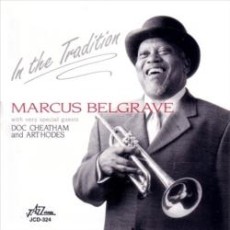
Marcus Belgrave was born June 12, 1936 in Chester, Pennsylvania and was tutored on trumpet by Clifford Brown when he was 17. Belgrave toured with Ray Charles from 1954-59 and later played with Charles Mingus and Max Roach.
In 1963 Marcus moved to Detroit and established himself as an educator and studio musician. He has recorded with Motown and Blue Note Record labels, The Lincoln Center Jazz Orchestra, Tony Bennett, Sammy Davis Jr., Dizzy Gillespie, Ella Fitzgerald and a host of other luminaries in jazz.
His reputation as a clinician and instructor led Marcus to cultivate young jazz talent over the years like Regina Carter, Rodney Whitaker, Kenny Garrett, James Carter, Geri Allen, Bob Hurst, Carlos McKinney and Karriem Riggins.
In 2006 he lent his expertise to the Young Musicians Program (YMP) summer program at the University of California Berkeley helping out student with coaching and private lessons. He was a frequent faculty member at Stanford Jazz Workshop and was a visiting professor of jazz trumpet at the Oberlin Conservatory.
Trumpeter Marcus Belgrave transitioned on May 23, 2015, in Ann Arbor, Michigan of heart failure after being hospitalized since April with complications of chronic obstructive pulmonary disease and congestive heart failure.
More Posts: trumpet
Daily Dose Of Jazz…
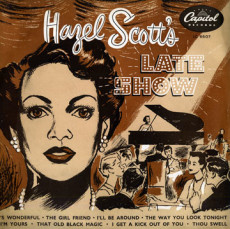
Hazel Dorothy Scott was born on June 11, 1920 in Port of Spain, Trinidad but was raised in New York City from age four. Performing extensively as a child pianist, she trained at Julliard and appeared in the 1942 production of Priorities and performed numerous times at Carnegie Hall.
A jazz and classical pianist and singer, Scott was known for improvising on classical themes and also played boogie-woogie, blues, and ballads. She was the first woman of color to have her own television series “The Hazel Scott Show” that premiered on the Dumont Television Network on July 3, 1950. However, due to her public opposition to McCarthyism and racial segregation the show was canceled in 1950 when she was accused of being a Communist sympathizer; the final broadcast was September 29, 1950.
The talented Hazel went on to have a brief motion picture career included films Something To Shout About, I Dood It, Broadway Rhythm, The Heat’s On and Rhapsody In Blue. Her album Relaxed Piano Moods on the Debut Record label with Charles Mingus and Max Roach is the album critics hold in high regard.
She married U.S. Congressman Adam Clayton Jr., a union that lasted from 1945 to 1956 and produced one child, Adam III. Pianist and vocalist Hazel Scott passed away of pancreatic cancer in New York City on October 2, 1981. She was 61 years old.

Daily Dose Of Jazz…
Charnett Moffett was born June 10, 1967 in New York City. His first name is a combination of his father’s name, drummer Charles Moffett and that of Ornette Coleman. Taking up the bass in his childhood, he attended Fiorello H. La Guardia High School for Music and Arts in New York City, later studied at Mannes College of Music and the Juilliard School of Music.
In 1983, he played on saxophonist Branford Marsalis’ debut as a leader, Scenes in the City, and the following year he joined the Wynton Marsalis quintet, appearing on the1985 acclaimed Black Codes (From the Underground). During the Eighties, he also played on Stanley Jordan’s best-selling 1985 Blue Note debut, Magic Touch, and went on to play with Tony Williams on two Blue Note albums.
In 1987, Moffett signed with Blue Note Records and debuted as a leader that year with his first of three albums for the label, Beauty Within, which featured his father and older brothers Codaryl Moffett on drums and Mondre Moffett on trumpet, Kenny Garrett on alto saxophone, and Stanley Jordan on guitar.
This led to a career as a free-lance bassist, performing and recording with Stanley Jordan, Ornette Coleman, McCoy Tyner, Kenny Garrett, Mulgrew Miller, Courtney Pine, Arturo Sandoval, Lew Soloff and Sonny Sharrock.
Charles Moffett, who plays the bass, piccolo bass, double bass, bass guitar has played and recorded as a leader in addition to Blue Note with Manhattan, Evidence and Piadrum record labels. With eleven albums under his belt as a leader and set to release an album for Motema, the former member of the Manhattan Jazz Quintet is currently performing with Melody Gardot.
More Posts: bass