


Daily Dose Of Jazz…
Matthew Garrison was born June 2, 1970 in New York. The son of double bassist Jimmy Garrison, he spent the first eight years of his life immersed in a community of musicians, dancers, visual artists and poets. After the death of his father (John Coltrane’s bassist), his family relocated to Rome, Italy where he began to study piano and bass guitar.
In 1988 Matthew returned to the United States and lived with his godfather Jack Dejohnette for two years, studying intensively under him and bassist Dave Holland. In 1989 he received a full scholarship to attend Berklee College of Music in Boston. Along with his studies, he began his professional career with the likes of Gary Burton, Bob Moses, Betty Carter, Mike Gibbs and Lyle Mays to mention a few.
Garrison moved to Brooklyn, New York in 1994 and since then has performed, toured and recorded with artists such as Herbie Hancock, Whitney Houston, Joe Zawinul, Chaka Khan, Meshell Ndege Ocello, Joni Mitchell, Wayne Shorter, Jack Dejohnette, Steve Coleman, Bill Cosby, Paul Simon, Cassandra Wilson, Wallace Roney, Geri Allen, John Mclaughlin, Tito Puente, John Scofield, Pat Metheny and many others.
In 1998 Matthew founded record label and production company, GarrisonJazz Productions, through which he currently produces, promotes and markets his music. Since 2000 he has released two compact discs and a live performance DVD. He is noted for playing his signature series Fodera bass, having created and developed a pizzicato technique that uses four fingers. He continues to perform and record.
More Posts: bass
Daily Dose Of Jazz…
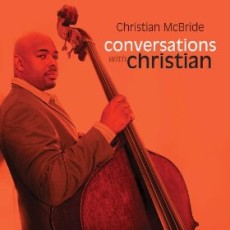
Christian McBride was born May 31, 1972 in Philadelphia, Pennsylvania into a family of bassists, his father Lee Smith and great uncle Howard Cooper who served as his early mentors.
Widely considered to be one of the best bassists of his generation in the jazz community, McBride has performed and recorded with Freddie Hubbard, Joe Henderson, McCoy Tyner, Herbie Hancock, Pat Metheny, Diana Krall, Roy Haynes, Joshua Redman, Chick Corea and Sonny Rollins to name a few as well as in the hip hop, soul, pop and classical genres with The Roots, Kathleen Battle, Carly Simon, Sting, James Brown and others.
Since 2000 Christian has fronted his own band and has become one of the least predictable bands if not intoxicating. Equally adept on the electric bass he was part of The Philadelphia Experiment with Uri Caine and Ahmir “Questlove” Thompson. He took over the relinquished Creative Chair of Jazz with the L.A. Philharmonic from Dianne Reeves, that he held until Herbie Hancock took over four years later in 2010. He is co-director of the new National Jazz Museum in Harlem.
McBride released his first big band album, titled “The Good Feeling” in 2011 for which he won his third Grammy for Best Large Jazz Ensemble Performance.
He currently leads four groups – “Inside Straight” featuring alto/soprano saxophonist Steve Wilson, vibraphonist Warren Wolf, pianist Peter Martin and drummer Carl Allen; a trio with pianist Christian Sands and drummer Ulysses Owens, Jr.; an 18-piece big band, and an experimental group called “A Christian McBride Situation” with pianist/keyboardist Patrice Rushen, turntablists DJ Logic and Jahi Sundance, saxophonist Ron Blake and vocalist Alyson Williams.
More Posts: bass
Daily Dose Of Jazz…
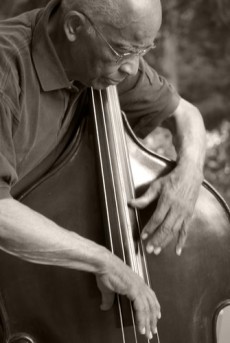
Bassist Julian Euell was born on May 23, 1929 in New York City. He first began playing bass in 1944, served in the Army from 1945-47 and after his discharge began playing with Sonny Rollins, Jackie McLean and Art Taylor that same year. He quit music in ’49 for steady work in the post office eventually studying under Charles Mingus in ’52 and attending Julliard fro 1953 to 1956. He also took classes at NYU, earned a bachelor’s degree from Columbia University and subsequently taught there.
His musical associations during the fifties were with Elmo Hope, Benny Harris, Charlie Rouse, Joe Roland, Freddie Redd, Gigi Gryce and Phineas Newborn. Leaving music again late in the decade he found employment in New Jersey as a social worker. Though less active at this time he continued to perform with Mal Waldron, Randy Weston, Abbey Lincoln, Charles Mingus and Kenny Dorham.
In the 1960s Euell worked in Harlem directing an arts program and then returned to school, receiving a Ph.D. from George Washington University in 1973. He was Assistant Secretary for Public Service at the Smithsonian from 1970-1982, and was partly responsible for the institution’s increasing interest in jazz history. From 1983 to 1988 he directed the Oakland Museum History-Arts-Science and from 1991-95 was director of the Louis Armstrong House. He returned to semi-regular performing in the 1980s and 1990s.
More Posts: bass
Daily Dose Of Jazz…
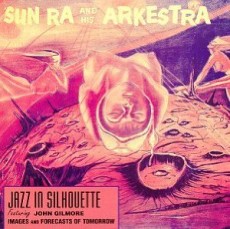
Sun Ra was born Herman Poole Blount in Birmingham, Alabama on May 22, 1914 and as a child was a skilled pianist. By twelve he was writing original songs and could sight read sheet music. With Birmingham being an important stop for touring musicians, during his childhood he was able to see famed musicians like Fletcher Henderson, Duke Ellington and Fats Waller.
By his teenage years he was producing from memory full transcriptions of big band songs he had heard and began playing semi-professional solo piano in ad hoc jazz bands. Attending Birmingham Industrial High School he took lessons the tutelage of John T. “Fess” Whatley, a demanding disciplinarian and producer of many professional musicians.
Claiming that he was of the “Angel Race” and not from Earth, but from Saturn, Sun Ra developed a complex persona of “cosmic” philosophies and lyrical poetry that made him a pioneer of “afro-futurism” as he preached awareness and peace above all. He abandoned his birth name and took on the name and persona of Sun Ra (Ra being the ancient Egyptian god of the sun).
From the mid-1950s to his death, Sun Ra led “The Arkestra”, an ensemble with an ever-changing lineup and names, asserting that the ever-changing name of his ensemble reflected the ever-changing nature of his music. His mainstream success was limited, but Sun Ra was a prolific recording artist and frequent live performer with music ranged from keyboard solos to big bands of over 30 musicians and music touching on virtually the entire history of jazz, from ragtime, swing, bebop, free improvisation, electronic and space music.
Sun Ra had several music periods during his lifetime – late 30s creating a conservatory workshop in his family home, conscientious objector during the war years, Chicago playing blues and jazz with Fletcher Henderson, Coleman Hawkins and Stuff Smith, New York Monday night gig at Slug’s Saloon and praise from Dizzy Gillespie and Thelonious Monk, and Philadelphia that would be the base of operations for the Arkestra until his death.
Sun Ra known for his “cosmic philosophy, musical compositions and performances was inducted into the Alabama Jazz Hall of Fame in 1979. The prolific Jazz composer, bandleader, piano and synthesizer player, poet and philosopher passed away on May 30, 1993, at 79.

Daily Dose Of Jazz…
Willis Leonard Holman was born on May 21, 1927 in Olive, California. Known to the jazz world as Bill Holman, he has worked primarily in the jazz idiom as a songwriter, conductor, composer, arranger and saxophonist.
Through his acquaintance with composer Gene Roland he was introduced to Stan Kenton and in the early fifties was hired as a tenor sax player. Beyond his sax playing, Holman had the ability to integrate counterpoint and dissonance in subtle yet distinctive ways thus making Kenton’s band swing. He became Kenton’s chief arranger writing much of Kenton’s late 1950s repertoire and continued to write for Kenton, on and off, throughout the 1960s and 70s.
In addition to working for Kenton, Bill provided charts for Woody Herman, Doc Severinsen, Buddy Rich, Terry Gibbs, Count Basie, Gerry Mulligan, The Association, The Fifth Dimension and Natalie Cole among others. In 1975 he formed his own band that continues to perform in the U.S. and worldwide. In 1997 he won a Grammy for his recording Brilliant Corners: The Music of Thelonious Monk. He continues to create his legacy in jazz.