

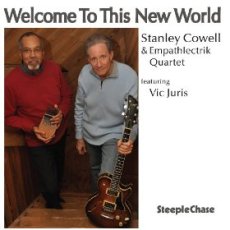
Daily Dose Of Jazz…
Vic Juris was born Victor E. Jurusz, Jr. on September 26, 1953 in New Jersey and started to play guitar around age 10, inspired by rock and roll legend Chuck Berry. He was self taught and played in many local rock and R&B bands around New Jersey as soon as he could.
Not long after he started playing professionally did he discover jazz and classical music and from then on it was a love affair with jazz. With an impeccable fluid approach to harmony and accompaniment, great writing style, a nice “blend” within the band, phenomenal chops, unique phrasing, advanced rhythmic ideas and concepts for improvisation Juris easily gained the respect of jazz musicians on the circuit and was not at a loss for work.
In the early 70s Vic played with Lyn Christie, made his first recordings with Eric Kloss, then joined Barry Miles working with him well into the Eighties. He recorded with Richie Cole, released his first album as a leader in the late 70s, and played with Don Patterson, Wild Bill Davis, Jimmy Smith, and Mel Torme.
He put together his own quartet in 1981, recorded for Muse and Steeplechase record labels, then became increasingly in demand as a sideman working with Bireli Lagrene, Larry Coryell, Dave Liebman, Jeanie Bryson, Gary Peacock, Judi Silvano, Lee Konitz and the list goes on.
As an educator Juris has held teaching positions at The New School for Jazz and Contemporary Music, Mason Gross School of the Arts, William Patterson and Lehigh Universities. Also a composer, his “Horizon Drive” was sampled in 1994 by Gang Starr on their Mass Appeal song. Guitarist and educator Vic Juris continued to perform, record and teach until his transition on New Year’s Eve, December 31, 2019 in Livingston, New Jersey at the age of 66.

Jazz Is Global – Share
More Posts: guitar,history,instrumental,jazz,music
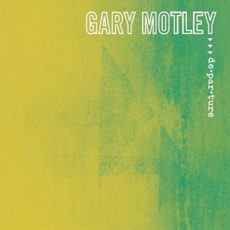
Review: Gary Motley | de*par*ture
As I cruised down the highway immersed in my quiet time listening to this advanced offering by composer, pianist and educator Gary Motley, it was no surprise that I was witness to a de*par*ture from the mundane. From the line, this project fittingly takes off with a fast-paced Fits And Starts, and keeps pace into Someday Sunday. Suffice it to say it continues with the title track and moves easily through the balance of the eight tunes that comprise this work.
I was halfway through a most engaging escape when the voice of Alex Lattimore snapped me back to reality and my internal conversation rebooted. Not just listening to words, I found myself interacting with the lyrics of life. Arranging sound and rhythm like light and shadows of film noir, this consummate accompanist enhances the poignancy and sensitivity of Caught and Stay With Me that touches the heart of any relationship mired in the pursuit and promise of love.
With a project like this, one can only surmise that only schedules were the biggest obstacle in getting into the studio. Enlisting bassist Craig Shaw and drummer Terreon Gully, two fellow original members of The Swing Association, it is never more evident that Gary knew their magic had not been lost over time. One clearly hears the comfort of camaraderie in their performance, each playing off and with the other. Mix in the additional ingredients of lyricist/vocalist Veronica Motley, flautist Randy Hunter, and guitarist Dan Baraszu with the strings of the Vega Quartet and you have a perfect blend of talent.
What I discovered with this recording is there is no track order that would otherwise diminish the experience. In the days of wax they used to say, “drop the needle and let it play” which meant there was no need to skip over tracks. In Mr. Motley’s case, it is a departure, in that any order is just as delightful. Listen as you desire and I guarantee, you will play and recommend this work of art to friends for years to come.
carl anthony | notorious jazz | august 28, 2014
Give A Gift Of Jazz ~ Share 
#preserving genius
More Posts: bandleader,history,instrumental,jazz,music,piano,review
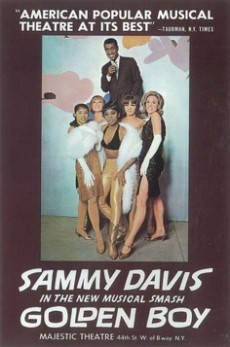
From Broadway To 52nd Street
Golden Boy opened the Majestic Theatre on October 20, 1964 starring Sammy Davis Jr., Billy Daniels, Paula Wayne, Johnny Brown, Lola Falana and Lou Gossett. Charles Strouse & Lee Adams composed the music from which Night Song was plucked to become a jazz standard for a show that ran 568 performances.
The Story: The play reflects the struggle of an ambitious young black man in America and focuses on Joe Wellington, a young man from Harlem who, despite his family’s objections, turns to prizefighting as a means of escaping his ghetto roots to find fame and fortune. He crosses paths with a Mephistopheles-like promoter Eddie Satin and eventually betrays his manager Tom Moody when he becomes romantically involved with Moody’s girlfriend Lorna Moon. In his quest for glory loses his soul and his life.
Broadway History: These innovations in lighting also made advertising on Broadway much more effective. The world’s first electrically lit large commercial billboard was erected over Madison Square in 1892. It read, “Buy Homes On Long Island/Swept By Ocean Breezes” and was paid for by the Long Island Rail Road. Though the sign had disappeared from the New York skyline by 1895, its brief exposure caught the eye of every business owner on Broadway, which by then included the square intersection at W. 42nd, Broadway, and 7th Avenue (the tourist-glutted hotspot we all know and love, “Times Square”, which was named after The New York Times in 1904, when the publication moved into its new headquarters building there, had decided to advertise with the new “spectaculars,” so called because of their large, complex light displays and intricate designs, some flashed, and some even had animated sections that moved.
Sponsored By

www.whatissuitetabu.com
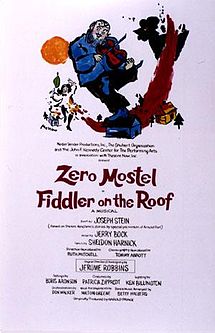
From Broadway To 52nd Street
Fiddler On The Roof opens the curtains at the Alvin theatre on September 22, 1964. Zero Mostel stars in this show that was the first musical to surpass 3000 performances. With 3, 242 it held the record for ten years and reigns as the 16th longest running show in Broadway history Jerry Bock & Sheldon Harnick composed the music for this Tony Award winning production. The tune from the show that would go on to rest alongside other great jazz classics was Matchmaker, Matchmaker.
The Story: In the Jewish village of Anatevka, Russia in 1905 the story follows the life of a dairyman Tevye, the father of five daughters and his attempts to maintain his family and Jewish religious traditions. While outside influences encroach upon their lives, he must cope both with the strong-willed actions of his three older daughters—each one’s choice of husband moves further away from the customs of his faith to finds happiness, love, and financial success through marriage. When all Tevye’s plans fall apart as Russia sustains a revolution, he must flee their destroyed village with his family to America while holding on to his faith and find his own happiness.
Jazz History: The Half Note located at 296 Spring Street on the corner of Hudson Street saw its peak years from 1957 to 1972. Established by Brooklyn-born Mike Canterino who while in the Nay in Florida befriended a local saxophonist named Cannonball Adderley, opened in a desolate location in New York City’s West Village, the club that had been a hard-drinking saloon dubbed the Zombie Bar was renamed and began booking jazz in 1957. Two things separated the Half Note from other clubs. Canterino intentionally integrated his lineups, and changed the industry’s 40-20 set-length standard (40 minutes on, 20 minutes off) by allowing musicians to play as long as they desired—often past the time his cabaret license permitted. Veteran blowers like Ben Webster could play all night long—and did—while experimentalists like Coltrane used the Half Note as a workshop of sorts, turning tunes like the legendary “One Down, One Up” into marathon workouts.
Sponsored By
www.whatissuitetabu.com
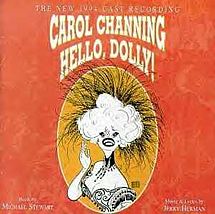
From Broadway To 52nd Street
Hello Dolly opened at the St. James Theatre on January 16, 1964 with music composed by Jerry Herman. The show starred Carol Channing & David Burns, Eileen Brennan, Sondra Lee and Charles Nelson Reilly, running for a record 2,844 performances landing it amongst the grand collection of blockbuster hits. It was revived in 1967 with Pearl Bailey & Cab Calloway in the lead roles and in 1969, Barbra Streisand & Walter Matthau took the characters to the silver screen. The title song Hello Dolly and It Only Takes A Moment went on to become a part of the jazz catalogue.
The Story: At the turn of the 20th century in New York City, a brassy and intrepid matchmaker Dolly Galagher Levi is in town to find wealthy Horace Vandergelder a wife. However, unbeknownst to Horace, Ms. Levi has her sights set on him herself. While helping two rich pretenders to find love, Dolly finds romance and a husband for herself in this spoof on love and marriage.
Broadway History: Broadway, previously the home to jazz influenced choreographers like Cole, Fosse, and Robbins, saw a part of its nature change to reflect the mood of the country. While there were still blockbuster musicals of the old type – like My Fair Lady, Hello Dolly, Mame – a new generation of musicals reflected the changes in American society, and dance. Hair was a depiction of the rebellious nature of the hippie movement. And Fosse, that champion of syncopated, tap and minstrel based movement, absorbed the new 60s feel of dance with his hit musical Sweet Charity. In this show, Fosse based much of his movement on the social dances of the 1960s, while injecting his own unique brand of style and angular movement and jutting body parts. The movements of jazz dance had evolved to absorb the blossoming social scene. Broadway was no longer the spawning ground for theatrical jazz dance. It had become a pastiche of old standard styles and movements, and an incubator for a new form of jazz dance.
Sponsored By
www.whatissuitetabu.com