

Daily Dose Of Jazz…
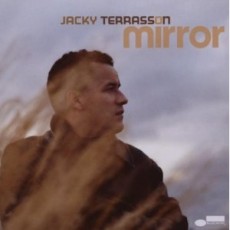
Jacky Terrasson was born Jacques-Laurent Terrasson on November 27, 1966 in Berlin, Germany to French and American parents, but grew up in Paris, France. He started learning piano at 5 years old and after studying classical piano in school, he studied jazz, in particular with Jeff Gardner. His encounter with Francis Paudras played an important role his initiation into jazz.
He studied at Berklee College of Music before playing in Chicago and New York clubs. He gained increased attention on winning the 1993 Thelonious Monk Piano Competition and began touring with Betty Carter. A year later he was named by the New York Times Magazine one of the 30 under 30 to change American culture in the next 30 years.
He has recorded for Blue Note, Venus, EMI, Concord and Universal France amassing a total of 15 records. He has worked with Dee Dee Bridgewater, Michael Brecker, Dianne Reeves, Jimmy Scott, Charles Aznavor, Cassandra Wilson, Ry Cooder, and his trios with Leon Parker and Ugonna Okegwo or Eric Harland, Ben Williams, Jamire Williams and Justin Faulkner.
Pianist Jacky Terrasson plays festivals all over the world and works regularly in Japan, South Korea and in China, as well as in Europe and the United States. He mingles and melts the colors and the inventions of the great pianists of yesterday and today creating his own style.
More Posts: piano

Daily Dose Of Jazz…
Johnny Mandel was born John Alfred Mandel on November 23, 1925 in New York, New York. His mother, an opera singer, discovered he had perfect pitch at age five. Piano lessons ensued but Johnny switched to the trumpet and later the trombone.
Johnny studied at the Manhattan School of Music and the Julliard School. By 1943 he was playing trumpet with Joe Venuti, in 1944 with Billy Rogers and then trombone in the bands of Boyd Raeburn, Jimmy Dorsey, Buddy Rich, George Auld and Chubby Jackson. In 1949 he accompanied singer June Christy in the Bob Cooper Orchestra, then with Elliot Lawrence’s outfit, followed by a stint with Count Basie and a move to Los Angeles, California to play with Zoot Sims.
In the late Forties and into the Fifties he wrote jazz compositions like “Not Really the Blues” for Woody Herman, “Hershey Bar” and “Pot Luck” for Stan Getz, “Straight Life” and “Low Life” for Count Basie as well as “Tommyhawk” for Chet Baker. Mandel composed, conducted and arranged the music for numerous movie sound tracks with his earliest credited contribution to “I Want To Live” in 1958 being nominated for a Grammy. Mandel’s most famous compositions include “Suicide Is Painless” from M*A*S*H, “Close Enough for Love”, “Emily”, “A Time for Love”, and “The Shadow Of Your Smile” which won an Oscar for Best Song and a Grammy for Song Of The Year in 1966.
Mandel is a recipient of the 2011 NEA Jazz Masters Award, has won several Grammy Awards for Best Instrumental Arrangements Accompanying Vocals for Quincy Jones’ Velas, Natalie & Nat King Cole’s Unforgettable and Shirley Horn’s Here’s To Life. He has composed music with lyricists Alan & Marilyn Bergman, Paul Williams and Johnny Mercer; and arranged for Frank Sinatra, Tony Bennett, Barbra Streisand, Diana Krall, The Diva Jazz Orchestra and Ann Hampton Calloway among numerous others.

Daily Dose Of Jazz…
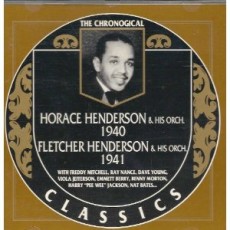
Horace W. Henderson, the younger brother of Fletcher Henderson, was born on November 22, 1904 in Cuthbert, Georgia. He attended Wilberforce University and played in the “Collegians” band that included Benny Carter and Rex Stewart. This band would later be known as the Horace Henderson Orchestra and then as the Dixie Stompers.
Henderson left the band to work with Sammy Stewart, then in 1928 organized a new band called the Collegians and in 1931 Don Redman took over this band. Henderson continued to work as the band’s pianist and arranger before leaving to work for his brother.
He arranged for many of the most important jazz musicians of the era, such as Charlie Barnet, the Casa Loma Orchestra, Tommy Dorsey, Benny Goodman, Earl Hines, Jimmie Lunceford and also for his brother. Although Horace worked continually, led bands, arranged, recorded, and composed into the 1980s without the popularity of his older sibling, he is considered by many the more talented and skillful of the Henderson brothers.
His best-known arrangements are of his own “Hot and Anxious” which later became “In The Mood”, “Christopher Columbus” and “Big John Special”. At different times in his career, Horace was pianist and musical director for both Lena Horne and Billie Holiday.
Jazz pianist, organist, arranger and bandleader Horace Henderson passed away on August 29, 1988 at the age of 83.

More Posts: piano
Daily Dose Of Jazz…
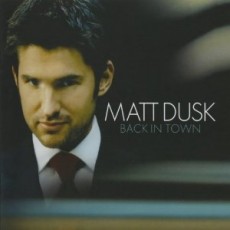
Matt Dusk was born Matthew-Aaron Dusk on November 19, 1978 in Toronto, Ontario, Canada and from an early age wanted to become a performer. At seven, he was accepted into St. Michael’s Choir School and for the next eleven years performed opera and classical music. It wasn’t until hearing Tony Bennett and Sarah Vaughan records at age 17 that he began to change his musical style and direction.
In 1998 Matt won the top spot in the Canadian National Exhibition Rising Star Competition, entered York University for economics but a year later change to music studying jazz theory and jazz vocal, graduating with honors in 2002.
Dusk recorded four independent CDs before his major record deal, making his mark on the MP3 web circuit. This was followed by a 2003 record deal with Decca Records, the next year played Las Vegas at the Golden Nugget, and became the house entertainer for the reality TV show Casino.
Matt has recorded with Capitol Records, worked with a 58-piece orchestra, is the first jazz artist in Japanese history to reach #1 on the pop radio charts, recorded the soundtrack for the TV series Call Me Fitz, and has shot a live DVD concert special with a 17-piece band and has six albums to his credit alongside his independent project. He currently performs, tours and records.
Daily Dose Of Jazz…
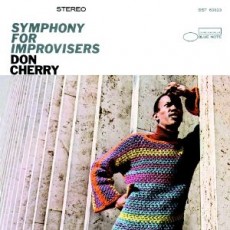
Don Cherry was born Donald Eugene Cherry on November 18, 1936 in Oklahoma City, Oklahoma. His father, trumpeter and club owner moved the family to Watts in Los Angeles, California when he was four. He would skip high school at Fremont to play with the swing band at Jefferson High, resulting in his transfer to reform school at Jacob Riis, where he first met drummer Billy Higgins.
By the early 50s Cherry was playing with jazz musicians in Los Angeles, sometimes acting as pianist in Art Farmer’s group. While trumpeter Clifford Brown was in L. A. he would informally mentor him. He became well known in 1958 when he performed and recorded with Ornette Coleman quintet. He co-led The Avant-Garde session with John Coltrane replacing Coleman, toured with Sonny Rollins, joined the New York Contemporary Five and recorded with Albert Ayler and George Russell.
Don’s first recording as a leader was Complete Communion for Blue Note in 1965 with Ed Blackwell and Gato Barbieri. He would begin leaning toward funk/fusion and play sparse jazz during his Scandinavia years. He would go on to play with Dewey Redman, Charlie Haden, Carla Bley, Lou Reed, and Sun Ra, and then ventured into developing world fusion music incorporating Middle Eastern, African and Indian into his playing.
Cherry appeared on the Red Hot Organization’s compilation CD, Stolen Moments: Red Hot + Cool, was inducted into the Oklahoma Jazz Hall of Fame, played piano, pocket trumpet, cornet, flugelhorn and bugle. He recorded some two-dozen albums as a leader and some 48 as a sideman. Don Cherry died on October 19, 1995 at age 58 from liver cancer in Málaga, Spain.
