

Daily Dose Of Jazz…
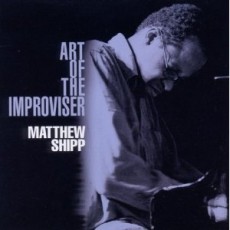
Matthew Shipp was born December 7, 1960 in Wilmington, Delaware and began playing piano at six years old. Strongly attracted to jazz, he also played in rock groups while in high school, and then attended the University of Delaware for one year, then the New England Conservatory of Music, where he studied with saxophonist/composer Joe Marini.
Shipp has been very active since the early 1990s initially becoming most active in free jazz but branched out to explore music that touches on contemporary classical, hip hop and electronica. He has appeared on more than three dozens of albums as a leader, sideman or producer.
Matthew has long been a member of saxophonist David S. Ware’s quartet, has recorded or performed with William Parker, DJ Spooky, Joe Morris, Daniel Carter and Roscoe Mitchell among others.
Pianist Matthew Shipp continuously improves his repertoire from touring the world, writing new compositions and currently collaborating with multi-media artist Barbara Januszkiewicz, exploring new territory through an avant-garde film called “The Composer”.
More Posts: piano

Daily Dose Of Jazz…
Eddie Heywood was born Edward Heywood, Jr. on December 4, 1915 in Atlanta, Georgia. Following in his father’s jazz footsteps, in through the Thirties he played with Waymon Carter, Clarence Love and Benny Carter once he moved to New York in 1939.
After starting his band, Heywood was an occasional sideman with Billie Holiday in 1941. By 1943 he was taking several classic solos on a Coleman Hawkins quartet date and put together the first sestet with Doc Cheatham and Vic Dickerson. Their version of “Begin the Beguine” became a hit in 1944 and three successful years followed.
Between 1947 and 1950, Eddie was stricken with a partial paralysis of his hands and could not play at all. However, it did not stop him when he made a comeback later in the decade. During the Fifties he composed and recorded “Land of Dreams” and “Soft Summer Breeze” and is probably best known for his 1956 recording of his composition “Canadian Sunset,” all of which he recorded with the Hugo Winterhalter Orchestra.
After a second partial paralysis in the 1960s, he made another comeback and continued his career in the 1980s. Pianist Eddie Heywood, who passed away on January 3, 1989 in Miami Beach, Florida, was awarded a star at 1709 Vine Street on the Hollywood Walk of Fame.
Eddie Heywood: 1915-1989 / Piano

More Posts: piano

Daily Dose Of Jazz…
Paul Lingle was born on December 3, 1902 in Denver, Colorado and began on piano at age six. He first played professionally in the San Francisco area in the 1920s, later becoming a local legend in the Bay area in the Forties. He often accompanied Al Jolson in the late 1920s, including recording for his film soundtracks.
In the 1930s Paul worked mainly on radio, and also played with Al Zohn’s band. He tuned pianos early in the 1940s and worked as a soloist in local San Francisco clubs, accompanying visiting musicians such as Leadbelly and Bunk Johnson.
Lingle moved to Honolulu, Hawaii in 1952, where he played until his death on October 30, 1963. A talented stride pianist that also played ragtime, he released almost no recorded material during his lifetime, doing only one session for Good Time Jazz in 1952. Euphonic Records posthumously released several volumes of private recordings that were critically acclaimed.

More Posts: piano
Daily Dose Of Jazz…
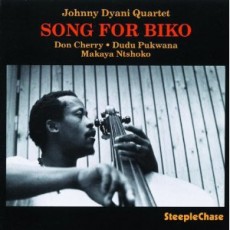
Johnny Mbizo Dyani was born on November 30, 1945 in Duncan Village, a township of the South African city of East London. He started playing the piano and singing in a traditional choir at an early age. At 13, he switched to bass, but would use both voice and piano later on.
In the early 1960s, Dyani was a member of South Africa’s first integrated jazz band, “The Blue Notes”; however, in 1964 the band fled South Africa to seek musical and political freedom, rebelling against the apartheid regime that inhibited whites and blacks playing together.
In 1966, Dyani toured Argentina with Steve Lacy’s quartet and recorded. The Forest and the Zoo. He would later move to Denmark and Sweden, recording many albums under his own name. He recorded with Dollar Brand a.k.a. Abdullah Ibrahim, Don Cherry, Steve Lacy, David Murray, Mal Waldron, Don Moye and Brotherhood of Breath among many others.
In the 70s he formed the group “Earthquake Power” and then became very active on the European scene. His Witchdoctor’s Son band recorded for Steeplechase Records and he also recorded with Swedish and Brazilian musicians. Dyani’s main focus of playing entered around African jazz, avant-garde jazz and world fusion.
Double bassist and pianist Johnny Dyani passed away suddenly after a concert in Berlin on October 24, 1986 at age 40. After his death, the remaining members of The Blue Notes reunited to record a moving tribute album, titled Blue Notes For Johnny.

Daily Dose Of Jazz…
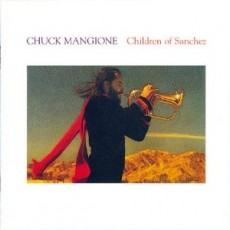
Chuck Mangione was born Charles Frank Mangione on November 29, 1940 in Rochester, New York. He attended the Eastman School of Music from 1958 to 1963, afterwards joining Art Blakey’s Jazz Messengers, for which he filled the trumpet seat.
In the late 1960s, Mangione was a member of the band The National Gallery, then served as director of the Eastman jazz ensemble from 1968 to 1972, and during this time returned to recording with the album Friends and Love, with the Rochester Philharmonic Orchestra.
Mangione’s quartet with saxophonist Gerry Niewood recorded “Bellavia” that won him a Grammy for Best Instrumental Composition. His music has been used during two Olympics, performed at the closing ceremonies, and composed the soundtrack for The Children of Sanchez starring Anthony Quinn, winning his second Grammy Award.
Chuck composed and performed the theme for The Cannonball Run among other films. Proficient on both trumpet and flugelhorn, he has performed with a 70-piece orchestra, recorded his hit album Feels So Good, and has worked with Dizzy Gillespie, Steve Gadd, and Chick Corea among other jazz luminaries.
Mangione, along with his brother Gap worked as the Jazz Brothers, recording three albums with Riverside Records. Later worked in one another’s band and orchestra. He has a recurring voice-acting role on the animated King of the Hill, and continues to perform and record with his current band.
More Posts: flugelhorn,french horn,piano,trumpet